


Molecular aspects of poliovirus pathogenesis
- PMID: 24367151
- PMCID: PMC3859295
- DOI: 10.2183/pjab/83.266
Molecular aspects of poliovirus pathogenesis
Abstract
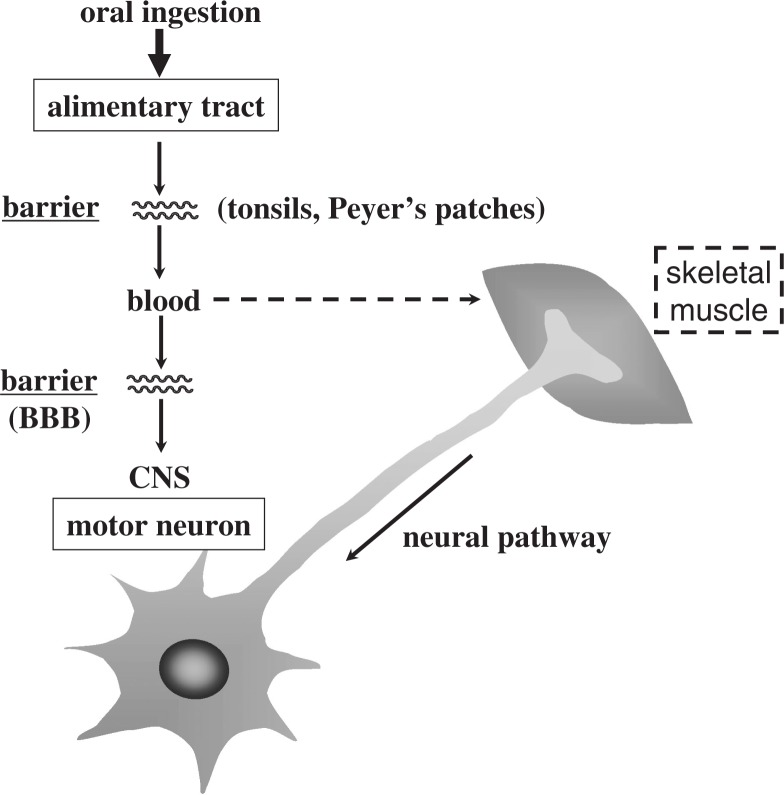
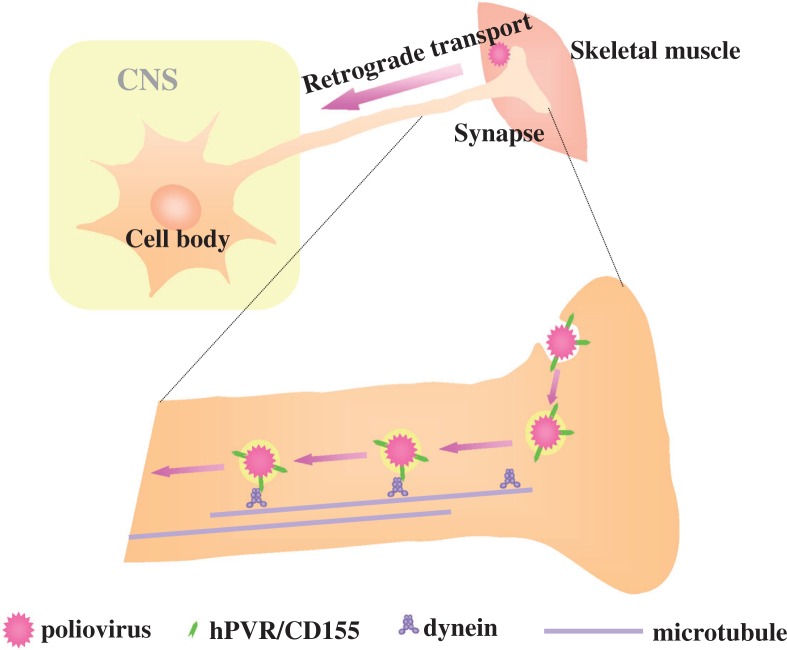
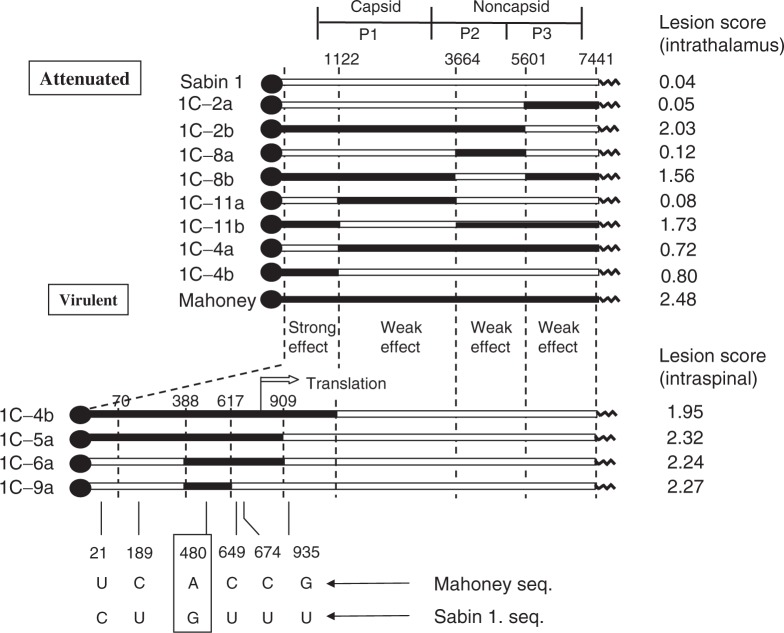
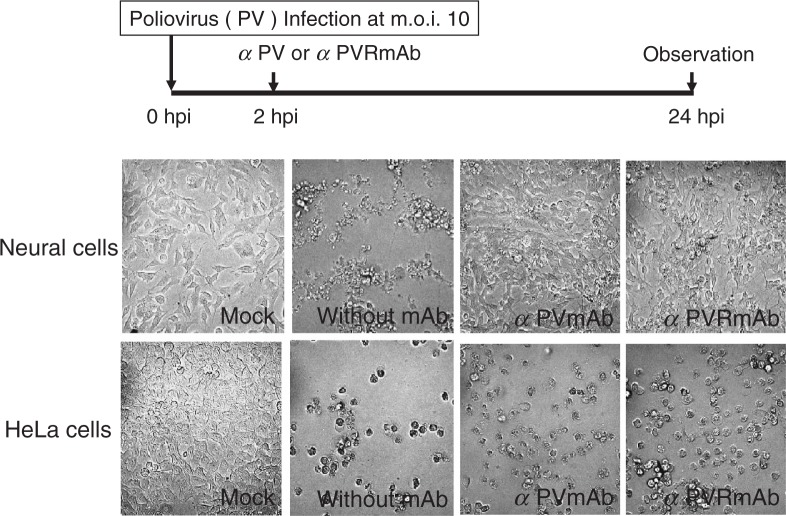
The development of a transgenic mouse model carrying the human poliovirus receptor has made it possible to investigate the molecular mechanisms of the viral dissemination process in a whole organism. Studies on this have provided an insight into the mechanisms for viral permeation through the blood-brain barrier and retrograde axonal transport of the virus. In addition, strain-specific neurovirulence levels are shown to depend mainly on the replicating capacity of the virus in the central nervous system rather than the efficiency of the 2 dissemination pathways indicated above. Studies of poliovirus-induced cytopathic effects on neural cells revealed that neural cells possess anti-poliovirus characteristics that may offer a new avenue for investigating the molecular mechanisms of poliovirus neurovirulence.
Keywords: dissemination; neurovirulence; poliovirus; poliovirus receptor; transgenic mouse.
Figures

References
-
- Mendelsohn, C.L., Wimmer, E. and Racaniello, V.R. (1989) Cellular receptor for poliovirus: molecular cloning, nucleotide sequence, and expression of a new member of the immunoglobulin superfamily. Cell 56, 855–865 - PubMed
-
- Ren, R., Constantini, F., Gorgacz, E.J., Lee, J.J. and Racaniello, V.R. (1990) Transgenic mice expressing a human poliovirus receptor: a new model for poliomyelitis. Cell 63, 353–362 - PubMed
-
- Bodian, D. (1955) Emerging concept of poliomyelitis infection. Science 122, 105–108 - PubMed
Publication types
LinkOut - more resources
Full Text Sources
Research Materials