


Brain extraction using the watershed transform from markers
- PMID: 24367327
- PMCID: PMC3856384
- DOI: 10.3389/fninf.2013.00032
Brain extraction using the watershed transform from markers
Abstract
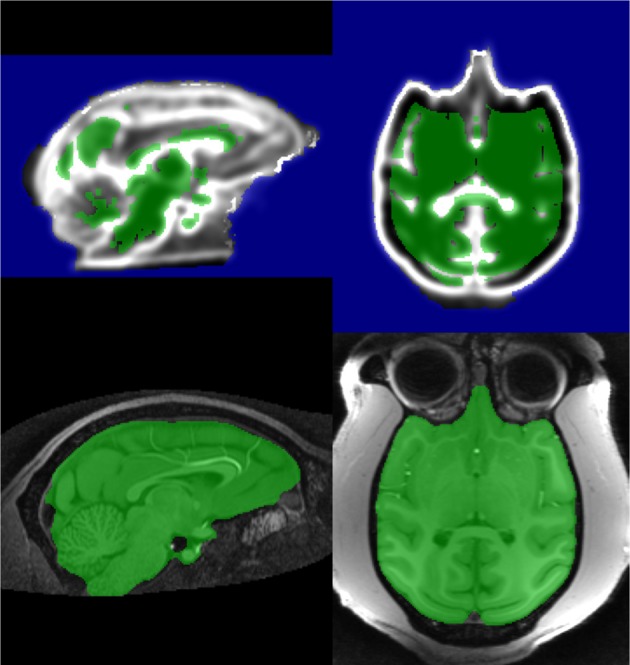
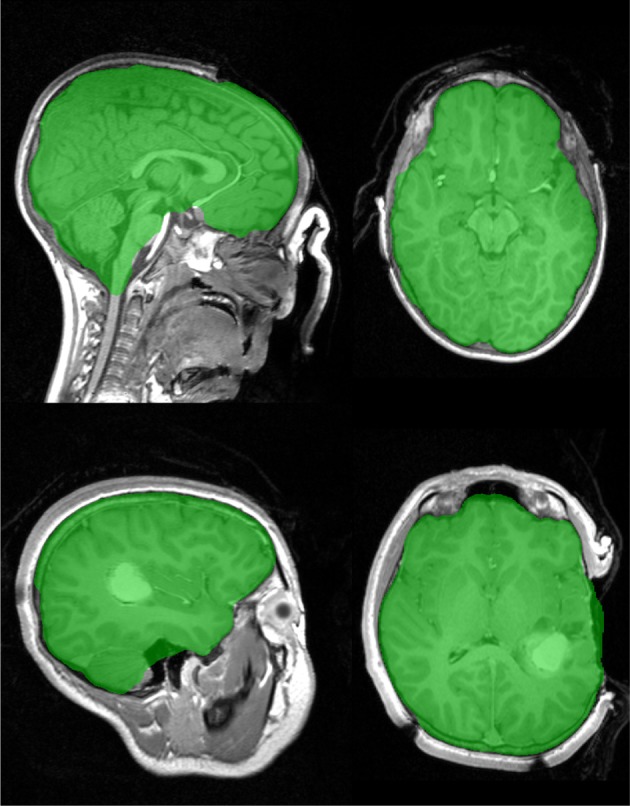
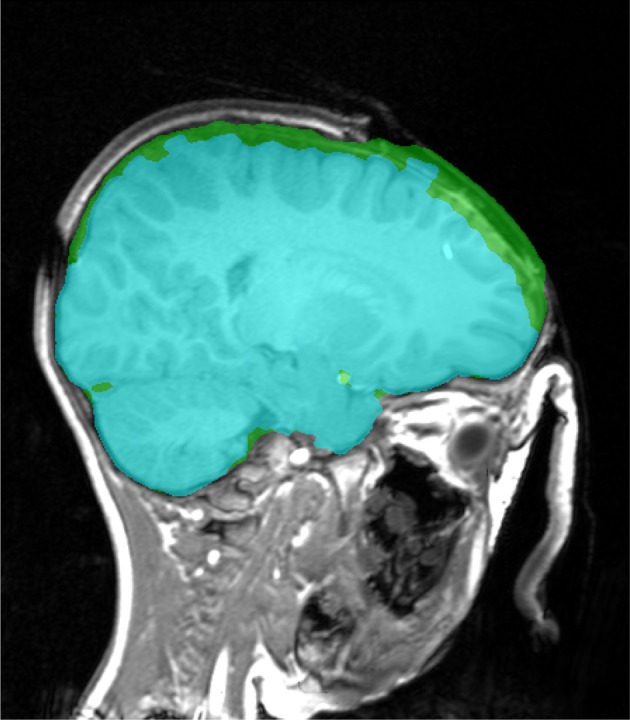
Isolation of the brain from other tissue types in magnetic resonance (MR) images is an important step in many types of neuro-imaging research using both humans and animal subjects. The importance of brain extraction is well appreciated-numerous approaches have been published and the benefits of good extraction methods to subsequent processing are well known. We describe a tool-the marker based watershed scalper (MBWSS)-for isolating the brain in T1-weighted MR images built using filtering and segmentation components from the Insight Toolkit (ITK) framework. The key elements of MBWSS-the watershed transform from markers and aggressive filtering with large kernels-are techniques that have rarely been used in neuroimaging segmentation applications. MBWSS is able to reliably isolate the brain without expensive preprocessing steps, such as registration to an atlas, and is therefore useful as the first stage of processing pipelines. It is an informative example of the level of accuracy achievable without using priors in the form of atlases, shape models or libraries of examples. We validate the MBWSS using a publicly available dataset, a paediatric cohort, an adolescent cohort, intra-surgical scans and demonstrate flexibility of the approach by modifying the method to extract macaque brains.
Keywords: Insight Toolkit; brain extraction; human brain extraction; macaque brain extraction; mathematical morphology; scalping; watershed transform from markers.
Figures
References
-
- Adams R. (1993). Radial decomposition of disks and spheres. CVGIP Graph. Models Image Process. 55, 325–332 10.1006/cgip.1993.1024 - DOI
-
- Beare R. (2008a). Itk source code for parabolic morphology classes. Available online at: https://github.com/richardbeare/parabolicMorphology.git
-
- Beare R. (2008b). Morphology with parabolic structuring elements. Insight J. Available online at: http://hdl.handle.net/1926/1370
-
- Beare R. (2011). Histogram-based thresholding—some missing methods. Insight J. Available online at: http://hdl.handle.net/10380/3279
-
- Beare R. (2013). Source code for MBWSS. Available online at: http://github.com/richardbeare/mbwss
LinkOut - more resources
Full Text Sources
Other Literature Sources
