. 2013 Dec 18;8(12):e84275.
doi: 10.1371/journal.pone.0084275. eCollection 2013.

Persistence of viral reservoirs in multiple tissues after antiretroviral therapy suppression in a macaque RT-SHIV model

Affiliations

Persistence of viral reservoirs in multiple tissues after antiretroviral therapy suppression in a macaque RT-SHIV model

Christopher Kline et al. PLoS One. .

Abstract

Although antiretroviral therapy (ART) can suppress HIV-1 replication sufficiently to eliminate measurable plasma viremia, infected cells remain and ensure viral recrudescence after discontinuation of ART. We used a macaque model of HIV-1/AIDS to evaluate the location of infected cells during ART. Twelve macaques were infected with RT-SHIVmne, a SIV containing HIV-1 reverse transcriptase, conferring sensitivity to non-nucleoside reverse transcriptase inhibitors (NNRTIs). Ten to fourteen weeks post-infection, 6 animals were treated with 3 or 4 antiretroviral drugs for 17-20 weeks; 6 control animals remained untreated. Viral DNA (vDNA) and RNA (vRNA) were measured in peripheral blood mononuclear cells (PBMC) and at necropsy in multiple tissues by quantitative PCR and RT-PCR. The majority of virally infected cells were located in lymphoid tissues with variable levels in the gastrointestinal tract of both treated and untreated animals. Tissue viral DNA levels correlated with week 1 plasma viremia, suggesting that tissues that harbor proviral DNA are established within the first week of infection. PBMC vDNA levels did not correlate with plasma viremia or tissue levels of vDNA. vRNA levels were high in lymphoid and gastrointestinal tissues of the untreated animals; animals on ART had little vRNA expressed in tissues and virus could not be cultured from lymph node resting CD4+ cells after 17-20 weeks on ART, indicating little or no ongoing viral replication. Strategies for eradication of HIV-1 will need to target residual virus in ART suppressed individuals, which may not be accurately reflected by frequencies of infected cells in blood.


Conflict of interest statement

Competing Interests: Co-authors on this study are employed by SAIC-Frederick, Inc. This does not alter the authors' adherence to all PLOS ONE policies on sharing data and materials.

Figures

Figure 1
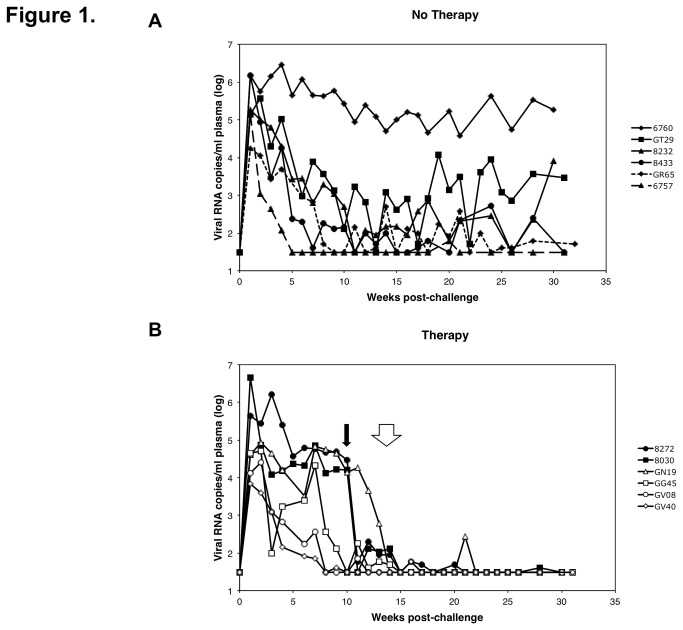
Figure 1. Plasma viremia was measured in all twelve macaques by qRT-PCR of RT-SHIV gag RNA.
Animals were infected at week 0 and were (A) untreated or (B) treated with 3 or 4 antiretroviral drugs. Animals treated with 3 drugs (TFV, FTC, EFV) are denoted by closed symbols and treatment was initiated at week 10, denoted by the solid arrow. The animals treated with 4 drugs (TFV, FTC, EFV, and L-870812) are denoted by open symbols and treatment was initiated at week 13 (GV08 and GN19) or week 14 (GG45 and GV40), denoted by the open arrow. Treatment was continued daily until necropsy (week 30 or 31). The limit of detection of the assay was 30 vRNA copies/ml plasma.
Figure 2
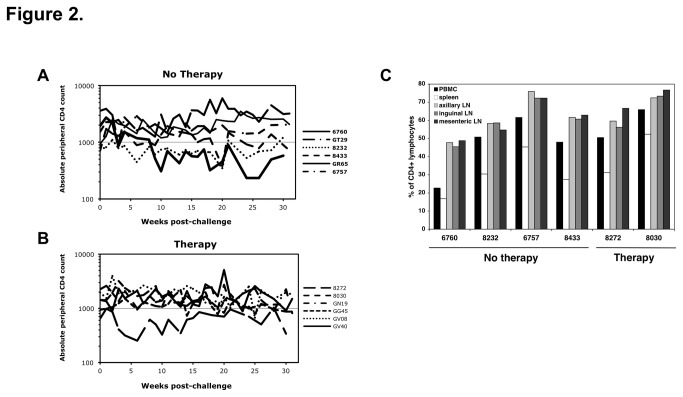
Figure 2. CD4 numbers in PBMC and tissues.
Absolute CD4 counts in the blood of (A) untreated and (B) treated animals were plotted from multiple time points. (C) The percentage of CD4+ lymphocytes in PBMC, spleen and multiple lymph nodes taken at necropsy in 6 animals are shown.
Figure 3
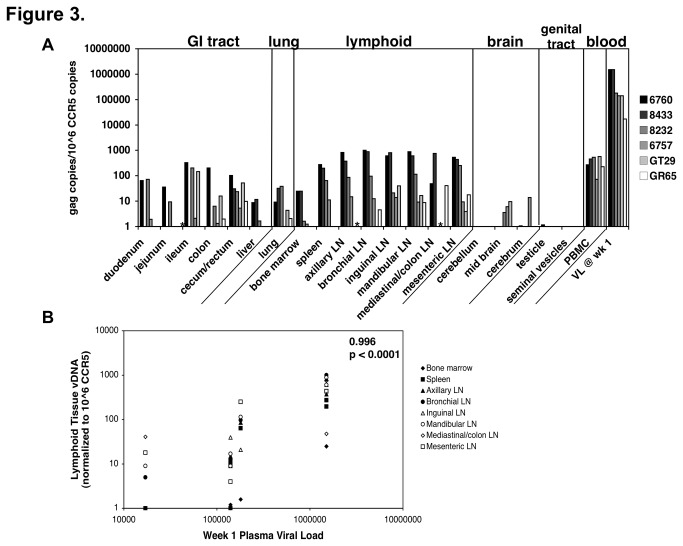
Figure 3. Lymphoid tissue viral DNA at necropsy is correlated with week 1 plasma viremia levels.
(A) The ratio of gag copies per 106 CCR5 copies for each tissue of the untreated RT-SHIV-infected macaques. The average of each qPCR reaction was used for the graph. In addition, the week 1 plasma viral load was included for each animal. Asterisks (*) denote samples that were not collected or in which no significant CCR5 DNA were measured. (B) The amount of gag vDNA detected in each of the lymphoid tissues for each animal was plotted against the week 1 plasma viremia level. Statistics determined a Spearman rank-order correlation of 0.996 with p value of < 0.0001.
Figure 4
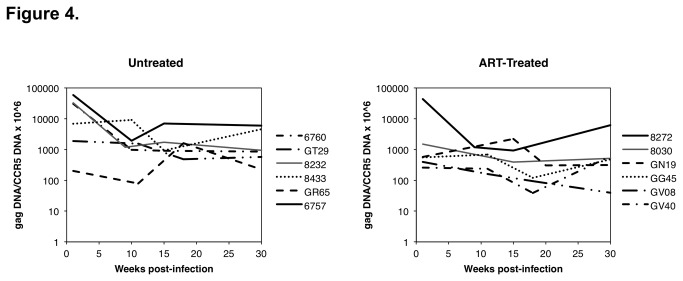
Figure 4. The ratio of RT-SHIV gag DNA copies per 106 macaque CCR5 DNA copies were measured in PBMC isolated at different time points from each of the untreated and treated macaques.
Figure 5
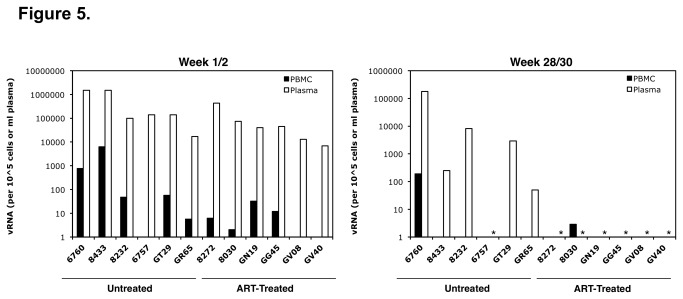
Figure 5. The ratio of RT-SHIV gag RNA copies per 106 macaque CD4 RNA copies were measured in PBMC isolated at week 1 or 2 and 28 or 30 post-infection from each of the untreated and treated macaques (black bars).
The amount of RT-SHIV gag RNA in the plasma is also plotted for each animal at each time point (white bars). Asterisks (*) denote plasma viremia levels below the limit of detection (<30 copies/ml).

References

    1. Chun TW, Davey RT Jr., Engel D, Lane HC, Fauci AS (1999) Re-emergence of HIV after stopping therapy. Nature 401: 874-875. doi: 10.1038/44755. PubMed: 10553903. - DOI - PubMed
    1. García F, Plana M, Vidal C, Cruceta A, O'Brien WA et al. (1999) Dynamics of viral load rebound and immunological changes after stopping effective antiretroviral therapy. AIDS 13: F79-F86. doi: 10.1097/00002030-199907300-00002. PubMed: 10449278. - DOI - PubMed
    1. Harrigan PR, Whaley M, Montaner JS (1999) Rate of HIV-1 RNA rebound upon stopping antiretroviral therapy. AIDS 13: F59-F62. doi: 10.1097/00002030-199905280-00001. PubMed: 10371167. - DOI - PubMed
    1. Neumann AU, Tubiana R, Calvez V, Robert C, Li TS et al. (1999) HIV-1 rebound during interruption of highly active antiretroviral therapy has no deleterious effect on reinitiated treatment. Comet Study Group. AIDS 13: 677-683. doi: 10.1097/00002030-199904160-00008. PubMed: 10397562. - DOI - PubMed
    1. Wong JK, Hezareh M, Günthard HF, Havlir DV, Ignacio CC et al. (1997) Recovery of replication-competent HIV despite prolonged suppression of plasma viremia. Science 278: 1291-1295. doi: 10.1126/science.278.5341.1291. PubMed: 9360926. - DOI - PubMed

Publication types

MeSH terms