


Prevention of allergic airway hyperresponsiveness and remodeling in mice by Astragaliradix antiasthmatic decoction
- PMID: 24367979
- PMCID: PMC3922862
- DOI: 10.1186/1472-6882-13-369
Prevention of allergic airway hyperresponsiveness and remodeling in mice by Astragaliradix antiasthmatic decoction
Abstract
Background: Astragali radix Antiasthmatic Decoction (AAD), a traditional Chinese medication, is found effective in treating allergic diseases and chronic cough. The purpose of this study is to determine whether this medication could suppress allergen-induced airway hyperresponsiveness (AHR) and remodeling in mice, and its possible mechanisms.
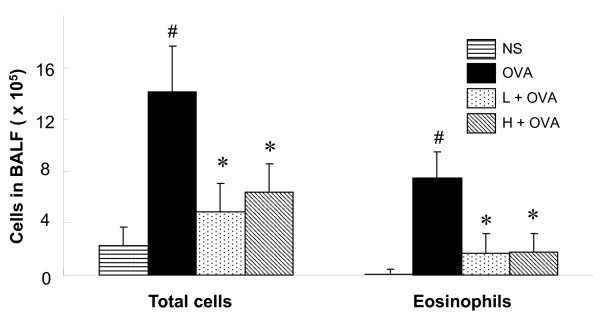
Methods: A mouse model of chronic asthma was used to investigate the effects of AAD on the airway lesions. Mice were sensitized and challenged with ovalbumin (OVA), and the extent of AHR and airway remodeling were characterized. Cells and cytokines in the bronchoalveolar lavage fluid (BALF) were examined.
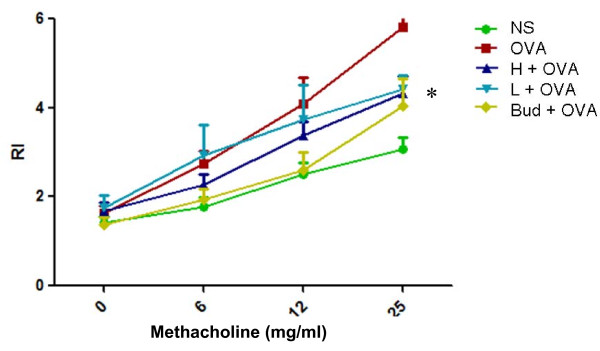
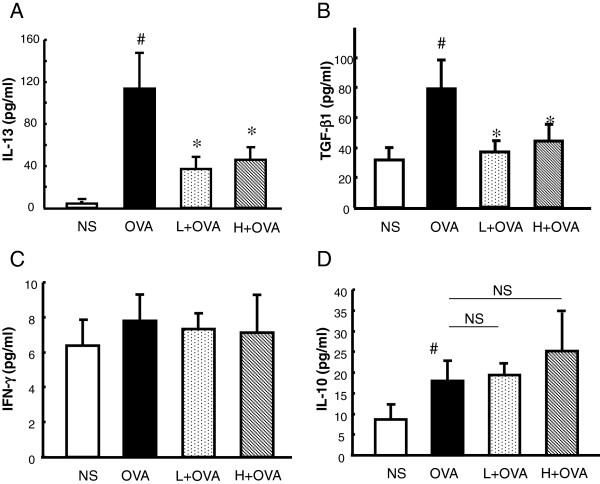
Results: AAD treatment effectively decreased OVA-induced AHR, eosinophilic airway inflammation, and collagen deposition around the airway. It significantly reduced the levels of IL-13 and TGF-β1, but exerted inconsiderable effect on INF-γ and IL-10.
Conclusions: AAD greatly improves the symptoms of allergic airway remodeling probably through inhibition of Th2 cytokines and TGF-β1.
Figures


References
Publication types
MeSH terms
Substances
LinkOut - more resources
Full Text Sources
Other Literature Sources
Medical
