


Mutations in the Complex III Assembly Factor Tetratricopeptide 19 Gene TTC19 Are a Rare Cause of Leigh Syndrome
- PMID: 24368687
- PMCID: PMC4213333
- DOI: 10.1007/8904_2013_282
Mutations in the Complex III Assembly Factor Tetratricopeptide 19 Gene TTC19 Are a Rare Cause of Leigh Syndrome
Abstract
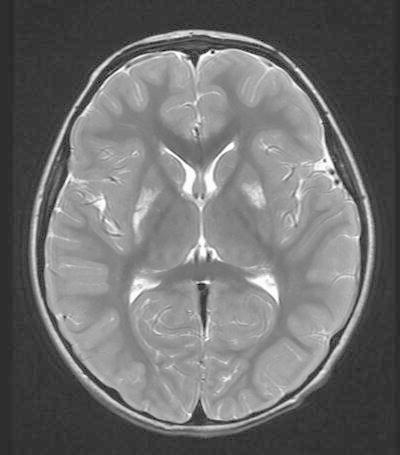
We report a patient with Leigh syndrome shown to have two previously undescribed truncating mutations in the TTC19 gene. Our patient is a 4-year-old boy with global developmental delay, language regression at 13 months, and brain MRI showing T2 high-signal lesions involving the putamen, caudate body, and the brainstem, which appear to be progressing. Molecular testing showed our patient is heterozygous for two previously undescribed mutations in the TTC19 gene, c.577G>A (p.Trp186Stop) and c.964_967delGGCT (p.Gly322MetfsX8), both of which are predicted to cause loss of protein function due to either protein truncation or nonsense-mediated mRNA decay. TTC19 encodes tetratricopeptide 19 (TTC19) and is thought to be a complex III (CIII) assembly factor that is embedded on the inner mitochondrial membrane as part of two high-molecular-weight complexes, one of which coincides with CIII. The initial presentations of previously described patients with TTC19 mutations are heterogeneous and can be from childhood to adulthood. In summary, TTC19 mutations have been shown to affect CIII complex function, which results in a heterogeneous clinical phenotype including Leigh syndrome.
Figures
References
-
- Balasubramaniam S, Oates S, Jolley A et al (2012) Mitochondrial complex III deficiency associated with a homozygous mutation in TTC19, Human Genetics Society of Australasia Meeting, Canberra
LinkOut - more resources
Full Text Sources
Other Literature Sources
