


A systems-pharmacology analysis of herbal medicines used in health improvement treatment: predicting potential new drugs and targets
- PMID: 24369484
- PMCID: PMC3863530
- DOI: 10.1155/2013/938764
A systems-pharmacology analysis of herbal medicines used in health improvement treatment: predicting potential new drugs and targets
Abstract
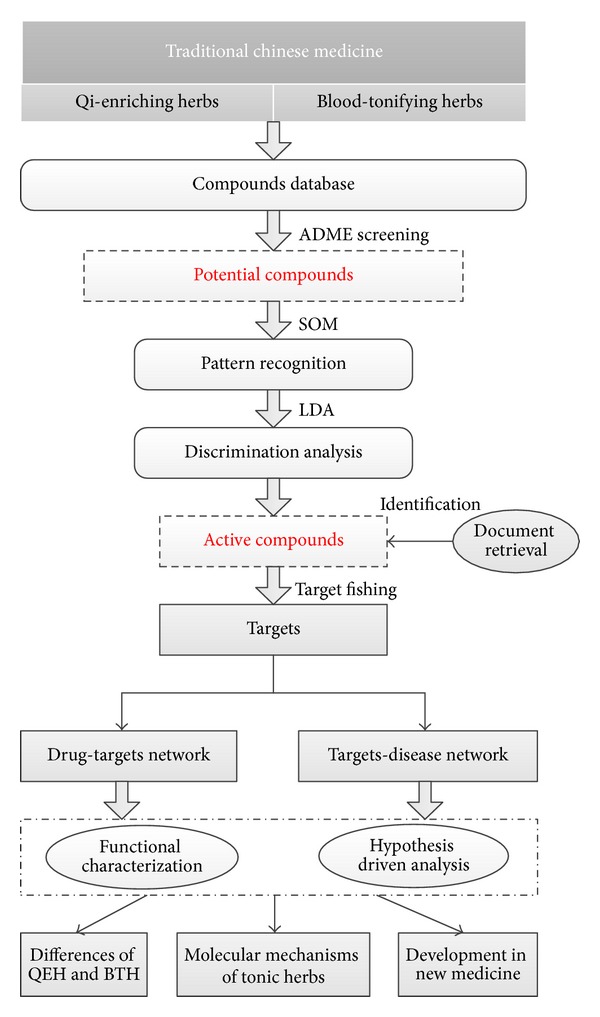
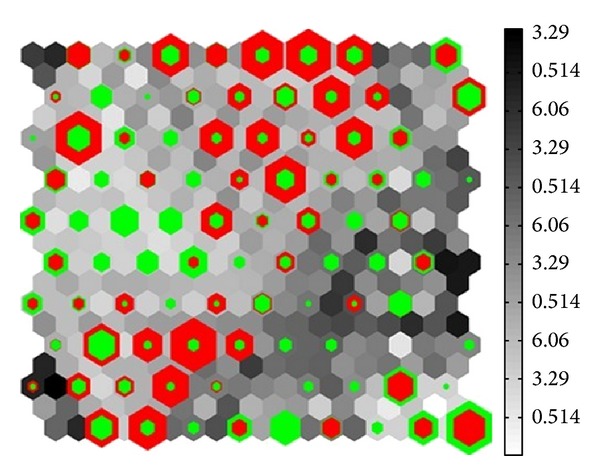
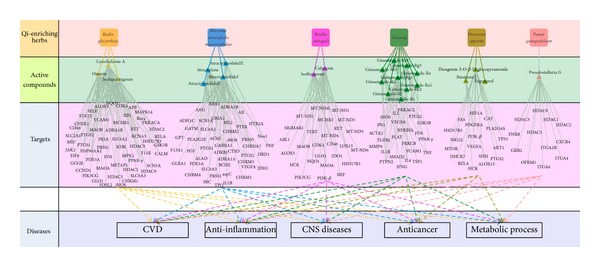
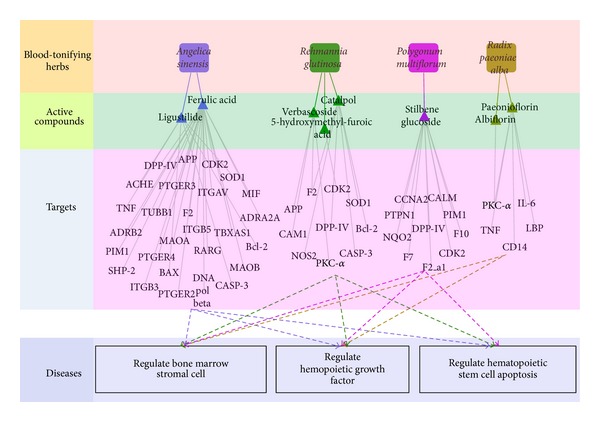
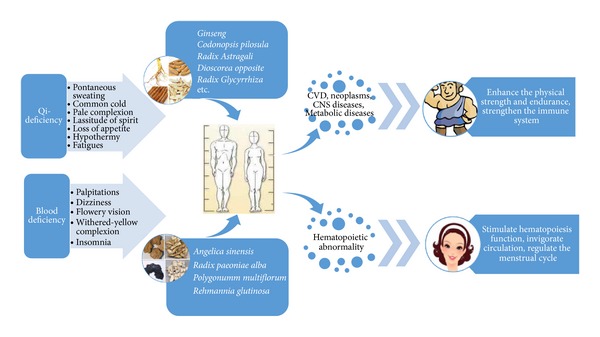
For thousands of years, tonic herbs have been successfully used all around the world to improve health, energy, and vitality. However, their underlying mechanisms of action in molecular/systems levels are still a mystery. In this work, two sets of tonic herbs, so called Qi-enriching herbs (QEH) and Blood-tonifying herbs (BTH) in TCM, were selected to elucidate why they can restore proper balance and harmony inside body, organ and energy system. Firstly, a pattern recognition model based on artificial neural network and discriminant analysis for assessing the molecular difference between QEH and BTH was developed. It is indicated that QEH compounds have high lipophilicity while BTH compounds possess high chemical reactivity. Secondly, a systematic investigation integrating ADME (absorption, distribution, metabolism, and excretion) prediction, target fishing and network analysis was performed and validated on these herbs to obtain the compound-target associations for reconstructing the biologically-meaningful networks. The results suggest QEH enhance physical strength, immune system and normal well-being, acting as adjuvant therapy for chronic disorders while BTH stimulate hematopoiesis function in body. As an emerging approach, the systems pharmacology model might facilitate to understand the mechanisms of action of the tonic herbs, which brings about new development for complementary and alternative medicine.
Figures
References
-
- Lee N-H, Son C-G. Systematic review of randomized controlled trials evaluating the efficacy and safety of ginseng. Journal of Acupuncture and Meridian Studies. 2011;4(2):85–97. - PubMed
-
- Huang G-C, Wu L-S, Chen L-G, Yang L-L, Wang C-C. Immuno-enhancement effects of Huang Qi Liu Yi Tang in a murine model of cyclophosphamide-induced leucopenia. Journal of Ethnopharmacology. 2007;109(2):229–235. - PubMed
-
- Burke GL, Legault C, Anthony M, et al. Soy protein and isoflavone effects on vasomotor symptoms in peri- and postmenopausal women: the soy estrogen alternative study. Menopause. 2003;10(2):147–153. - PubMed
-
- Liang Q-D, Lu X-Q, Ma Z-C, et al. Preliminary study on hematopoietic constituents of si-wu-tang. Zhongguo Zhong Yao Za Zhi. 2004;29(6):546–549. - PubMed
-
- Kim C, Ha H, Kim JS. Induction of growth hormone by the roots of Astragalus membranaceus in pituitary cell culture. Archives of Pharmacal Research. 2003;26(1):34–39. - PubMed
LinkOut - more resources
Full Text Sources
Other Literature Sources
