


The role of astrocytes in the regulation of synaptic plasticity and memory formation
- PMID: 24369508
- PMCID: PMC3867861
- DOI: 10.1155/2013/185463
The role of astrocytes in the regulation of synaptic plasticity and memory formation
Abstract
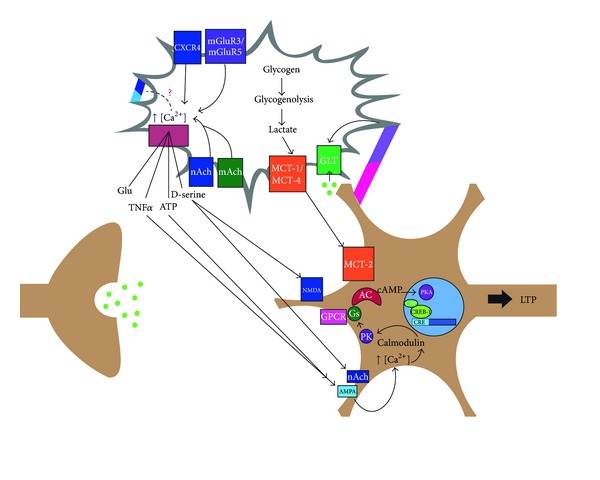
Astrocytes regulate synaptic transmission and play a role in the formation of new memories, long-term potentiation (LTP), and functional synaptic plasticity. Specifically, astroglial release of glutamate, ATP, and cytokines likely alters the survivability and functioning of newly formed connections. Among these pathways, regulation of glutamate appears to be most directly related to the promotion of LTP, which is highly dependent on the synchronization of synaptic receptors through the regulation of excitatory postsynaptic potentials. Moreover, regulation of postsynaptic glutamate receptors, particularly AMPA receptors, is dependent on signaling by ATP synthesized in astrocytes. Finally, cytokine signaling is also implicated in regulating LTP, but is likely most important in plasticity following tissue damage. Despite the role of these signaling factors in regulating LTP and functional plasticity, an integrative model of these factors has not yet been elucidated. In this review, we seek to summarize the current body of evidence on astrocytic mechanisms for regulation of LTP and functional plasticity, and provide an integrative model of the processes.
Figures
References
-
- Martin SJ, Grimwood PD, Morris RGM. Synaptic plasticity and memory: an evaluation of the hypothesis. Annual Review of Neuroscience. 2000;23(1):649–711. - PubMed
-
- Bains JS, Oliet SHR. Glia: they make your memories stick! Trends in Neurosciences. 2007;30(8):417–424. - PubMed
-
- Hamilton NB, Attwell D. Do astrocytes really exocytose neurotransmitters? Nature Reviews. 2010;11(4):227–238. - PubMed
-
- Lalo U, Verkhratsky A, Pankratov Y. Ionotropic ATP receptors in neuronal-glial communication. Seminars in Cell & Developmental Biology. 2011;22(2):220–228. - PubMed
-
- Volterra A, Meldolesi J. Astrocytes, from brain glue to communication elements: the revolution continues. Nature Reviews. 2005;6(8):626–640. - PubMed
Publication types
MeSH terms
Substances
LinkOut - more resources
Full Text Sources
Other Literature Sources
Medical
