


Plantar flexor moment arm and muscle volume predict torque-generating capacity in young men
- PMID: 24371016
- PMCID: PMC3949211
- DOI: 10.1152/japplphysiol.01140.2013
Plantar flexor moment arm and muscle volume predict torque-generating capacity in young men
Abstract
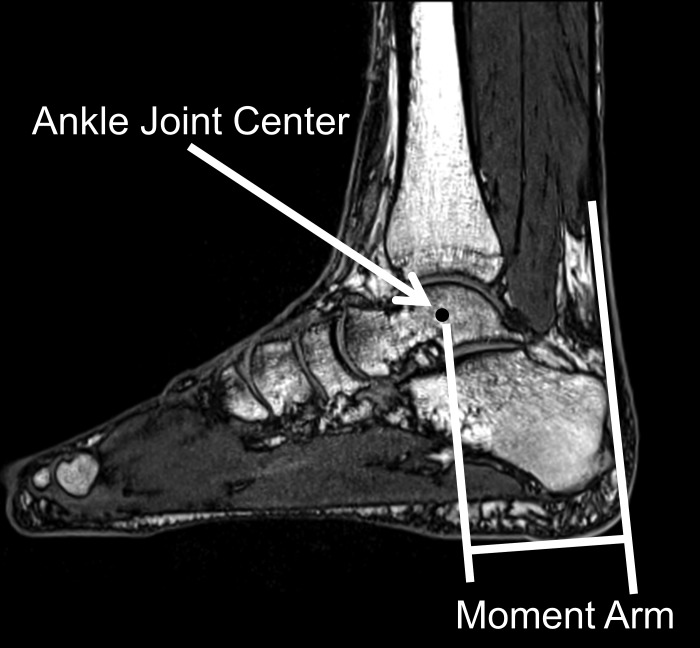
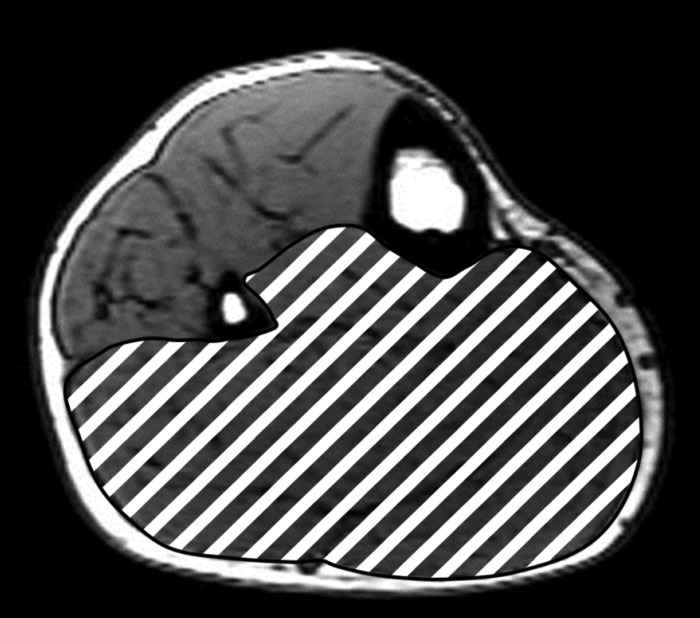
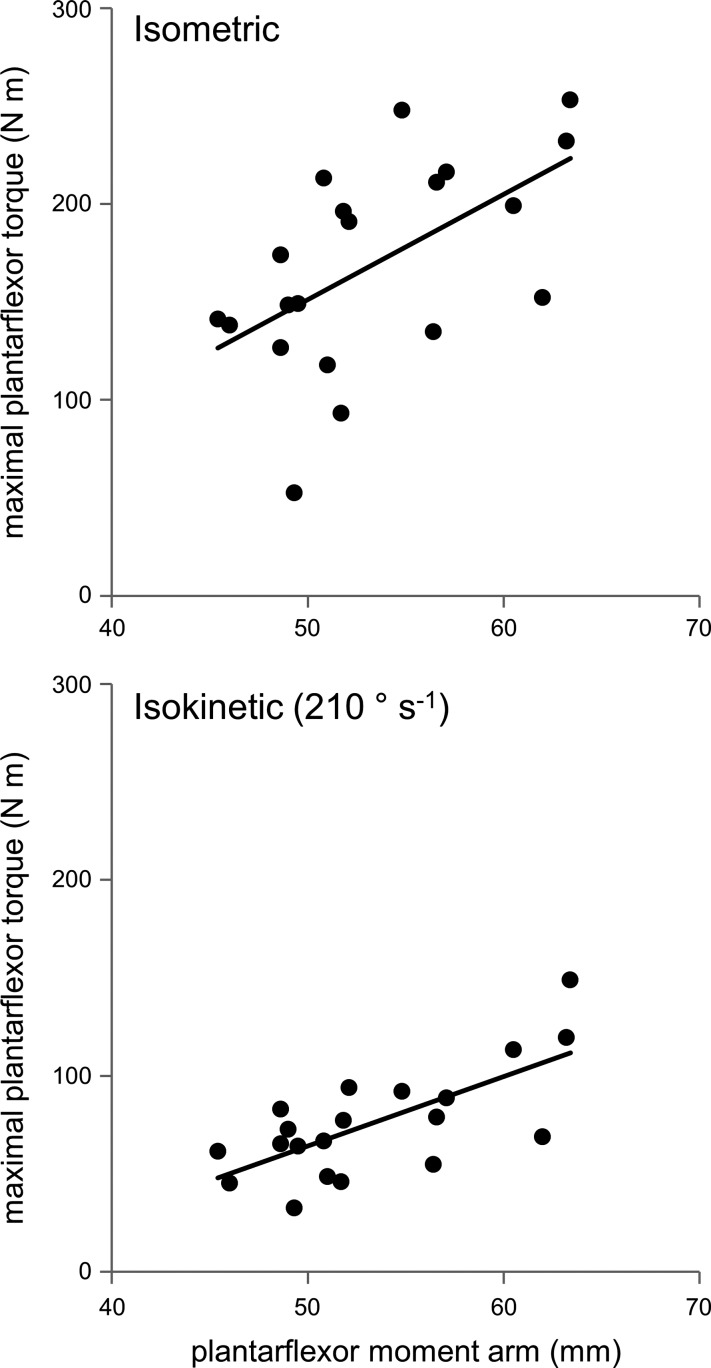
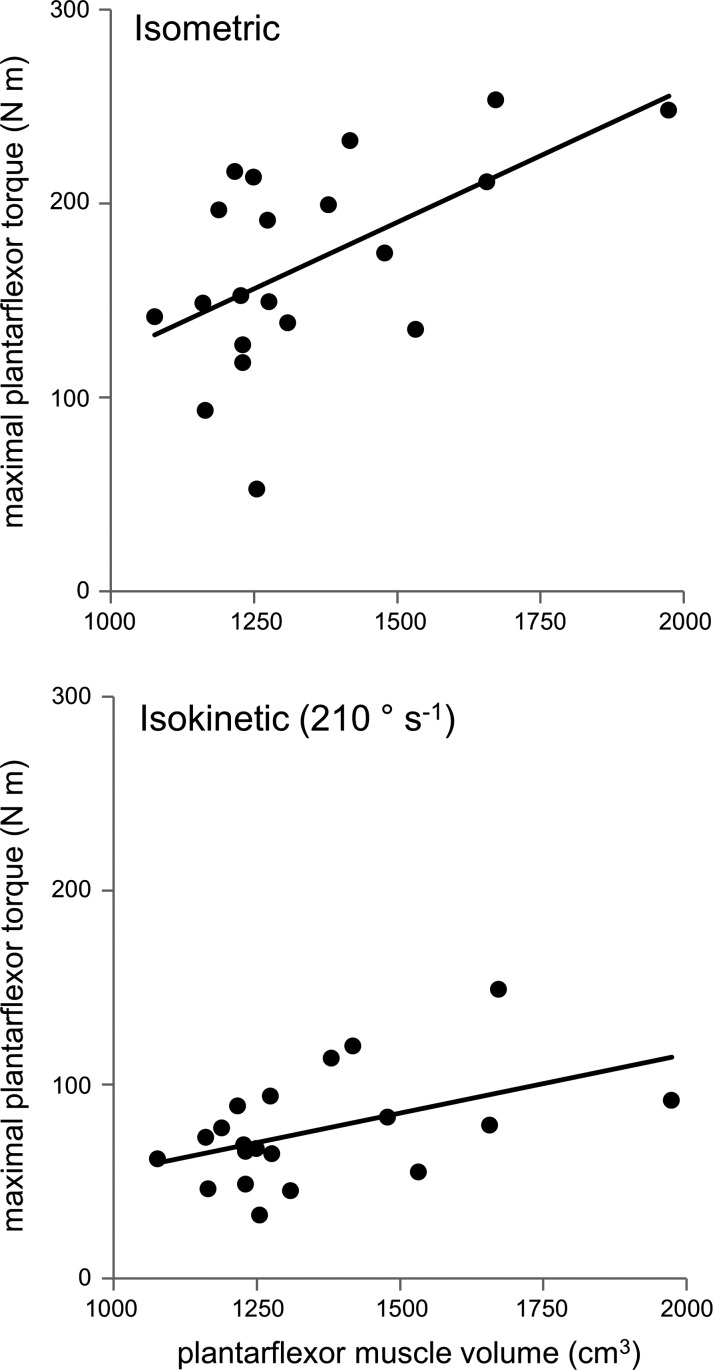
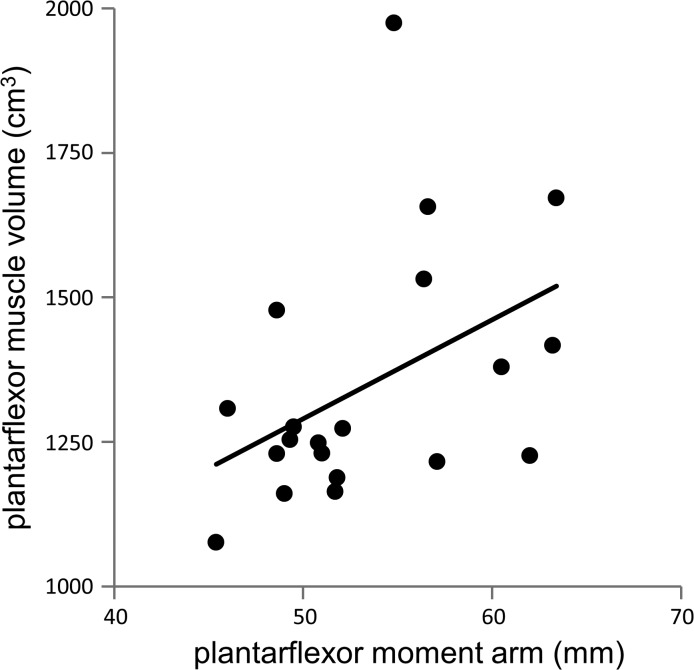
Muscle volume is known to correlate with maximal joint torque in humans, but the role of muscle moment arm in determining maximal torque is less clear. Moderate correlations have been reported between maximal isometric knee extensor torque and knee extensor moment arm, but no such observations have been made for the ankle joint. It has been suggested that smaller muscle moment arms may enhance force generation at high rates of joint rotation, but this has not yet been observed for ankle muscles in vivo. The purpose of the present study was to correlate plantar flexor moment arm and plantar flexor muscle volume with maximal plantar flexor torque measured at different rates of plantar flexion. Magnetic resonance imaging was used to quantify the plantar flexor moment arm and muscle volume of the posterior compartment in 20 healthy young men. Maximal plantar flexor torque was measured isometrically and at three plantar flexion speeds using an isokinetic dynamometer. Plantar flexor torque was significantly correlated with muscle volume (0.222 < R(2) < 0.322) and with muscle moment arm at each speed (0.323 < R(2) < 0.494). While muscle volume was strongly correlated with body mass and stature, moment arm was not. The slope of the torque-moment arm regression line decreased as the rate of joint rotation increased, indicating that subjects with small moment arms experienced smaller reductions in torque at high speeds. The findings of this study suggest that plantar flexor moment arm is a determinant of joint strength that is at least as important as muscle size.
Keywords: force-velocity; joint torque; moment arm; plantar flexors.
Figures
References
-
- Abe T, Fukashiro S, Harada Y, Kawamoto K. Relationship between sprint performance and muscle fascicle length in female sprinters. J Physiol Anthropol Appl Human Sci 20: 141–147, 2001 - PubMed
-
- Abe T, Kumagai K, Brechue WF. Fascicle length of leg muscles is greater in sprinters than distance runners. Med Sci Sports Exerc 32: 1125–1129, 2000 - PubMed
-
- Alexander RM, Jayes AS, Maloiy GMO, Wathuta EM. Allometry of the leg muscles of mammals. J Zool 194: 539–552, 1981
-
- Arampatzis A, Stafilidis S, DeMonte G, Karamanidis K, Morey-Klapsing G, Brüggemann GP. Strain and elongation of the human gastrocnemius tendon and aponeurosis during maximal plantarflexion effort. J Biomech 38: 833–841, 2005 - PubMed
MeSH terms
LinkOut - more resources
Full Text Sources
Other Literature Sources
Medical
