


Revolutionizing orthopaedic biomaterials: The potential of biodegradable and bioresorbable magnesium-based materials for functional tissue engineering
- PMID: 24373510
- PMCID: PMC4144980
- DOI: 10.1016/j.jbiomech.2013.12.003
Revolutionizing orthopaedic biomaterials: The potential of biodegradable and bioresorbable magnesium-based materials for functional tissue engineering
Abstract
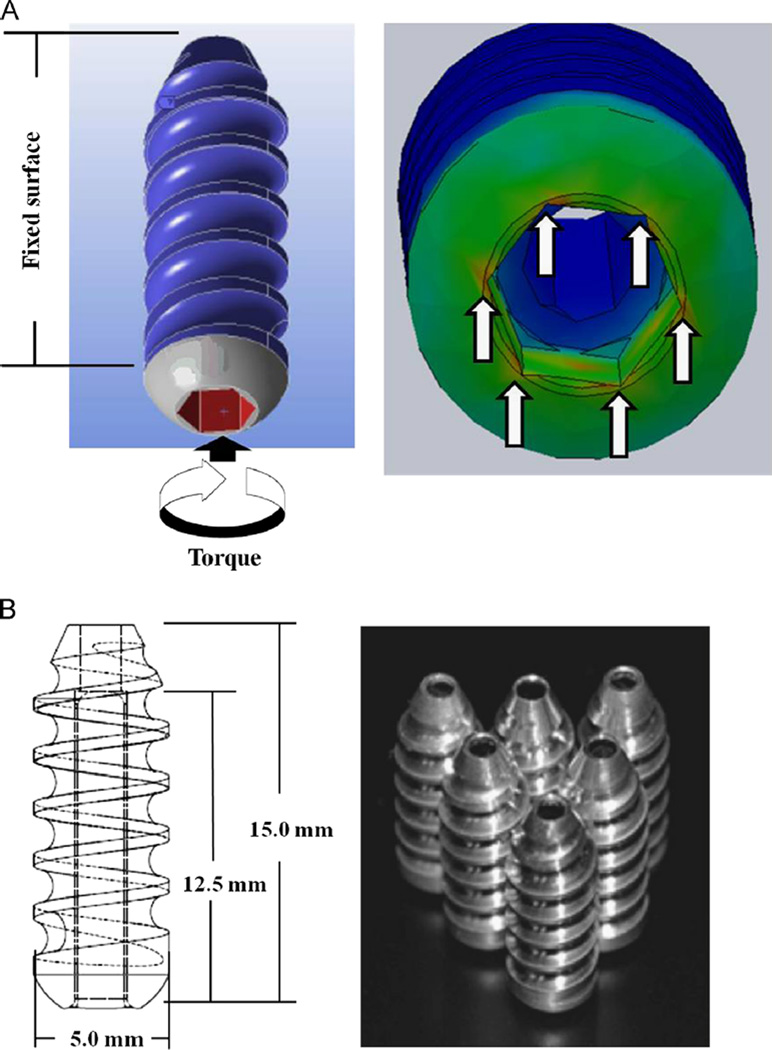
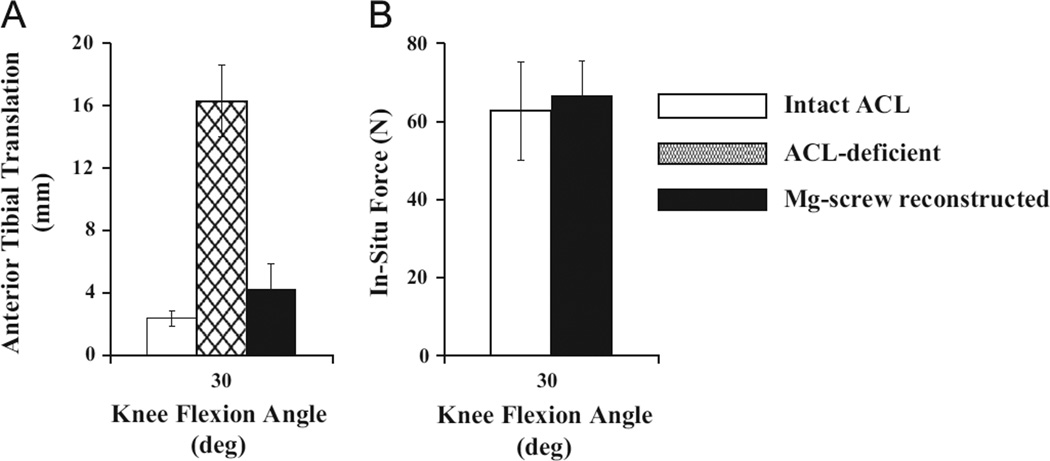
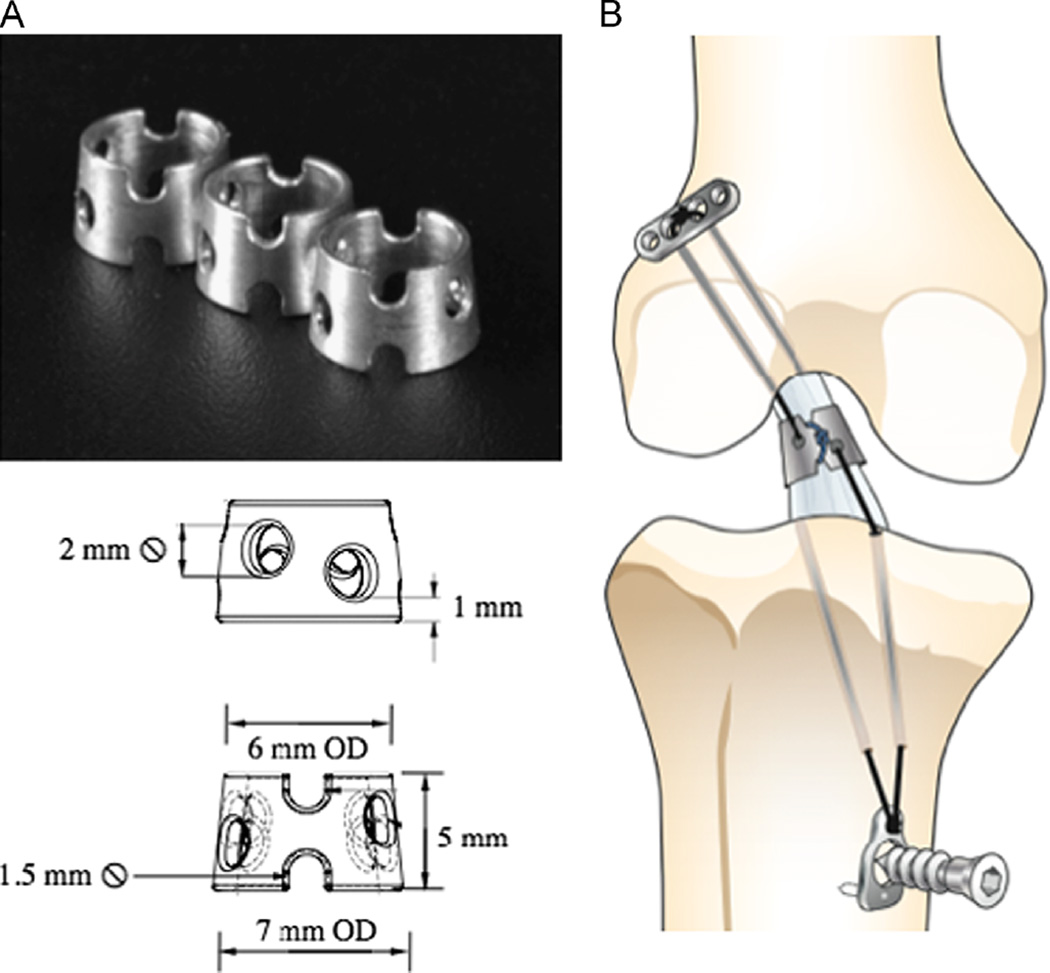
In recent years, there has been a surge of interest in magnesium (Mg) and its alloys as biomaterials for orthopaedic applications, as they possess desirable mechanical properties, good biocompatibility, and biodegradability. Also shown to be osteoinductive, Mg-based materials could be particularly advantageous in functional tissue engineering to improve healing and serve as scaffolds for delivery of drugs, cells, and cytokines. In this paper, we will present two examples of Mg-based orthopaedic devices: an interference screw to accelerate ACL graft healing and a ring to aid in the healing of an injured ACL. In vitro tests using a robotic/UFS testing system showed that both devices could restore function of the goat stifle joint. Under a 67-N anterior tibial load, both the ACL graft fixed with the Mg-based interference screw and the Mg-based ring-repaired ACL could restore anterior tibial translation (ATT) to within 2mm and 5mm, respectively, of the intact joint at 30°, 60°, and 90° of flexion. In-situ forces in the replacement graft and Mg-based ring-repaired ACL were also similar to those of the intact ACL. Further, early in vivo data using the Mg-based interference screw showed that after 12 weeks, it was non-toxic and the joint stability and graft function reached similar levels as published data. Following these positive results, we will move forward in incorporating bioactive molecules and ECM bioscaffolds to these Mg-based biomaterials to test their potential for functional tissue engineering of musculoskeletal and other tissues.
Keywords: Biomaterials; Functional tissue engineering; Magnesium; Mg alloys; Orthopaedic devices.
© 2013 Published by Elsevier Ltd.
Conflict of interest statement
All authors confirm they have no financial or other conflicts of interest relevant to this manuscript.
Figures
References
-
- Abramowitch SD, Papageorgiou CD, Withrow JD, Gilbert TW, Woo SL-Y. The effect of initial graft tension on the biomechanical properties of a healing ACL replacement graft: a study in goats. J. Orthop. Res. 2003;21:708–715. - PubMed
-
- Agung M, Ochi M, Yanada S, Adachi N, Izuta Y, Yamasaki T, Toda K. Mobilization of bone marrow-derived mesenchymal stem cells into the injured tissues after intraarticular injection and their contribution to tissue regeneration. Knee Surg., Sports Traumatol., Arthrosc. 2006;14:1307–1314. - PubMed
-
- Beaty JH. Knee and leg: soft tissue trauma. In: EA A, editor. OKU orthopaedic knowledge update. first ed. Vol. 442. Rosemont, IL: American Academy of Orthopaedic Surgeons; 1999. p. xix.
-
- Butler DL, Goldstein SA, Guilak F. Functional tissue engineering: the role of biomechanics. J. Biomech. Eng.-Trans. ASME. 2000;122:570–575. - PubMed
-
- Cao JD, Martens P, Laws KJ, Boughton P, Ferry M. Quantitative in vitro assessment of Mg65Zn30Ca5 degradation and its effect on cell viability. J. Biomed. Mater. Res. B. 2013;101B:43–49. - PubMed
Publication types
MeSH terms
Substances
Grants and funding
LinkOut - more resources
Full Text Sources
Other Literature Sources
