


Implementation of microfluidic sandwich ELISA for superior detection of plant pathogens
- PMID: 24376668
- PMCID: PMC3871650
- DOI: 10.1371/journal.pone.0083231
Implementation of microfluidic sandwich ELISA for superior detection of plant pathogens
Abstract
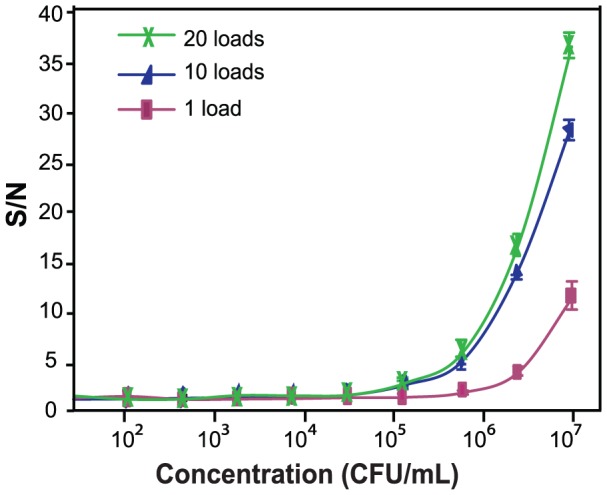
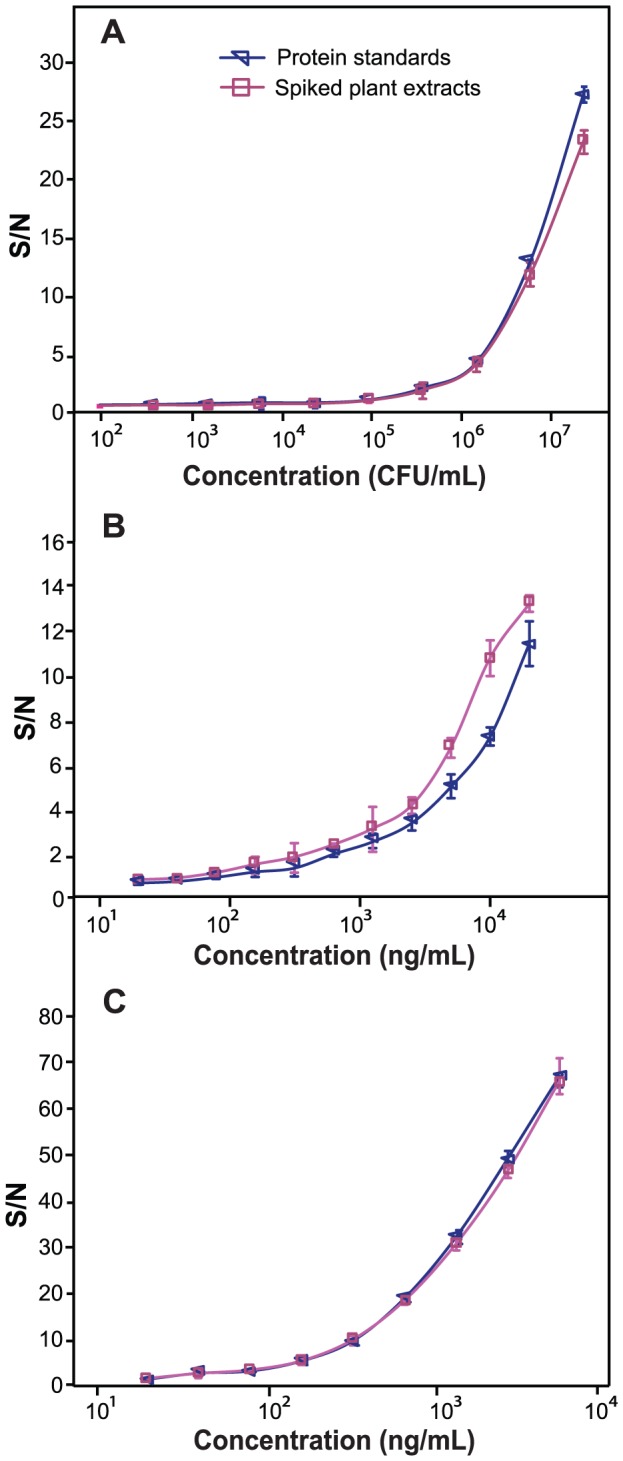
Rapid and economical screening of plant pathogens is a high-priority need in the seed industry. Crop quality control and disease surveillance demand early and accurate detection in addition to robustness, scalability, and cost efficiency typically required for selective breeding and certification programs. Compared to conventional bench-top detection techniques routinely employed, a microfluidic-based approach offers unique benefits to address these needs simultaneously. To our knowledge, this work reports the first attempt to perform microfluidic sandwich ELISA for Acidovorax citrulli (Ac), watermelon silver mottle virus (WSMoV), and melon yellow spot virus (MYSV) screening. The immunoassay occurs on the surface of a reaction chamber represented by a microfluidic channel. The capillary force within the microchannel draws a reagent into the reaction chamber as well as facilitates assay incubation. Because the underlying pad automatically absorbs excess fluid, the only operation required is sequential loading of buffers/reagents. Buffer selection, antibody concentrations, and sample loading scheme were optimized for each pathogen. Assay optimization reveals that the 20-folds lower sample volume demanded by the microchannel structure outweighs the 2- to 4-folds higher antibody concentrations required, resulting in overall 5-10 folds of reagent savings. In addition to cutting the assay time by more than 50%, the new platform offers 65% cost savings from less reagent consumption and labor cost. Our study also shows 12.5-, 2-, and 4-fold improvement in assay sensitivity for Ac, WSMoV, and MYSV, respectively. Practical feasibility is demonstrated using 19 real plant samples. Given a standard 96-well plate format, the developed assay is compatible with commercial fluorescent plate readers and readily amendable to robotic liquid handling systems for completely hand-free assay automation.
Conflict of interest statement
Figures
References
-
- International Seed Federation website. Available: http://www.worldseed.org/isf/seed_statistics.html. Accessed 2013 May 28.
-
- Bangkok Post website. Available: http://www.bangkokpost.com/print/212164/. Accessed 2013 May 28.
-
- Strange RN, Scott PR (2005) Plant disease: A threat to global food security. Annu Rev Phytopathol 43: 83–116. - PubMed
-
- Federation of American Scientists website. Available: www.fas.org. Accessed 2013 June 3.
-
- Gitaitis R, Walcott R (2007) The epidemiology and management of seedborne bacterial diseases. Annu Rev Phytopathol 45: 371–397. - PubMed
MeSH terms
Substances
LinkOut - more resources
Full Text Sources
Other Literature Sources
