. 2013 Dec 23;8(12):e84442.
doi: 10.1371/journal.pone.0084442. eCollection 2013.

Increasing brain protein O-GlcNAc-ylation mitigates breathing defects and mortality of Tau.P301L mice

Affiliations

Increasing brain protein O-GlcNAc-ylation mitigates breathing defects and mortality of Tau.P301L mice

Peter Borghgraef et al. PLoS One. .

Abstract

The microtubule associated protein tau causes primary and secondary tauopathies by unknown molecular mechanisms. Post-translational O-GlcNAc-ylation of brain proteins was demonstrated here to be beneficial for Tau.P301L mice by pharmacological inhibition of O-GlcNAc-ase. Chronic treatment of ageing Tau.P301L mice mitigated their loss in body-weight and improved their motor deficits, while the survival was 3-fold higher at the pre-fixed study endpoint at age 9.5 months. Moreover, O-GlcNAc-ase inhibition significantly improved the breathing parameters of Tau.P301L mice, which underpinned pharmacologically the close correlation of mortality and upper-airway defects. O-GlcNAc-ylation of brain proteins increased rapidly and stably by systemic inhibition of O-GlcNAc-ase. Conversely, biochemical evidence for protein Tau.P301L to become O-GlcNAc-ylated was not obtained, nor was its phosphorylation consistently or markedly affected. We conclude that increasing O-GlcNAc-ylation of brain proteins improved the clinical condition and prolonged the survival of ageing Tau.P301L mice, but not by direct biochemical action on protein tau. The pharmacological effect is proposed to be located downstream in the pathological cascade initiated by protein Tau.P301L, opening novel venues for our understanding, and eventually treating the neurodegeneration mediated by protein tau.


Conflict of interest statement

Competing Interests: The authors have the following interests: two co-authors are employees of Janssen Research Foundation. This does not alter the authors' adherence to all the PLOS ONE policies on sharing data and materials.

Figures

Figure 1
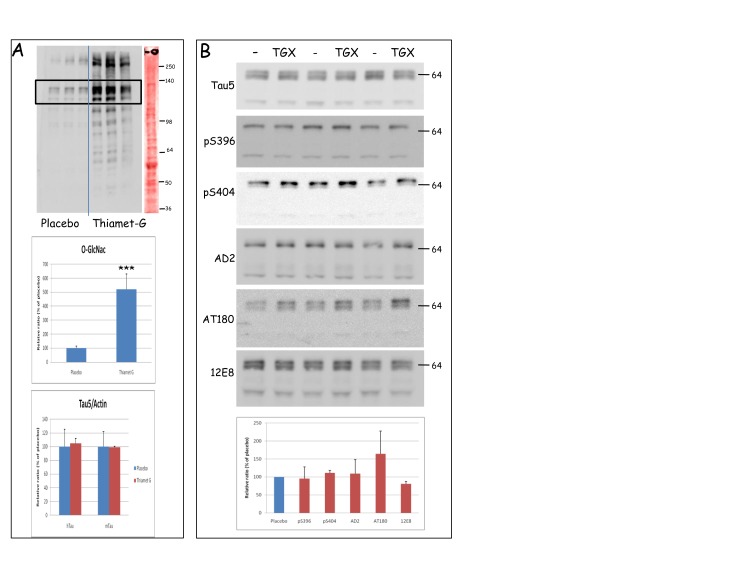
Figure 1. Thiamet-G increased O-GlcNAc-ylation of brain proteins in Tau.P301L mice.
A. The upper panel is a representative western blot with antibody CTD110.6 of total forebrain protein extracts from 3 untreated and 3 Thiamet-G treated Tau.P301L mice. The utmost right lane is a representative total protein stain with Ponceau red of one of the extracts. Quantification of the major O-GlcNAc-ylated proteins of unknown identity (120-140 kDa, boxed in the top panel) demonstrated the 5-fold increase in O-GlcNAc-ylation (middle panel) without affecting total levels of human transgenic Tau.P301L protein or mouse endogenous protein tau (denoted hTau and mTau in bottom panel). B. Biochemical analysis by western blotting of total protein tau (Tau5) and its phosphorylated isoforms specified or denoted by the antibody acronym (captions on the left, details in Table 1). Total forebrain homogenates from Tau.P301L mice, untreated (lanes marked "-") or Thiamet-G treated (lanes denoted TGX) analyzed by western blotting with the antibodies indicated. Representative western blots are shown. Bottom panel: quantitative data (mean±SEM) from all mice (placebo n=13, Thiamet-G n=13) .
Figure 2
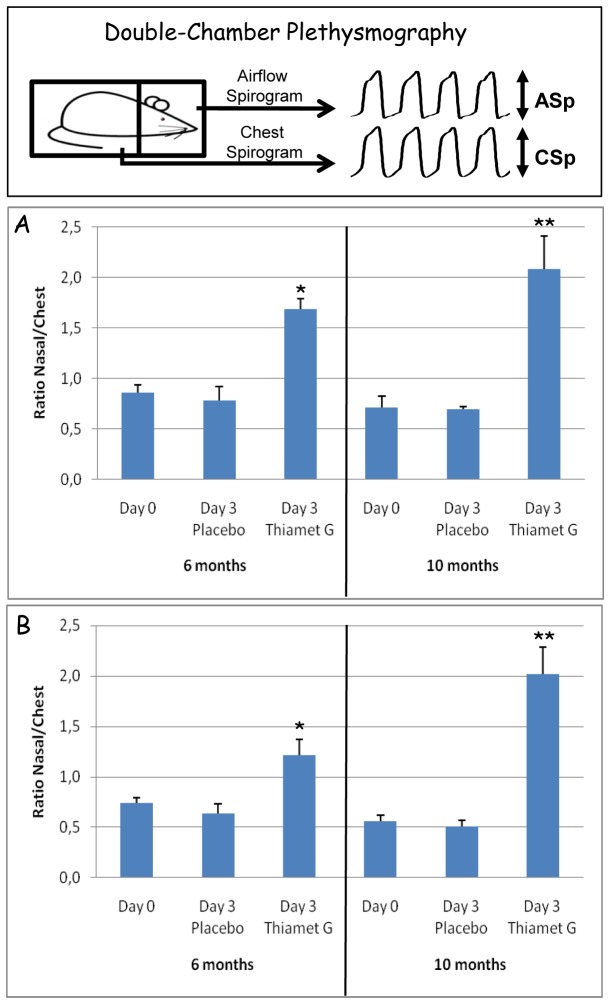
Figure 2. Thiamet-G rescued upper-airway breathing defects of Tau.P301L mice.
Dual-chamber plethysmography, schematically represented in the upper panel, was performed as described [25,26]. Treatment of Tau.P301L mice for 3 days with Thiamet-G in the drinking water (2.5 mg/ml) in the home-cage, significantly improved their breathing deficit in normocapnia (panel A) and in hypercapnia (panel B). Of note, the improved breathing efficacy was nearly normalized to that of age-matched wild-type mice (see text for details). Also note that the positive effect was most significant for older Tau.P301L mice. Statistical analysis by ANOVA: *p<0.05, **p<0.01.
Figure 3
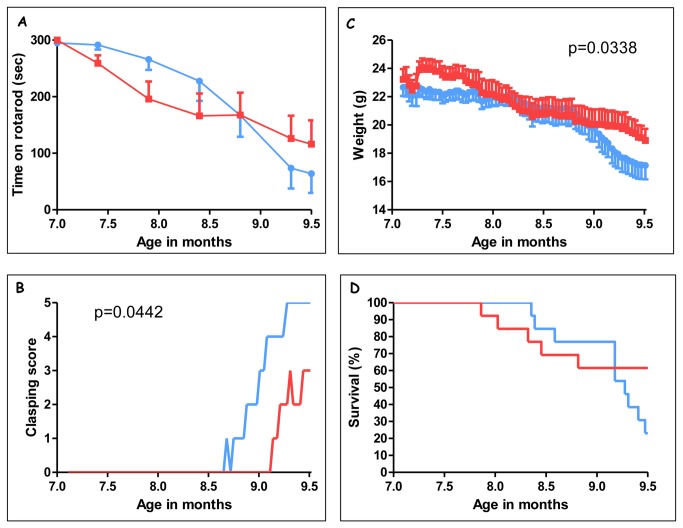
Figure 3. Chronic treatment with Thiamet-G improved clinical parameters of Tau.P301L mice.
Female Tau.P301L mice (n=13, age 7.2 months at start) were given access to normal drinking water without (placebo, blue symbols and lines ) or with Thiamet-G (2.5 mg/ml, red symbols and lines) for a total duration of 2.5 months. Mice were monitored by automated accelerating rotarod every 2 weeks (panel A) and daily for clasping (panel B) and body-weight (panel C). Panel D: Kaplan-Meier curves of the two cohorts of Tau.P301L mice (n=13 each). At the predefined endpoint of the study (2.5 months treatment) surviving Tau.P301L mice (n=3/13 for placebo, n=8/13 for Thiamet-G) were sacrificed (see text for details). The endpoint was defined at the start of the experiment to coincide with the median survival age (50% mortality) of Tau.P301L mice in our breeding colony (Fig S2; see text for details) [22-26].
Figure 4
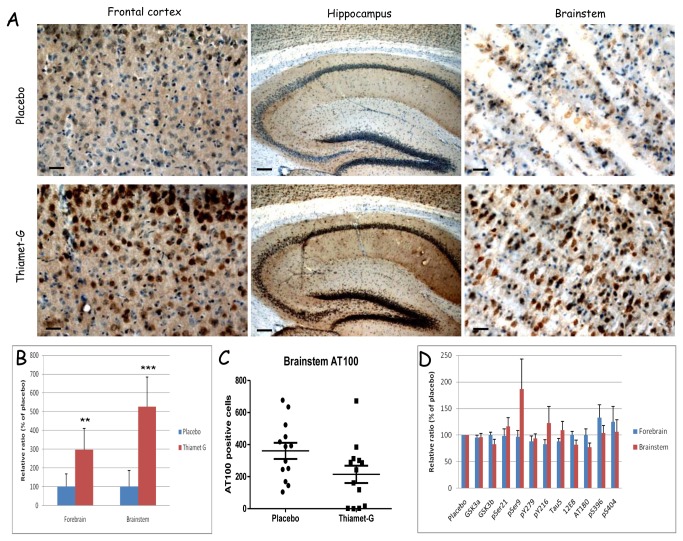
Figure 4. Immunohistochemistry and biochemistry of Tau.P301L mice chronically treated with Thiamet-G.
A. Immunohistochemistry (antibody CTD110.6) demonstrated increased O-GlcNAc-ylation in brain regions specified in the captions of Thiamet-G treated Tau.P301L mice (lower panels) versus placebo treated Tau.P301L mice (upper panels). Scalebars: 100 µm and 200 µm in middle panels. B. Quantification of western blotting with CTD110.6 antibody of total protein extracts from forebrain and brainstem of placebo and Thiamet-G treated Tau.P301L mice (** p<0.01,*** p<0.001). C. Quantification of AT100 positive neurons in brainstem of placebo and Thiamet-G treated Tau.P301L mice demonstrating less affected neurons after treatment with Thiamet-G. D. Quantitative data from western blots of forebrain and brainstem extracts from chronically Thiamet-G treated Tau.P301L mice relative to placebo treated Tau.P301L mice (mean±SEM, n=13 each).
Figure 5
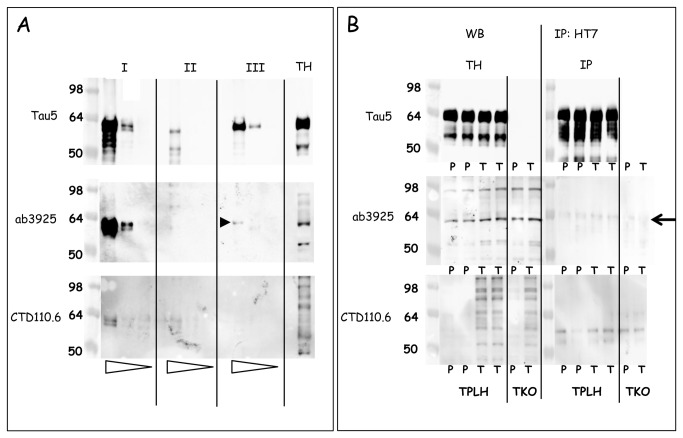
Figure 5. Biochemical analysis demonstrating that protein tau is not O-GlcNAc-ylated in mouse brain.
A. Western blotting with antibodies Tau5, ab3925 and CTD110.6 of (I) recombinant Tau O-GlcNAc-ylated in vitro with OGT [21]; (II) human tau and OGT co-expressed in E.Coli [10,11]; (III) recombinant tau441. Samples were loaded in 10-fold serial dilutions indicated by the open triangles underneath the lanes. A sample of total brain extract is included (denoted TH). The black arrowhead denotes the cross-reaction of ab3925 with recombinant protein tau, discussed in the text. B. Immunoprecipitation of protein tau with antibody HT7 from brain extracts of Tau.P301L and from Tau.KO mice, either untreated (lanes marked P) or treated with Thiamet-G (lanes marked T). The arrow denotes the 64 kDa protein that is detected with ab3925 in all mice, including Tau.KO mice, as discussed in the text.

References

    1. Golks A, Guerini D (2008) The O-linked N-acetylglucosamine modification in cellular signaling and the immune system. EMBO Rep 9: 748-753. doi: 10.1038/embor.2008.129. PubMed: 18617890. - DOI - PMC - PubMed
    1. Davies GJ, Martinez-Fleites C (2010) The O-GlcNAc modification: three-dimensional structure, enzymology and the development of selective inhibitors to probe disease. Biochem Soc Trans 38: 1179-1188. doi: 10.1042/BST0381179. PubMed: 20863281. - DOI - PubMed
    1. Martinez-Fleites C, He Y, Davies GJ (2010) Structural analyses of enzymes involved in the O-GlcNAc modification. Biochim Biophys Acta. 1800: 122-133. doi: 10.1016/j.bbagen.2009.07.019. PubMed: 19647042. - DOI - PubMed
    1. Teo CF, Ingale S, Wolfert MA, Elsayed GA, Nöt LG et al. (2010) Glycopeptide-specific monoclonal antibodies suggest new roles for O-GlcNAc. Nat Chem Biol 6: 338-343. PubMed: 20305658. - PMC - PubMed
    1. Hart GW, Slawson C, Ramirez-Correa G, Lagerlof O (2011) Cross-talk between O-GlcNAc-ylation and phosphorylation: roles in signaling, transcription, and chronic Disease. Annual Rev Biochem 80:6: 1–6.34. - PMC - PubMed

Publication types

MeSH terms

LinkOut - more resources