Comparative Study
. 2013 Dec 23;8(12):e84661.
doi: 10.1371/journal.pone.0084661. eCollection 2013.

Comparative proteomics analysis of engineered Saccharomyces cerevisiae with enhanced biofuel precursor production

Affiliations
Comparative Study

Comparative proteomics analysis of engineered Saccharomyces cerevisiae with enhanced biofuel precursor production

Xiaoling Tang et al. PLoS One. .

Abstract

The yeast Saccharomyces cerevisiae was metabolically modified for enhanced biofuel precursor production by knocking out genes encoding mitochondrial isocitrate dehydrogenase and over-expression of a heterologous ATP-citrate lyase. A comparative iTRAQ-coupled 2D LC-MS/MS analysis was performed to obtain a global overview of ubiquitous protein expression changes in S. cerevisiae engineered strains. More than 300 proteins were identified. Among these proteins, 37 were found differentially expressed in engineered strains and they were classified into specific categories based on their enzyme functions. Most of the proteins involved in glycolytic and pyruvate branch-point pathways were found to be up-regulated and the proteins involved in respiration and glyoxylate pathway were however found to be down-regulated in engineered strains. Moreover, the metabolic modification of S. cerevisiae cells resulted in a number of up-regulated proteins involved in stress response and differentially expressed proteins involved in amino acid metabolism and protein biosynthesis pathways. These LC-MS/MS based proteomics analysis results not only offered extensive information in identifying potential protein-protein interactions, signal pathways and ubiquitous cellular changes elicited by the engineered pathways, but also provided a meaningful biological information platform serving further modification of yeast cells for enhanced biofuel production.


Conflict of interest statement

Competing Interests: Co-author Wei Ning Chen is a PLOS ONE Editorial Board member. This does not alter the authors' adherence to all the PLOS ONE policies on sharing data and materials.

Figures

Figure 1
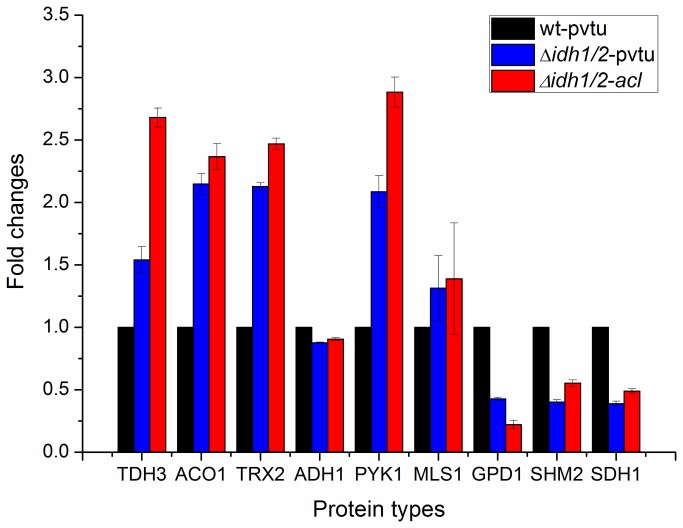
Figure 1. Real-time RT-PCR analysis of mRNA levels of selected differentially expressed proteins among wt-pvtu, ∆idh1/2-pvtu and ∆idh1/2-acl strains.
Three independent experiments were carried out. The mRNA levels in wt-pvtu strain were taken as controls (100%) and mRNA levels in ∆idh1/2-pvtu and ∆idh1/2-acl strains were being ratio to that in the wt-pvtu strain.
Figure 2
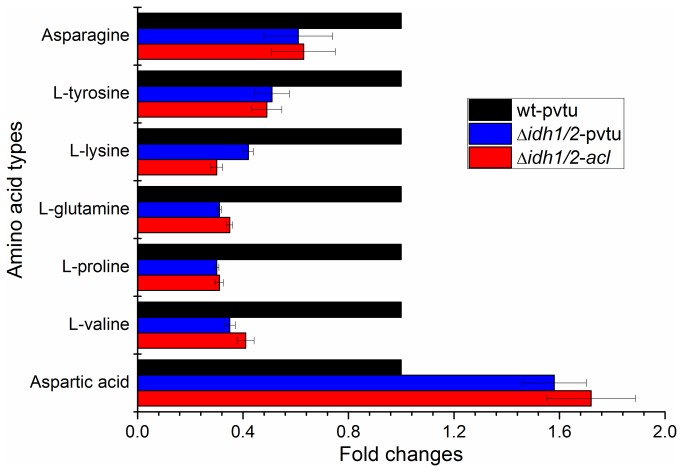
Figure 2. Differential production levels of intracellular amino acids among wt-pvtu, ∆idh1/2-pvtu and ∆idh1/2-acl strains.
Three independent experiments were carried out. The amino acid levels in wt-pvtu strain were taken as controls and the amino acid levels in ∆idh1/2-pvtu and ∆idh1/2-acl strains were calculated accordingly.
Figure 3
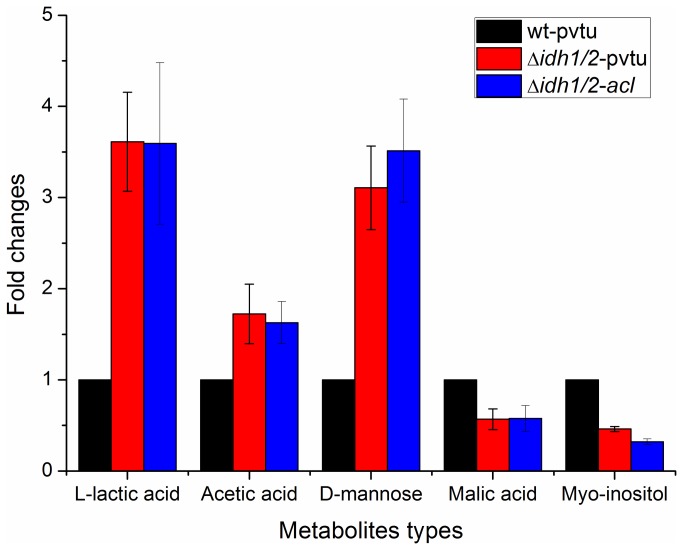
Figure 3. Differential production levels of intracellular metabolites among wt-pvtu, ∆idh1/2-pvtu and ∆idh1/2-acl strains.
Three independent experiments were carried out. The metabolites production levels in wt-pvtu strain were taken as controls and the metabolites production levels in ∆idh1/2-pvtu and ∆idh1/2-acl strains were calculated accordingly.
Figure 4
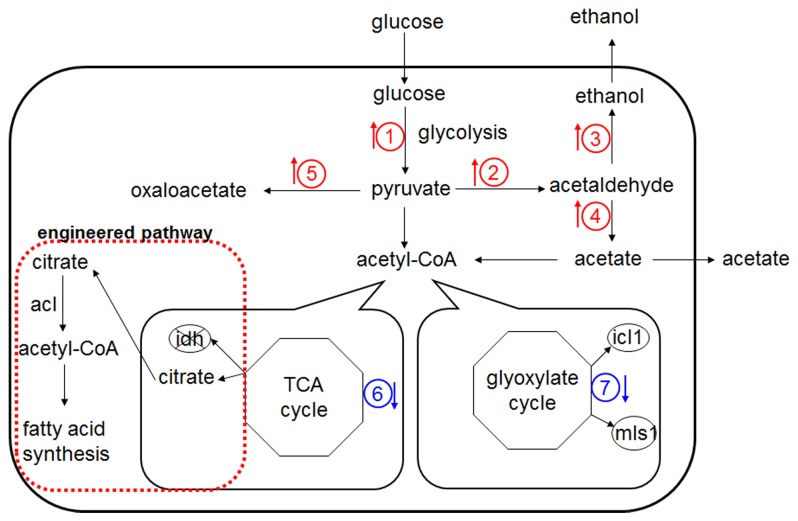
Figure 4. Schematic diagram of metabolic pathway changes in S.
cerevisiae engineered strains. The engineered pathway in yeast with enhanced fatty acid synthesis was indicated by red dashed box. Both of the up-regulated and down regulated metabolic pathways in ∆idh1/2-acl strain were indicated by the different colored arrows. The proteins involved in other pathways that haven’t been detected from LC-MS/MS analysis were not shown in this diagram.

References

    1. Meher LC, Vidya-Sagar D, Naik SN (2006) Technical aspects of biodiesel production by transesterification-A review. Renew Sust Energ Rev 10: 248-268. doi: 10.1016/j.rser.2004.09.002. - DOI
    1. Thornley P, Rogers J, Huang J (2008) Quantification of employment from biomass power plants. Renew Energ 33: 1922-1927. doi: 10.1016/j.renene.2007.11.011. - DOI
    1. Beopoulos A, Nicaud JM, Gaillardin C (2011) An overview of lipid metabolism in yeast and its impact on biotechnological processes. Appl Microbiol Biotechnol 90: 1193-1206. doi: 10.1007/s00253-011-3212-8. PubMed: 21452033. - DOI - PubMed
    1. Mao S, Luo Y, Zhang T, Li J, Bao G et al. (2010) Proteome reference map and comparative proteomic analysis between a wild type Clostridium acetobutylicum DSM 1731 and its mutant with enhanced butanol tolerance and butanol yield. J Proteome Res 9: 3026-3061. PubMed: 20426490. - PubMed
    1. Sivagnanam K, Raghavan VG, Shah M, Hettich RL, Verberkmoes NC et al. (2011) Comparative shotgun proteomic analysis of Clostridium acetobutylicum from butanol fermentation using glucose and xylose. Proteome Sci 9: 66-80. doi: 10.1186/1477-5956-9-66. PubMed: 22008648. - DOI - PMC - PubMed

Publication types

MeSH terms

LinkOut - more resources