. 2013 Dec 20;8(12):e84668.
doi: 10.1371/journal.pone.0084668. eCollection 2013.

Circadian modulation of anxiety: a role for somatostatin in the amygdala

Affiliations

Circadian modulation of anxiety: a role for somatostatin in the amygdala

Anne Albrecht et al. PLoS One. .

Abstract

Pharmacological evidence suggests that the neuropeptide somatostatin (SST) exerts anxiolytic action via the amygdala, but findings concerning the putative role of endogenous SST in the regulation of emotional responses are contradictory. We hypothesized that an endogenous regulation of SST expression over the course of the day may determine its function and tested both SST gene expression and the behavior of SST knock out (SST⁻/⁻) mice in different aversive tests in relation to circadian rhythm. In an open field and a light/dark avoidance test, SST⁻/⁻ mice showed significant hyperactivity and anxiety-like behavior during the second, but not during the first half of the active phase, failing to show the circadian modulation of behavior that was evident in their wild type littermates. Behavioral differences occurred independently of changes of intrinsically motivated activity in the home cage. A circadian regulation of SST mRNA and protein expression that was evident in the basolateral complex of the amygdala of wild type mice may provide a neuronal substrate for the observed behavior. However, fear memory towards auditory cue or the conditioning context displayed neither a time- nor genotype-dependent modulation. Together this indicates that SST, in a circadian manner and putatively via its regulation of expression in the amygdala, modulates behavior responding to mildly aversive conditions in mice.


Conflict of interest statement

Competing Interests: The authors have declared that no competing interests exist.

Figures

Figure 1
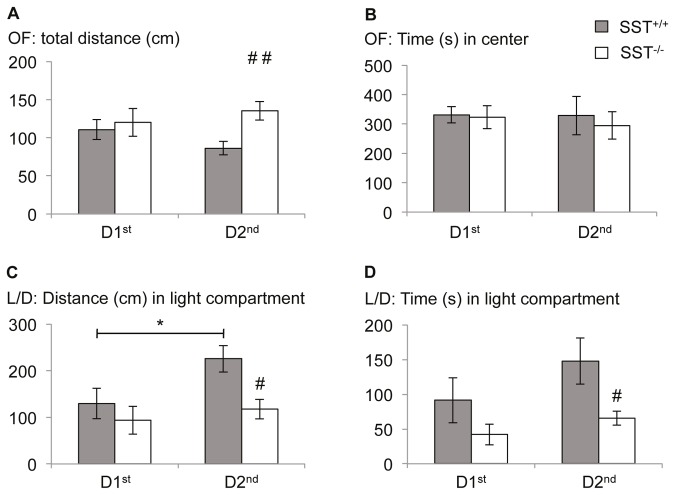
Figure 1. Lack of circadian fluctuation of anxiety-like behavior in SST deficient mice.
(A) SST-/- mice displayed hyperactivity during the second half of their active phase as indicated by total distance walked in the open field, compared to their SST+/+ littermates. (B) However, time spent in center did not differ between genotypes are time of testing. (C,D) In the light/dark- avoidance test, SST-/- mice showed reduced exploration of the light compartment, indicating increased anxiety-like behavior during the second half of the active phase. In fact the mutants failed to show a reduction of anxiety as seen in SST+/+ mice, thus indicating a deficit in the circadian modulation of anxiety- like behavior. Values are mean ± SEM. * significant differences between time point of testing, p<0.05; #, significant differences between SST-/- and SST+/+ mice, p < 0.05; # # p < 0.01.
Figure 2
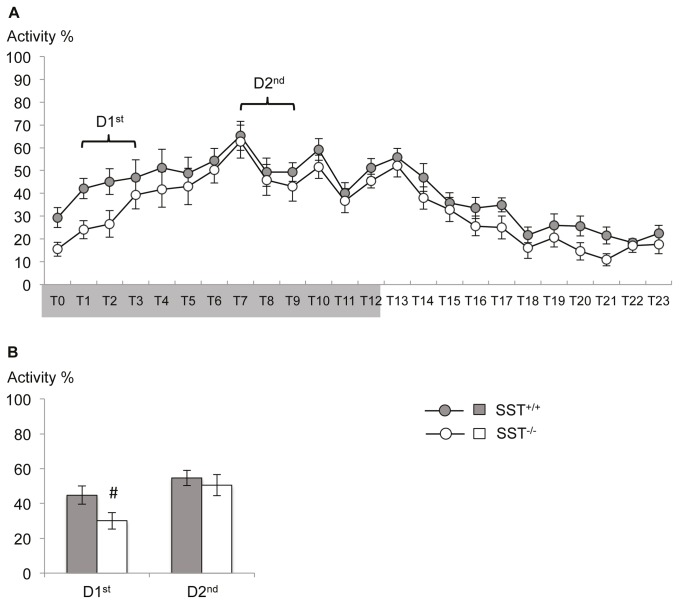
Figure 2. Home cage activity of SST deficient mice.
(A) The general activity profile of SST-/- mice in their home cages did not differ from that of SST+/+ mice over the 24h cycle (lights off indicated by gray shaded area on the x-axis). (B) Planned comparison of the average activity over the daytime corresponding to the behavioral test periods showed a reduced activity of SST-/- mice during the first half of the active phase (D1st) but no difference between genotype in the second half (D2nd). Values are mean ± SEM. #, significant differences between SST-/- and SST+/+ mice, p < 0.05.
Figure 3
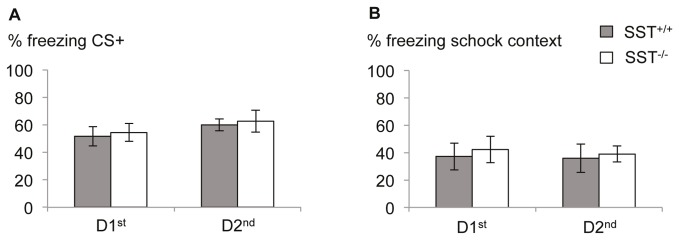
Figure 3. Unaltered auditory cued fear memory in SST deficient mice.
(A) Freezing towards the conditioned auditory stimulus (CS+) did not differ between genotypes or time points of testing. (B) Likewise, treezing towards the context also was not influenced by the time point of training. No deficits in could be observed in SST-/- mice. Values are mean ± SEM.
Figure 4
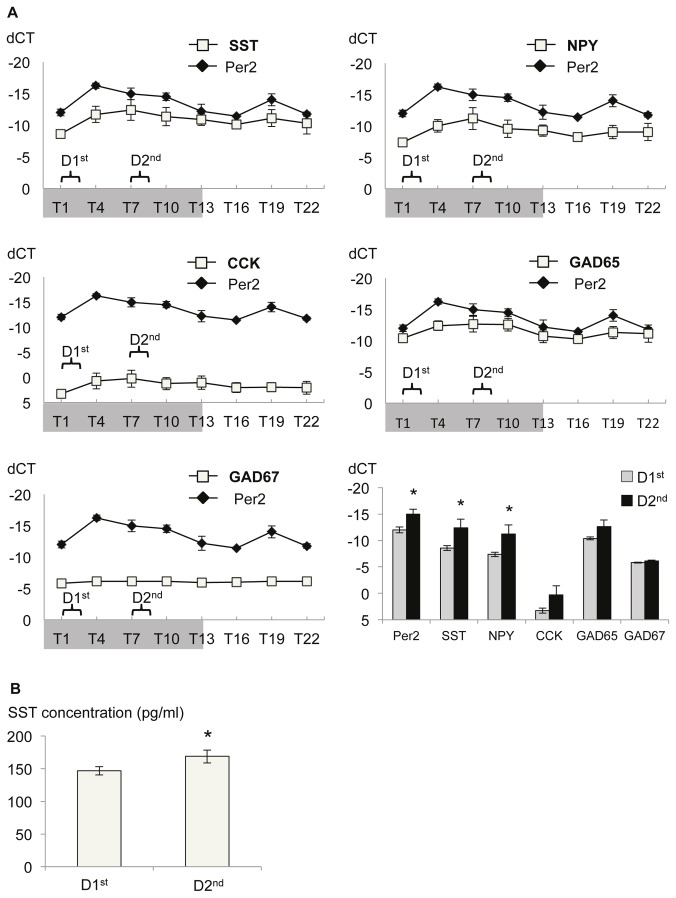
Figure 4. Circadian modulation of SST expression in the BLA.
(A) Per2 mRNA levels display pronounced circadian fluctuation over a 24h period, confirming previous reports. Expression of SST is well correlated (Pearson’s correlation: r=0.439) with expression levels of Per2 in the BLA over the different time points. Significant correlation with Per2 expression is also observed for NPY (r=0.455) and GAD65 expression levels (r=0.514). Shaded area illustrates 12h lights off period and brackets indicate time of behavioral testing. Planned comparison revealed a significant increase of Per2 and SST, but also NPY mRNA levels towards the second half of the active phase (D2nd). Values are relative expression after normalization to house keeping gene GAPDH (dCT) ± SEM for each time point. (B) Accordingly, the peptide concentration of SST in the BLA is increased in the second half of the dark phase compared to the first half.. Values are mean ± SEM. * significant difference T1 vs. T7, p<0.05 .

References

    1. Alldredge B (2010) Pathogenic involvement of neuropeptides in anxiety and depression. Neuropeptides 44: 215-224. doi: 10.1016/j.npep.2009.12.014. PubMed: 20096456. - DOI - PubMed
    1. Rotzinger S, Lovejoy DA, Tan LA (2010) Behavioral effects of neuropeptides in rodent models of depression and anxiety. Peptides 31: 736-756. doi: 10.1016/j.peptides.2009.12.015. PubMed: 20026211. - DOI - PubMed
    1. Yeung M, Engin E, Treit D (2011) Anxiolytic-like effects of somatostatin isoforms SST 14 and SST 28 in two animal models (Rattus norvegicus) after intra-amygdalar and intra-septal microinfusions. Psychopharmacology (Berl) 216: 557-567. doi: 10.1007/s00213-011-2248-x. PubMed: 21424237. - DOI - PubMed
    1. Yeung M, Treit D (2012) The anxiolytic effects of somatostatin following intra-septal and intra-amygdalar microinfusions are reversed by the selective sst2 antagonist PRL2903. Pharmacol Biochem Behav 101: 88-92. doi: 10.1016/j.pbb.2011.12.012. PubMed: 22210489. - DOI - PubMed
    1. Kluge C, Stoppel C, Szinyei C, Stork O, Pape HC (2008) Role of the somatostatin system in contextual fear memory and hippocampal synaptic plasticity. Learn Mem 15(4): 252-260. doi: 10.1101/lm.793008. PubMed: 18391186. - DOI - PMC - PubMed

Publication types