


Anal canal plasmacytoma-An uncommon presentation site
- PMID: 24376953
- PMCID: PMC3863234
- DOI: 10.1016/j.rpor.2010.12.002
Anal canal plasmacytoma-An uncommon presentation site
Abstract
Background: Extramedullary plasmacytomas (EMP) are rare plasma cell tumors that arise outside the bone marrow. They are most often located in the head and neck region, but may also occur in the other locations. The lower gastrointestinal EMP represents less than 5% of all cases, and location in the anal canal is exceedingly rare.
Aim: We present an exceedingly rare case of anal canal plasmacytoma, aiming to achieve a better understanding of this rare entity.
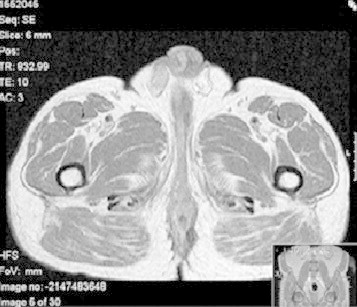
Methods: We report a case of a 61-year-old man with a bulky mass in the anal canal. The lesion measured about 6 cm and invaded in all layers of the anal canal wall. The biopsy was performed and revealed a round and plasmocitoid cell population with a solid growth pattern and necrosis. The tumoral cells have express CD79a and CD138 with lambda chains. There was no evidence of disease in other locations and these features were consistent with the diagnosis of an extra-osseous plasmacytoma. The patient was submitted to conformal radiotherapy 50.4 Gy total dose, 1.8 Gy per fraction. After 24 months, the patient is asymptomatic and the lesion has completely disappeared.
Conclusions: EMP accounts for approximately 3% of plasma cell malignancies. The median age is about 60 years, and the majority of patients are male. The treatment of choice for extramedullary plasmacytoma is radiation therapy in a dosage of about 50 Gy. Patients should be followed-up for life with repeated bone marrow aspiration and protein studies to detect the development of multiple myeloma.
Keywords: Extramedullary plasmacytoma; Radiotherapy.
Figures


References
-
- Knowling M.A., Harwood A.R., Bergsagel D.E. Comparison of extramedullary plasmacytomas with solitary and multiple plasma cell tumors of bone. J Clin Oncol. 1983;1:255–262. - PubMed
-
- Bataille R., Sany J. Solitary myeloma: clinical and prognostic features of a review of 114 cases. Cancer. 1981;48:845–851. - PubMed
-
- Tsang R.W., Gospodarowicz M.K., Pintilie M., Bejak A., Wells W., Hodgson D. Solitary plasmacytoma treated with radiotherapy: Impact of tumor size on outcomes. Int J Radiat Oncol Biol Phys. 2001;50:113–120. - PubMed
-
- Hughes M, Soutar R, Lucraft H, Owen R, Bird J. Guidelines on the diagnosis and management of solitary plasmacytoma of bone, extramedullary plasmacytoma and multiple solitary plasmacytomas: 2009 update; UKMF.
-
- Liebross R., Chul S., Cox J., Weber D., Delasalle K., Alexanian R. Clinical course of solitary extramedullary plasmacytoma. Radiother Oncol. 1999;52:245–249. - PubMed
LinkOut - more resources
Full Text Sources
Miscellaneous
