


Radiobiology of the acute radiation syndrome
- PMID: 24376969
- PMCID: PMC3863296
- DOI: 10.1016/j.rpor.2011.06.001
Radiobiology of the acute radiation syndrome
Abstract
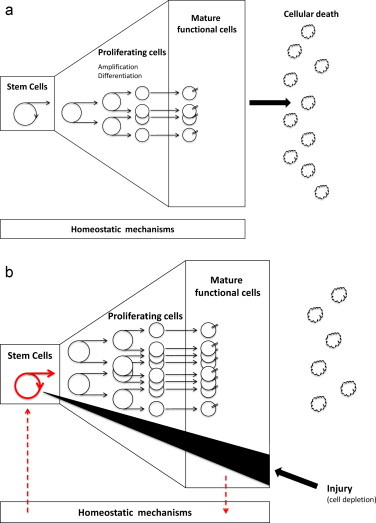
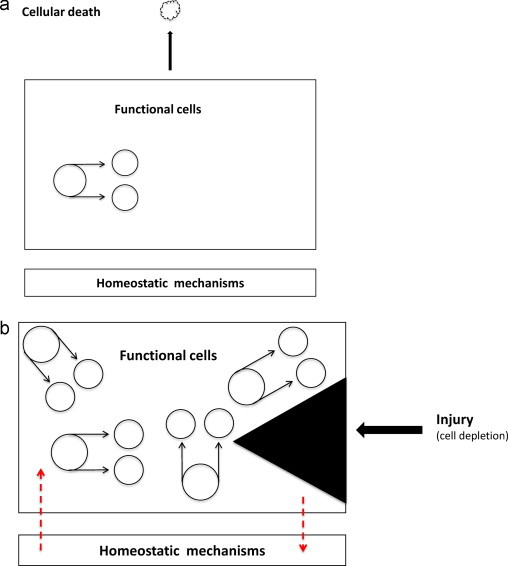
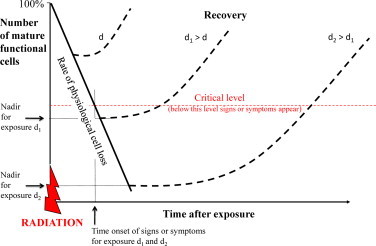
ACUTE RADIATION SYNDROME OR ACUTE RADIATION SICKNESS IS CLASSICALLY SUBDIVIDED INTO THREE SUBSYNDROMES: the hematopoietic, gastrointestinal and neurovascular syndrome but many other tissues can be damaged. The time course and severity of clinical signs and symptoms are a function of the overall body volume irradiated, the inhomogeneity of dose exposure, the particle type, the absorbed dose and the dose rate. Classical pathophysiology explain the failure of each of these organs and the timing of appearance of their signs and symptoms due to radiation-induced cytocidal effects of a great number of parenchymal cells of hierarchically organized tissues. Contemporaneously, many other radiation-induced effects has been described and all of them may lead to tissue injury with their corresponding signs and symptoms that can be expressed after short or long period of time. Radiation-induced multi-organ involvement is thought to be due to radiation-induced systemic inflammatory response mediated by released pro-inflammatory cytokines.
Keywords: Acute radiation syndrome; Gastrointestinal syndrome; Hematopoietic syndrome; Neurovascular syndrome; Radiation-induced multi-organ failure; Radiation-induced multi-organ involvement; Radiobiology.
Figures
References
-
- De-Coursey E. Human pathological anatomy of ionizing radiation effects of the atomic bomb explosions. Mil Surg. 1948;102:427–432. - PubMed
-
- Denham J.W., Hauer-Jensen M., Peters L.J. Is it time for a new formalism to categorize normal tissue radiation injury? Int J Radiat Oncol Biol Phys. 2001;50:1105–1106. - PubMed
-
- Gourmelon P., Benderitter M., Bertho J.M. European consensus on the medical management of acute radiation syndrome and analysis of the radiation accidents in Belgium and Senegal. Health Phys. 2010;98:825–832. - PubMed
-
- International Atomic Energy Agency . IAEA; Vienna: 1998. Diagnosis and treatment of radiation injuries. Safety reports series 2.
-
- Pedigo T. Mosby/Jems; 2005. Radiological weapons in Currance PL. Medical response to weapons of mass destruction.
Publication types
LinkOut - more resources
Full Text Sources
Other Literature Sources
