


Biodosimetry and assessment of radiation dose
- PMID: 24376970
- PMCID: PMC3863315
- DOI: 10.1016/j.rpor.2011.06.003
Biodosimetry and assessment of radiation dose
Abstract
Aim: When investigating radiation accidents, it is very important to determine the exposition dose to the individuals. In the case of exposures over 1 Gy, clinicians may expect deterministic effects arising the following weeks and months, in these cases dose estimation will help physicians in the planning of therapy. Nevertheless, for doses below 1 Gy, biodosimetry data are important due to the risk of developing late stochastic effects. Finally, some accidental overexposures are lack of physical measurements and the only way of quantifying dose is by biological dosimetry.
Background: The analysis of chromosomal aberrations by different techniques is the most developed method of quantifying dose to individuals exposed to ionising radiations.(1,2) Furthermore, the analysis of dicentric chromosomes observed in metaphases from peripheral lymphocytes is the routine technique used in case of acute exposures to assess radiation doses.
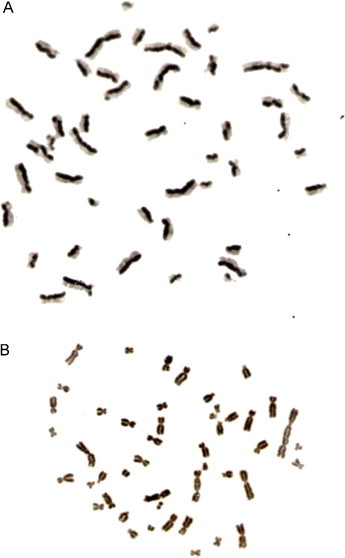
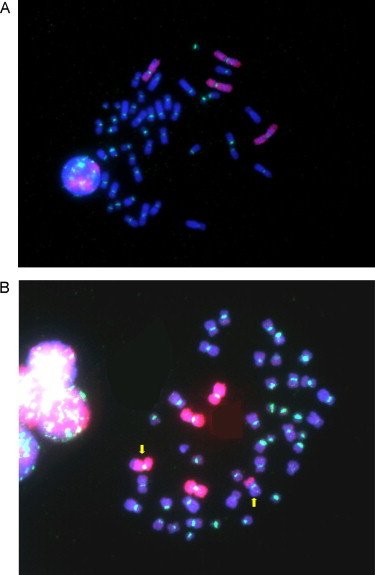
Materials and methods: Solid stain of chromosomes is used to determine dicentric yields for dose estimation. Fluorescence in situ hybridization (FISH) for translocations analysis is used when delayed sampling or suspected chronically irradiation dose assessment. Recommendations in technical considerations are based mainly in the IAEA Technical Report No. 405.(2.)
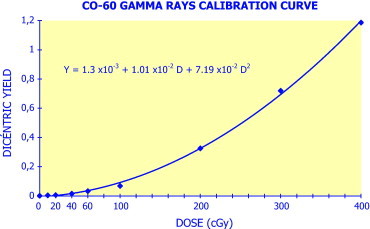
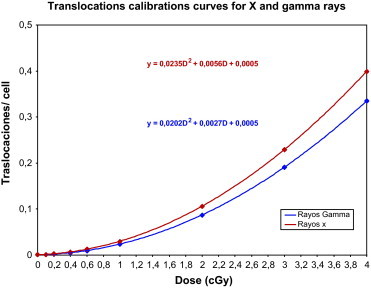
Results: Experience in biological dosimetry at Gregorio Marañón General Hospital is described, including own calibration curves used for dose estimation, background studies and real cases of overexposition.
Conclusion: Dose assessment by biological dosimeters requires a large previous standardization work and a continuous update. Individual dose assessment involves high qualification professionals and its long time consuming, therefore requires specific Centres. For large mass casualties cooperation among specialized Institutions is needed.
Keywords: Biodosimetry; Dicentrics; FISH; Translocations.
Figures
References
-
- International Atomic Energy Agency. Biological dosimetry: chromosomal aberration. Analysis for dose assessment. Technical Reports Series. No. 260. IAEA, Viena; 1986.
-
- International Atomic Energy Agency. Cytogenetic Analysis for radiation dose assessment, a manual. Technical Reports Series. No. 405, IAEA, Viena; 2001.
-
- Natarajan A.T., Obe G. Molecular mechanisms involved in the production of chromosome aberrations. 1. Utilization of neurospora endonuclease for the study of aberrations production in G2 stage of the cell cycle. Mutat Res. 1978;52:137–149. - PubMed
-
- Darroudi F., Natarajan A.T., Van der Schans G.P., Van Loon A.A.W.M. Biochemical and cytogenetic characterization of Chinese hamster ovary x-ray-sensitive mutant cells xrs. Mutat Res. 1989;213:190–197.
-
- Nowell P.C. Phytohemagglutinin – an inhibitor of mitosis in cultures of normal human leukocytes. Cancer Res. 1960;20:462–466. - PubMed
Publication types
LinkOut - more resources
Full Text Sources
