


Primary squamous cell carcinoma of the breast: A rare case report
- PMID: 24377039
- PMCID: PMC3863314
- DOI: 10.1016/j.rpor.2012.07.004
Primary squamous cell carcinoma of the breast: A rare case report
Abstract
Background: Squamous cells are normally not found inside the breast. Therefore, a primary squamous cell carcinoma of the breast is an exceptional phenomenon and the management of this type of disease is still debated.
Aim: Clinical outcome assessment of a patient with squamous cell carcinoma of the breast.
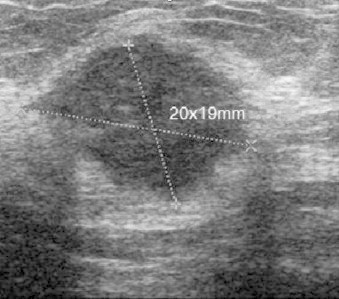
Materials and methods: We report a case of primary squamous cell carcinoma of the breast (T1cN0M0) in a 51-years-old woman who underwent breast conserving surgery plus adjuvant chemotherapy and radiation therapy (RT).
Results: With a follow up of 43 months, the patient is alive with no evidence of local or distant recurrence. The patient had Grade 2 acute skin toxicity. No late skin or respiratory toxicity was observed.
Conclusions: Pure primary squamous cell carcinoma of the breast is a rare and aggressive disease, often treatment-refractory. Our case shows that the addition of RT after breast conserving surgery, allows to achieve a high local control without adding severe toxicity. A multidisciplinary approach seems to be the optimal management for early stages in this rare disease.
Keywords: Breast cancer; Outcome; Squamous cell carcinoma.
Figures

References
-
- Gupta G., Malani A.K., Weigand R.T., Rangenini G. Pure primary squamous cell carcinoma of the breast: a rare presentation and clinicopathologic comparison with usual ductal carcinoma of the breast. Pathol Res Pract. 2006;6:465–469. - PubMed
-
- Behranwala K.A., Nasiri N., Abdullah N., Trott P.A., Gui G.P.H. Squamous cell carcinoma of the breast: clinico-pathologic implications and outcome. Eur J Surg Oncol. 2003;29:386–389. - PubMed
-
- Wrightson W.R., Edwards M.J., McMasters K.M. Primary squamous cell carcinoma of the breast presenting as a breast abscess. Am Surg. 1999;65:1153–1155. - PubMed
-
- Bethesda, MD: ICRU Report 50: Prescribing, recording, and reporting photon beam therapy. International Commission of Radiation Units and Measurements; 1993.
LinkOut - more resources
Full Text Sources
