


Global catalogue of microorganisms (gcm): a comprehensive database and information retrieval, analysis, and visualization system for microbial resources
- PMID: 24377417
- PMCID: PMC3890509
- DOI: 10.1186/1471-2164-14-933
Global catalogue of microorganisms (gcm): a comprehensive database and information retrieval, analysis, and visualization system for microbial resources
Abstract
Background: Throughout the long history of industrial and academic research, many microbes have been isolated, characterized and preserved (whenever possible) in culture collections. With the steady accumulation in observational data of biodiversity as well as microbial sequencing data, bio-resource centers have to function as data and information repositories to serve academia, industry, and regulators on behalf of and for the general public. Hence, the World Data Centre for Microorganisms (WDCM) started to take its responsibility for constructing an effective information environment that would promote and sustain microbial research data activities, and bridge the gaps currently present within and outside the microbiology communities.
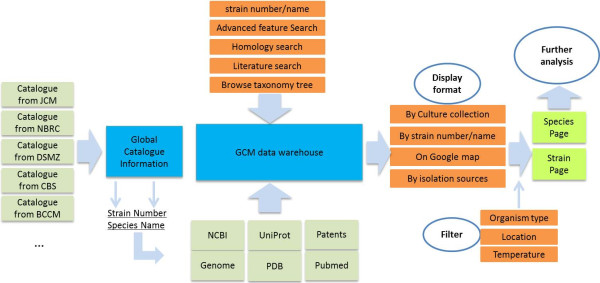
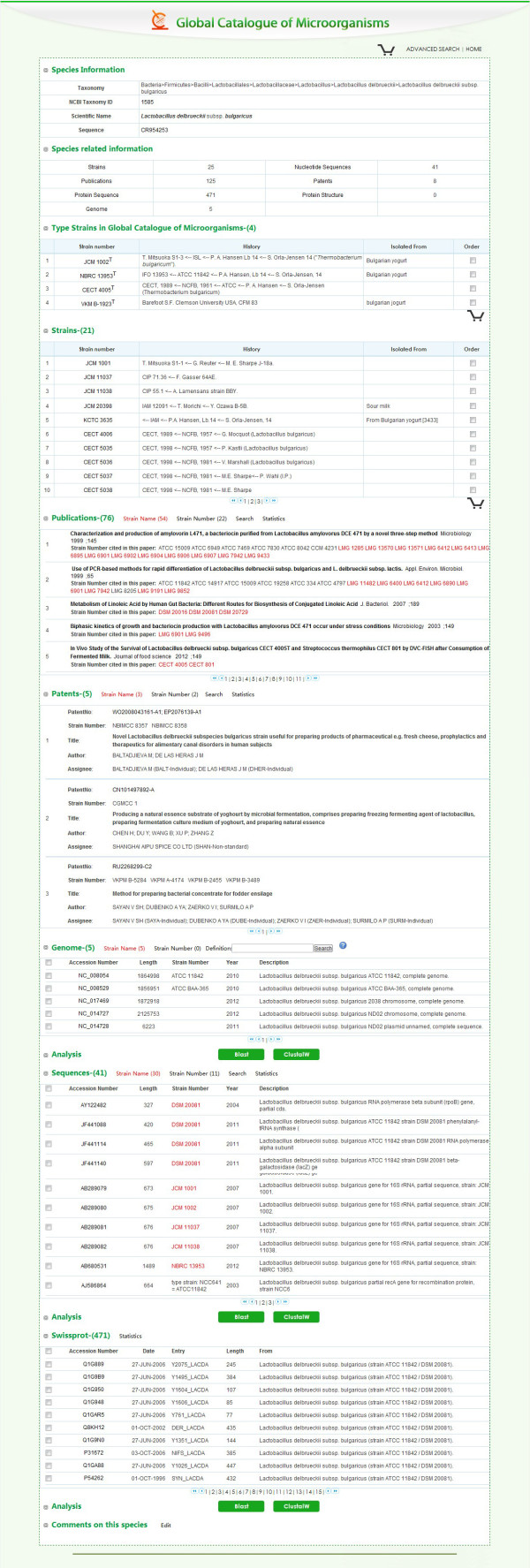
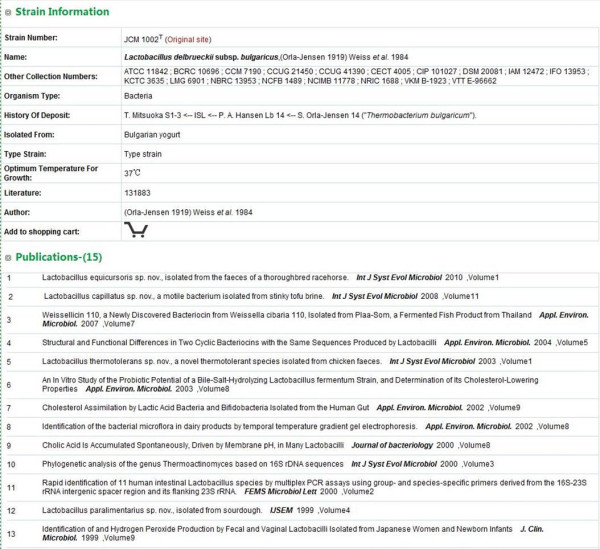
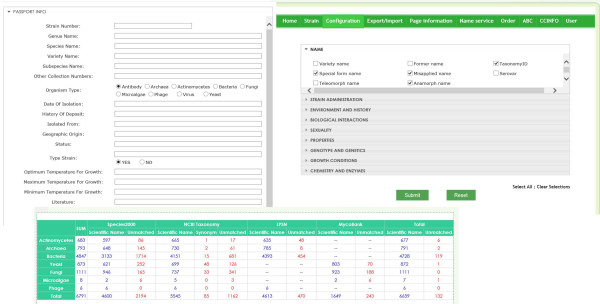
Description: Strain catalogue information was collected from collections by online submission. We developed tools for automatic extraction of strain numbers and species names from various sources, including Genbank, Pubmed, and SwissProt. These new tools connect strain catalogue information with the corresponding nucleotide and protein sequences, as well as to genome sequence and references citing a particular strain. All information has been processed and compiled in order to create a comprehensive database of microbial resources, and was named Global Catalogue of Microorganisms (GCM). The current version of GCM contains information of over 273,933 strains, which includes 43,436 bacterial, fungal and archaea species from 52 collections in 25 countries and regions.A number of online analysis and statistical tools have been integrated, together with advanced search functions, which should greatly facilitate the exploration of the content of GCM.
Conclusion: A comprehensive dynamic database of microbial resources has been created, which unveils the resources preserved in culture collections especially for those whose informatics infrastructures are still under development, which should foster cumulative research, facilitating the activities of microbiologists world-wide, who work in both public and industrial research centres. This database is available from http://gcm.wfcc.info.
Figures
References
-
- Satoru Miyazaki HS. Networking of biological resource centers: WDCM Experiences. Data Science Journal. 2002;14(2):102–107.
-
- OECD Best Practice Guidelines for Biological Resource Centres. 2007. http://www.oecd.org/health/biotech/oecdbestpracticeguidelinesforbiologic....
-
- Gams W, Hennebert GL, Stalpers JA, Janssens D, Schipper MA, Smith J, Yarrow D, Hawksworth DL. Structuring strain data for storage and retrieval of information on fungiand yeasts in MINE, the microbial information network Europe. J Gen Microbiol. 1998;14:1667–1689. - PubMed
-
- CABRI. Common Access to Biological Resources and Information (CABRI) 1998. (GUIDELINES FOR CATALOGUE PRODUCTION). http://www.cabri.org/guidelines/catalogue/CPcover.html.
MeSH terms
LinkOut - more resources
Full Text Sources
Other Literature Sources
Medical
