


Back pain in patients with degenerative spine disease and intradural spinal tumor: what to treat? when to treat?
- PMID: 24378627
- PMCID: PMC3960417
- DOI: 10.1007/s00586-013-3137-2
Back pain in patients with degenerative spine disease and intradural spinal tumor: what to treat? when to treat?
Abstract
Background: Back pain is common in industrialized countries and one of the most frequent causes of work incapacity. Successful treatment is, therefore, not only important for improving the symptoms and the quality of life of these patients but also for socioeconomic reasons. Back pain is frequently caused by degenerative spine disease. Intradural spinal tumors are rare with an annual incidence of 2-4/1,00,000 and are mostly associated with neurological deficits and radicular and nocturnal pain. Back pain is not commonly described as a concomitant symptom, such that in patients with both a tumor and degenerative spine disease, any back pain is typically attributed to the degeneration rather than the tumor.
Objective: The aim of the present retrospective investigation was to study and analyze the impact of microsurgery on back/neck pain in patients with intradural spinal tumor in the presence of degenerative spinal disease in adjacent spinal segments.
Methods: Fifty-eight consecutive patients underwent microsurgical, intradural tumor surgery using a standardized protocol assisted by multimodal intraoperative neuromonitoring. Clinical symptoms, complications and surgery characteristics were documented. Standardized questionnaires were used to measure outcome from the surgeon's and the patient's perspectives (Spine Tango Registry and Core Outcome Measures Index). Follow-up included clinical and neuroradiological examinations 6 weeks, 3 months and 1 year postoperatively.
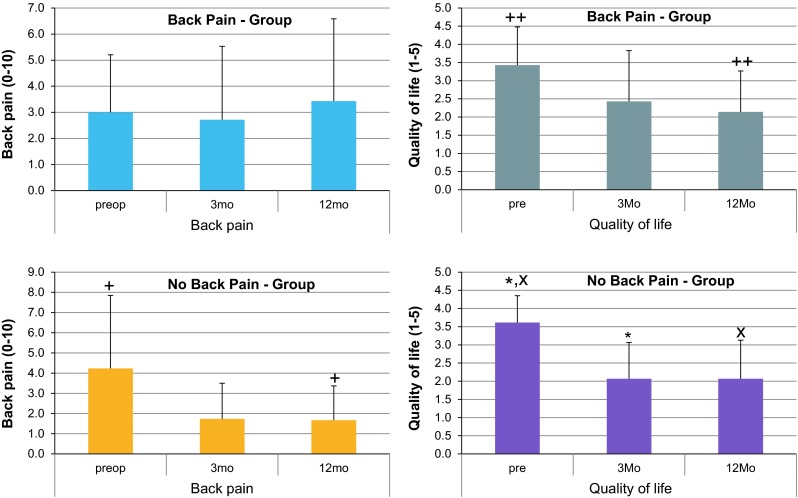
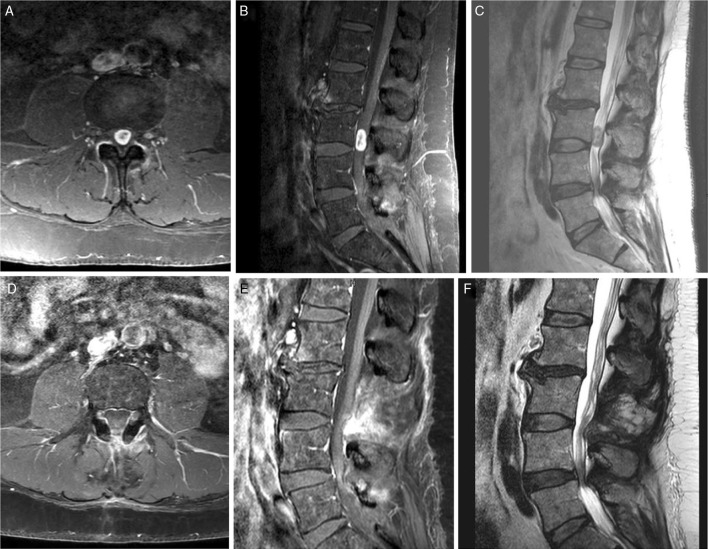
Results: Back/neck pain as a leading symptom and coexisting degenerative spine disease was present in 27/58 (47 %) of the tumor patients, and these comprised to group under study. Patients underwent tumor surgery only, without addressing the degenerative spinal disease. Remission rate after tumor removal was 85 %. There were no major surgical complications. Back/neck pain as the leading symptom was eradicated in 67 % of patients. There were 7 % of patients who required further invasive therapy for their degenerative spinal disease.
Conclusions: Intradural spinal tumor surgery improves back/neck pain in patients with coexisting severe degenerative spinal disease. Intradural spinal tumors seem to be the only cause of back/neck pain more often than appreciated. In these patients suffering from both pathologies, there is a higher risk of surgical overtreatment than undertreatment. Therefore, elaborate clinical and radiological examinations should be performed preoperatively and the indication for stabilization/fusion should be discussed carefully in patients foreseen for first time intradural tumor surgery.
Figures

References
Publication types
MeSH terms
LinkOut - more resources
Full Text Sources
Other Literature Sources
Medical
