


High-frequency nasal ventilation for 21 d maintains gas exchange with lower respiratory pressures and promotes alveolarization in preterm lambs
- PMID: 24378898
- PMCID: PMC3961520
- DOI: 10.1038/pr.2013.254
High-frequency nasal ventilation for 21 d maintains gas exchange with lower respiratory pressures and promotes alveolarization in preterm lambs
Abstract
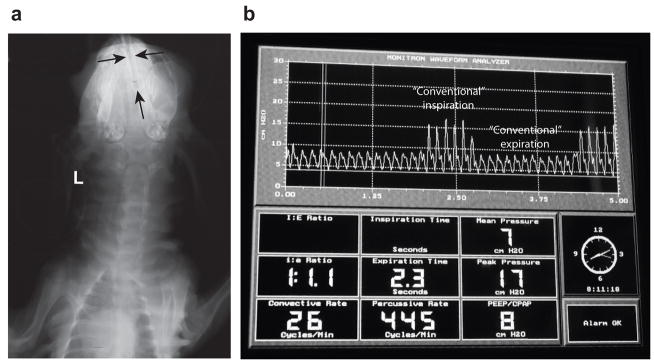
Background: Short-term high-frequency nasal ventilation (HFNV) of preterm neonates provides acceptable gas exchange compared to endotracheal intubation and intermittent mandatory ventilation (IMV). Whether long-term HFNV will provide acceptable gas exchange is unknown. We hypothesized that HFNV for up to 21 d would lead to acceptable gas exchange at lower inspired oxygen (O2) levels and airway pressures compared to intubation and IMV.
Methods: Preterm lambs were exposed to antenatal steroids and treated with perinatal surfactant and postnatal caffeine. Lambs were intubated and resuscitated by IMV. At ~3 h of age, half of the lambs were switched to noninvasive HFNV. Support was for 3 or 21 d. By design, Pao2 and Paco2 were not different between groups.
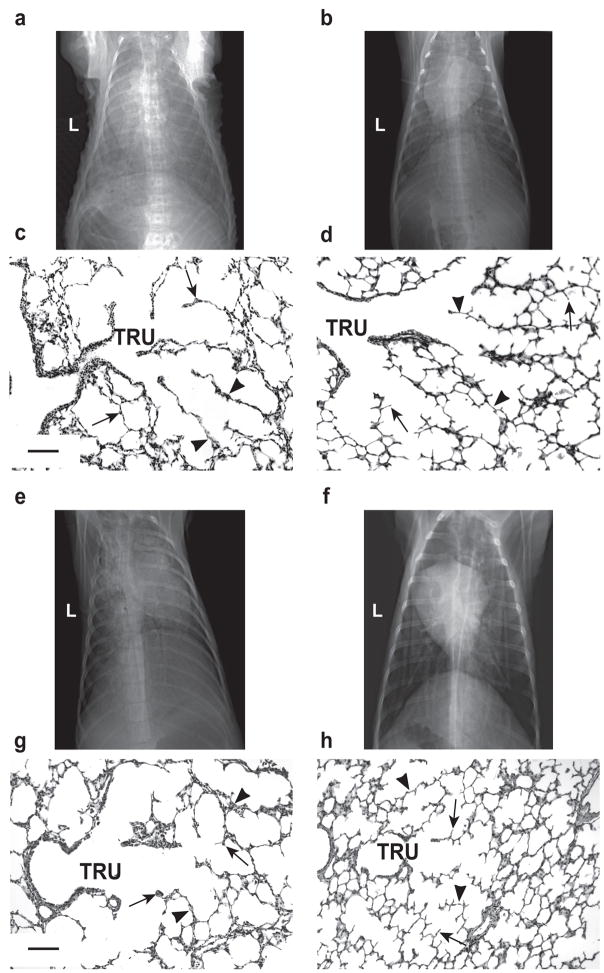
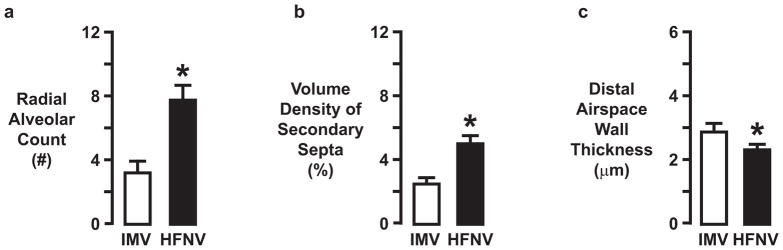
Results: At 3 d (n = 5) and 21 d (n = 4) of HFNV, fractional inspired O2 (FiO2), peak inspiratory pressure (PIP), mean airway, intratracheal, and positive end-expiratory pressures, oxygenation index, and alveolar-arterial gradient were significantly lower than matched periods of intubation and IMV. Pao2/FiO2 ratio was significantly higher at 3 and 21 d of HFNV compared to matched intubation and IMV. HFNV led to better alveolarization at 3 and 21 d.
Conclusion: Long-term HFNV provides acceptable gas exchange at lower inspired O2 levels and respiratory pressures compared to intubation and IMV.
Figures
References
-
- Van Marter LJ, Allred EN, Pagano M, et al. Do clinical markers of barotrauma and oxygen toxicity explain interhospital variation in rates of chronic lung disease? The Neonatology Committee for the Developmental Network. Pediatrics. 2000;105:1194–1201. - PubMed
-
- Henderson-Smart DJ, Cools F, Bhuta T, Offringa M. Elective high frequency oscillatory ventilation versus conventional ventilation for acute pulmonary dysfunction in preterm infants. Cochrane Database Syst Rev. 2007:CD000104. - PubMed
-
- Yoder BA, Harrison M, Clark RH. Time-related changes in steroid use and bronchopulmonary dysplasia in preterm infants. Pediatrics. 2009;124:673–679. - PubMed
-
- Gortner L, Misselwitz B, Milligan D, et al. Rates of bronchopulmonary dysplasia in very preterm neonates in Europe: results from the MOSAIC cohort. Neonatology. 2011;99:112–117. - PubMed
Publication types
MeSH terms
Grants and funding
LinkOut - more resources
Full Text Sources
Other Literature Sources
Medical
