


Improvements in iron status and cognitive function in young women consuming beef or non-beef lunches
- PMID: 24379009
- PMCID: PMC3916851
- DOI: 10.3390/nu6010090
Improvements in iron status and cognitive function in young women consuming beef or non-beef lunches
Abstract
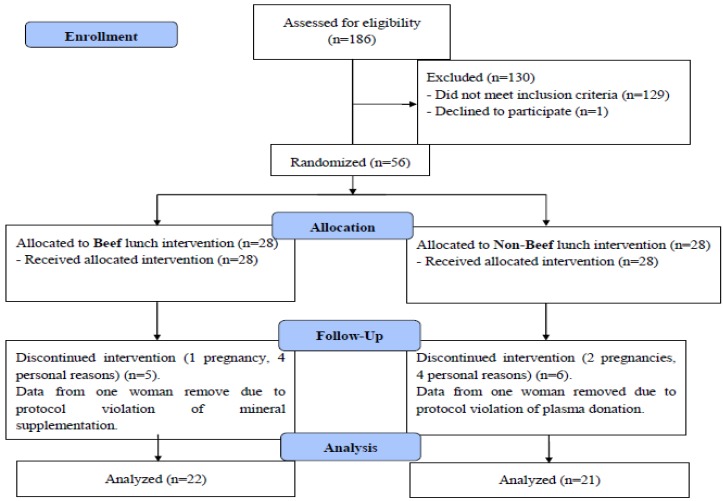
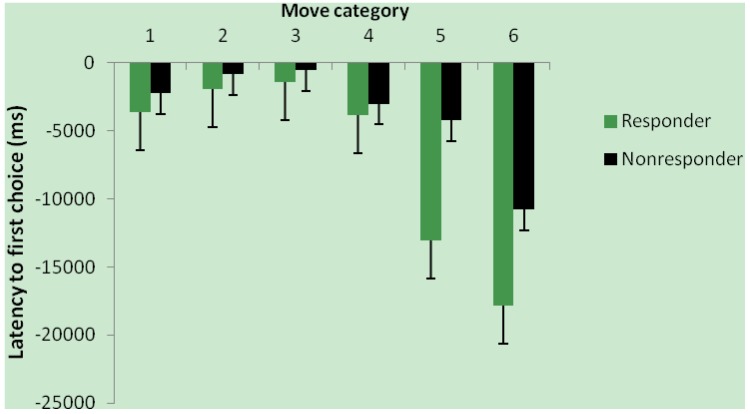
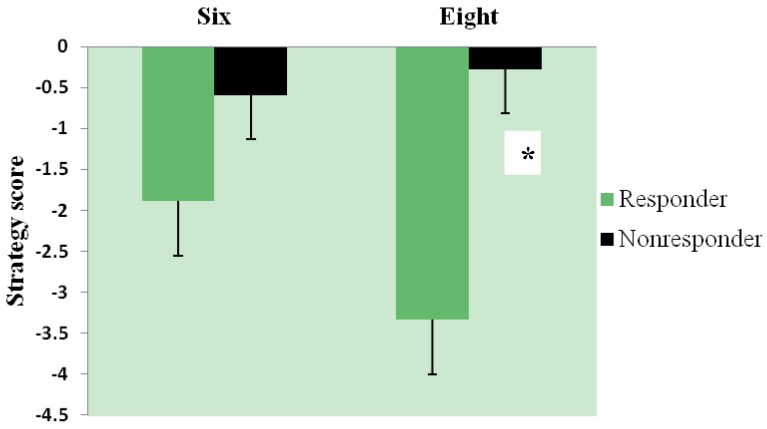
Iron status is associated with cognitive performance and intervention trials show that iron supplementation improves mental function in iron-deficient adults. However, no studies have tested the efficacy of naturally iron-rich food in this context. This investigation measured the hematologic and cognitive responses to moderate beef consumption in young women. Participants (n=43; age 21.1±0.4 years) were randomly assigned to a beef or non-beef protein lunch group [3-oz (85 g), 3 times weekly] for 16 weeks. Blood was sampled at baseline, and weeks 8 and 16, and cognitive performance was measured at baseline and week 16. Body iron increased in both lunch groups (p<0.0001), with greater improvement demonstrated in women with lower baseline body iron (p<0.0001). Body iron had significant beneficial effects on spatial working memory and planning speed (p<0.05), and ferritin responders (n=17) vs. non-responders (n=26) showed significantly greater improvements in planning speed, spatial working memory strategy, and attention (p<0.05). Lunch group had neither significant interactions with iron status nor consistent main effects on test performance. These findings support a relationship between iron status and cognition, but do not show a particular benefit of beef over non-beef protein consumption on either measure in young women.
Figures
References
-
- Cogswell M.E., Looker A.C., Pfeiffer C.M., Cook J.D., Lacher D.A., Beard J.L., Lynch S.R., Grummer-Strawn L.M. Assessment of iron deficiency in US preschool children and nonpregnant females of childbearing age: National health and nutrition examination survey 2003–2006. Am. J. Clin. Nutr. 2009;89:1334–1342. doi: 10.3945/ajcn.2008.27151. - DOI - PubMed
-
- Mejia-Rodriguez F., Shamah-Levy T., Villalpando S., Garcia-Guerra A., Mendez-Gomez I. Humaran, Iron, zinc, copper and magnesium deficiencies in Mexican adults from the National Health and Nutrition Survey 2006. Salud Publ. Mex. 2013;55:275–284. - PubMed
-
- Cooper M., Greene-Finestone L., Lowell H., Levesque J., Robinson S. Iron sufficiency of Canadians. Health Rep. 2012;23:41–48. - PubMed
-
- Hawk S., Englehardt K.G., Small C. Risks of iron deficiency among vegetarian college women. Health. 2012;4:113–119. doi: 10.4236/health.2012.43018. - DOI
-
- Houston M.S. Lifestyle and dietary practices influencing iron status in university women. Nutr. Res. 1997;17:9–22. doi: 10.1016/S0271-5317(96)00228-X. - DOI
Publication types
MeSH terms
Substances
LinkOut - more resources
Full Text Sources
Other Literature Sources
Medical
