


A study of insulin resistance by HOMA-IR and its cut-off value to identify metabolic syndrome in urban Indian adolescents
- PMID: 24379034
- PMCID: PMC3890224
- DOI: 10.4274/Jcrpe.1127
A study of insulin resistance by HOMA-IR and its cut-off value to identify metabolic syndrome in urban Indian adolescents
Abstract
Objective: Insulin resistance (IR) and associated metabolic abnormalities are increasingly being reported in the adolescent population. Cut-off value of homeostasis model of assessment IR (HOMA-IR) as an indicator of metabolic syndrome (MS) in adolescents has not been established. This study aimed to investigate IR by HOMA-IR in urban Indian adolescents and to establish cut-off values of HOMA-IR for defining MS.
Methods: A total of 691 apparently healthy adolescents (295 with normal body mass index (BMI), 205 overweight, and 199 obese) were included in this cross-sectional study. MS in adolescents was defined by International Diabetes Federation (IDF) and Adult Treatment Panel III (ATP III) criteria. IR was calculated using the HOMA model.
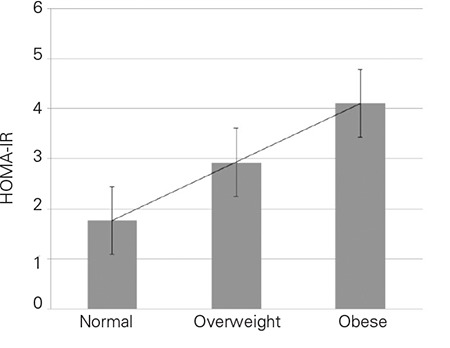
Results: Mean height, waist circumference (WC), waist/hip ratio (WHR), waist/height ratio (WHtR), and blood pressure were significantly higher in boys as compared to girls. The HOMA-IR values increased progressively from normal weight to obese adolescents in both sexes. Mean HOMA-IR values increased progressively according to sexual maturity rating in both sexes. HOMA-IR value of 2.5 had a sensitivity of >70% and specificity of >60% for MS. This cut-off identified larger number of adolescents with MS in different BMI categories (19.7% in normal weight, 51.7% in overweight, and 77.0% in obese subjects) as compared to the use of IDF or ATP III criteria for diagnosing MS. Odds ratio for having IR (HOMA-IR of >2.5) was highest with WHtR (4.9, p p<0.0001) and WC (4.8, p p<0.0001), compared to WHR (3.3, p p<0.0001).
Conclusions: In Indian adolescents, HOMA-IR increased with sexual maturity and with progression from normal to obese. A HOMA-IR cut-off of 2.5 provided the maximum sensitivity and specificity in diagnosing MS in both genders as per ATP III and IDF criteria.
Figures
References
-
- Invitti C, Guzzaloni G, Gilardini L, Morabito F, Viberti G. Prevalence and concomitants of glucose intolerance in European obese children and adolescents. Diabetes Care. 2003;26:118–124. - PubMed
-
- Ten S, Maclaren N. Insulin resistance syndrome in children. J Clin Endocrinol Metab. 2004;89:2526–2539. - PubMed
-
- Gupta N, Goel K, Shah P, Misra A. Childhood obesity in developing countries: epidemiology, determinants, and prevention. Endocr Rev. 2012;33:48–70. - PubMed
-
- Matthews DR, Hosker JP, Rudenski AS, Naylor BA, Treacher DF, Turner RC. Homeostasis model assessment: insulin resistance and beta-cell function from fasting plasma glucose and insulin concentrations in man. Diabetologia. 1985;28:412–419. - PubMed
-
- Atabek ME, Pirgon O. Assessment of insulin sensitivity from measurements in fasting state and during an oral glucose tolerance test in obese children. J Pediatr Endocrinol Metab. 2007;20:187–195. - PubMed
MeSH terms
Substances
LinkOut - more resources
Full Text Sources
Other Literature Sources
Medical
