. 2014 Jun;59(6):1286-95.
doi: 10.1007/s10620-013-3001-6. Epub 2013 Dec 31.

Dipeptidyl peptidase IV inhibition prevents the formation and promotes the healing of indomethacin-induced intestinal ulcers in rats

Affiliations

Dipeptidyl peptidase IV inhibition prevents the formation and promotes the healing of indomethacin-induced intestinal ulcers in rats

Takuya Inoue et al. Dig Dis Sci. 2014 Jun.

Abstract

Backgrounds and aims: We studied the intestinotrophic hormone glucagon-like peptide-2 (GLP-2) as a possible therapy for non-steroidal anti-inflammatory drug (NSAID)-induced intestinal ulcers. Luminal nutrients release endogenous GLP-2 from enteroendocrine L cells. Since GLP-2 is degraded by dipeptidyl peptidase IV (DPPIV), we hypothesized that DPPIV inhibition combined with luminal administration of nutrients potentiates the effects of endogenous GLP-2 on intestinal injury.

Methods: Intestinal injury was induced by indomethacin (10 mg/kg, sc) in fed rats. The long-acting DPPIV inhibitor K579 was given intragastrically (ig) or intraperitoneally (ip) before or after indomethacin treatment. L-Alanine (L-Ala) and inosine 5'-monophosphate (IMP) were co-administered ig after the treatment.

Results: Indomethacin treatment induced intestinal ulcers that gradually healed after treatment. Pretreatment with ig or ip K579 given at 1 mg/kg reduced total ulcer length, whereas K579 at 3 mg/kg had no effect. Exogenous GLP-2 also reduced intestinal ulcers. The preventive effect of K579 was dose-dependently inhibited by a GLP-2 receptor antagonist. Daily treatment with K579 (1 mg/kg), GLP-2, or L-Ala + IMP after indomethacin treatment reduced total ulcer length. Co-administration (ig) of K579 and L-Ala + IMP further accelerated intestinal ulcer healing.

Conclusion: DPPIV inhibition and exogenous GLP-2 prevented the formation and promoted the healing of indomethacin-induced intestinal ulcers, although high-dose DPPIV inhibition reversed the preventive effect. Umami receptor agonists also enhanced the healing effects of the DPPIV inhibitor. The combination of DPPIV inhibition and luminal nutrient-induced GLP-2 release may be a useful therapeutic tool for the treatment of NSAIDs-induced intestinal ulcers.


Figures
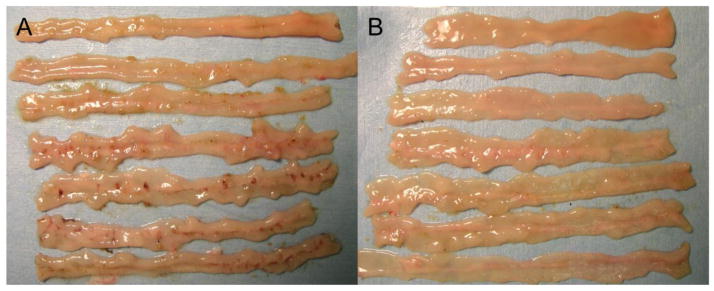
Fig. 1
Fig. 1. Indomethacin (IND)-induced intestinal ulcers in rats
The representative gross appearance of IND-induced intestinal ulcers on Day 1 is shown (A). Pretreatment with K579 (1 mg/kg, ig) reduced intestinal ulcer formation on Day 1 (B).
Fig. 2
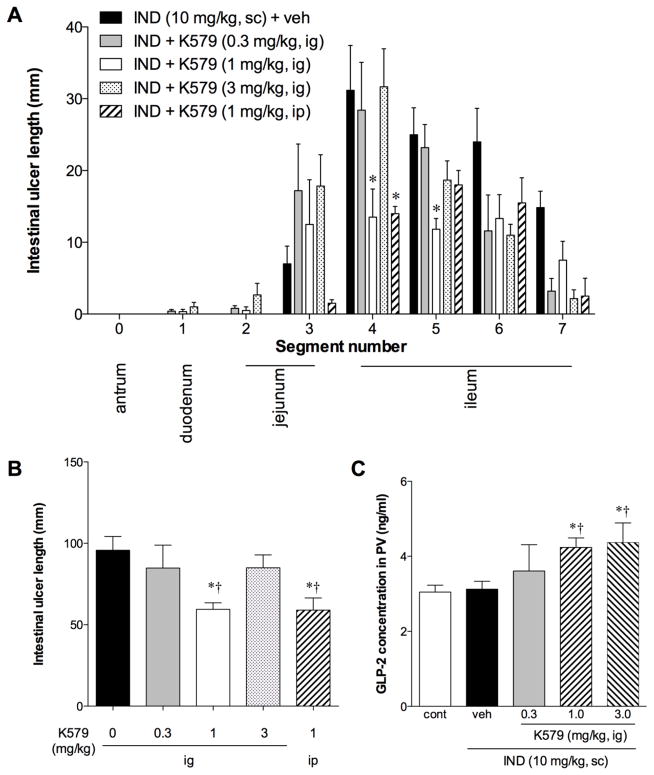
Fig. 2. Effect of DPPIV inhibition on IND-induced intestinal ulcer formation in rats
Intestinal ulcers were induced by IND (10 mg/kg, sc). K579 (0.3 – 3 mg/kg) or vehicle was given intragastrically (ig) or intraperitoneally (ip). Intestinal lesions were evaluated at 24 hrs (Day 1) after IND treatment. A: Intestinal ulcer formation in each segment. The small intestine was divided into 7 segments from duodenum (1) to terminal ileum (7); antrum was defined as segment 0. Each data point represents mean ± SEM (n = 6 rats). *p < 0.05 vs. IND + veh group. B: Total intestinal ulcer score. Each data point represents mean ± SEM (n = 6 rats). *p < 0.05 vs. IND + veh group, p < 0.05 vs. IND + K579 (0.3 mg/kg, ig) group. C: Portal venous (PV) GLP-2 level on Day 1 after IND treatment with or without K579 pretreatment (0.3 – 3 mg/kg, ig). Each data point represents mean ± SEM (n = 6 rats). *p < 0.05 vs. control, p < 0.05 vs. IND + veh group.
Fig. 3
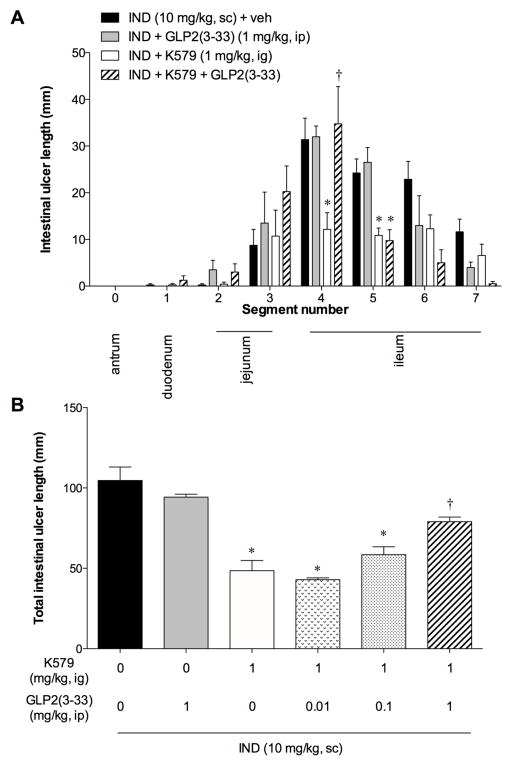
Fig. 3. Effect of a GLP-2 receptor antagonist on the preventive effect of DPPIV inhibition
GLP-2(3–33) (0.01 – 1 mg/kg, ip) was given after IND treatment with or without K579 pretreatment. Intestinal lesions were evaluated at 24 hrs (Day 1) after IND treatment. A: Intestinal ulcer formation in each segment. Each data point represents mean ± SEM (n = 6 rats). *p < 0.05 vs. IND + veh group. B: Total intestinal ulcer score. Each data point represents mean ± SEM (n = 6 rats). *p < 0.05 vs. IND + veh group, p < 0.05 vs. IND + K579 (1 mg/kg, ig) group.
Fig. 4
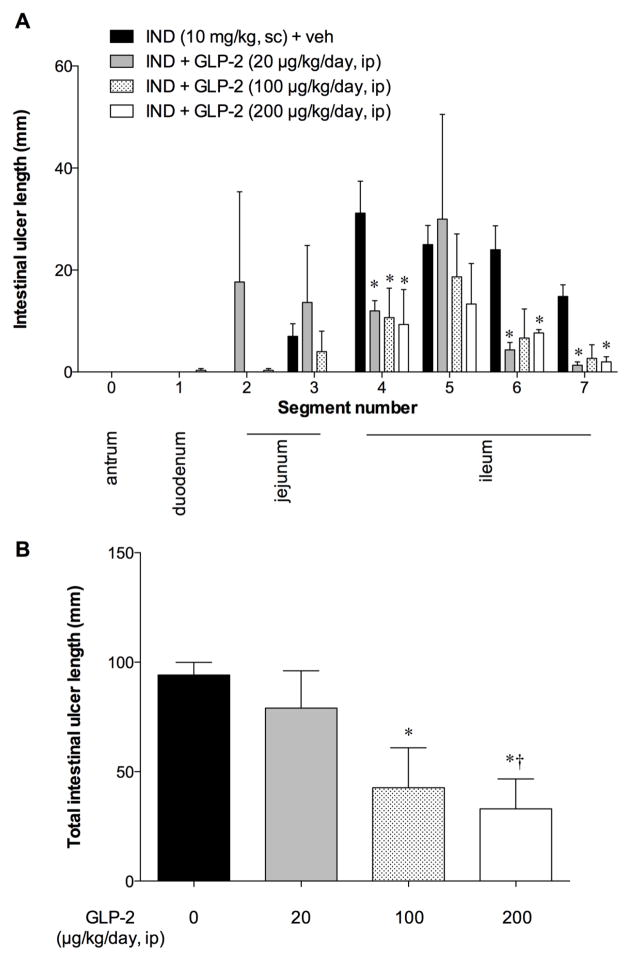
Fig. 4. Effect of exogenous GLP-2 on IND-induced intestinal ulcer formation in rats
Rat GLP-2 (10 – 100 μg/kg, ip) was given at 0 and 8 hrs after IND treatment (20 – 200 μg/kg/day). Intestinal lesions were evaluated at 24 hrs (Day 1) after IND treatment. Each data point represents mean ± SEM (n = 6 rats). *p < 0.05 vs. IND + veh group. A: Intestinal ulcer formation in each segment. *p < 0.05 vs. IND + veh group. B: Total intestinal ulcer score. *p < 0.05 vs. IND + veh group, p < 0.05 vs. IND + GLP-2 (20 μg/kg/day, ip) group.
Fig. 5
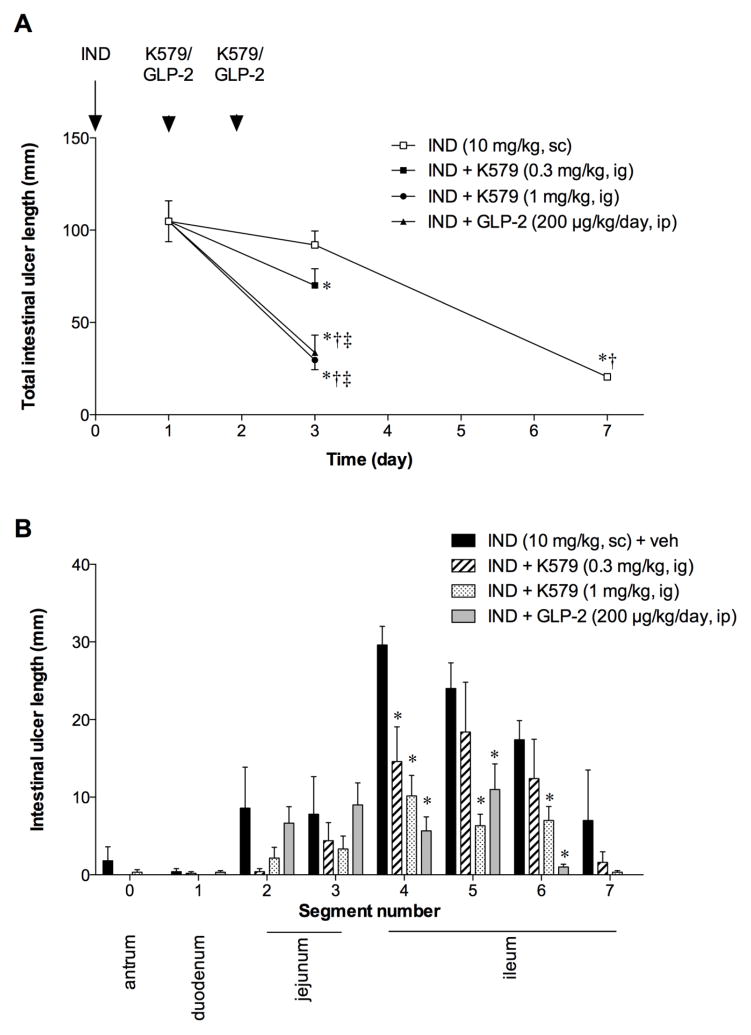
Fig. 5. Effect of DPPIV inhibition on ulcer healing of IND-induced intestinal ulcers
Intestinal ulcers were assessed on Day 3 after IND was given on Day 0. K579 (0.3 or 1 mg/kg, ig, once a day), GLP-2 (100 μg/kg, ip, twice a day), or GLP-2(3–33) (1 mg/kg, ip) with K579 (1 mg/kg, ig) was given on Days 1 and 2. A: Total intestinal ulcer score was assessed on Days 1, 3, and 7 after IND treatment on Day 0. Each data point represents mean ± SEM (n = 6 rats). *p < 0.05 vs. IND + veh group on Day 1, p < 0.05 vs. IND + veh group on Day 3, p < 0.05 vs. IND + K579 (0.3 mg/kg, ig) group on Day 3. §p < 0.05 vs. IND + K579 (1 mg/kg, ig) group on Day 3. B: Intestinal ulcer score in each segment. Each data point represents mean ± SEM (n = 6 rats). *p < 0.05 vs. IND + veh group.
Fig. 6
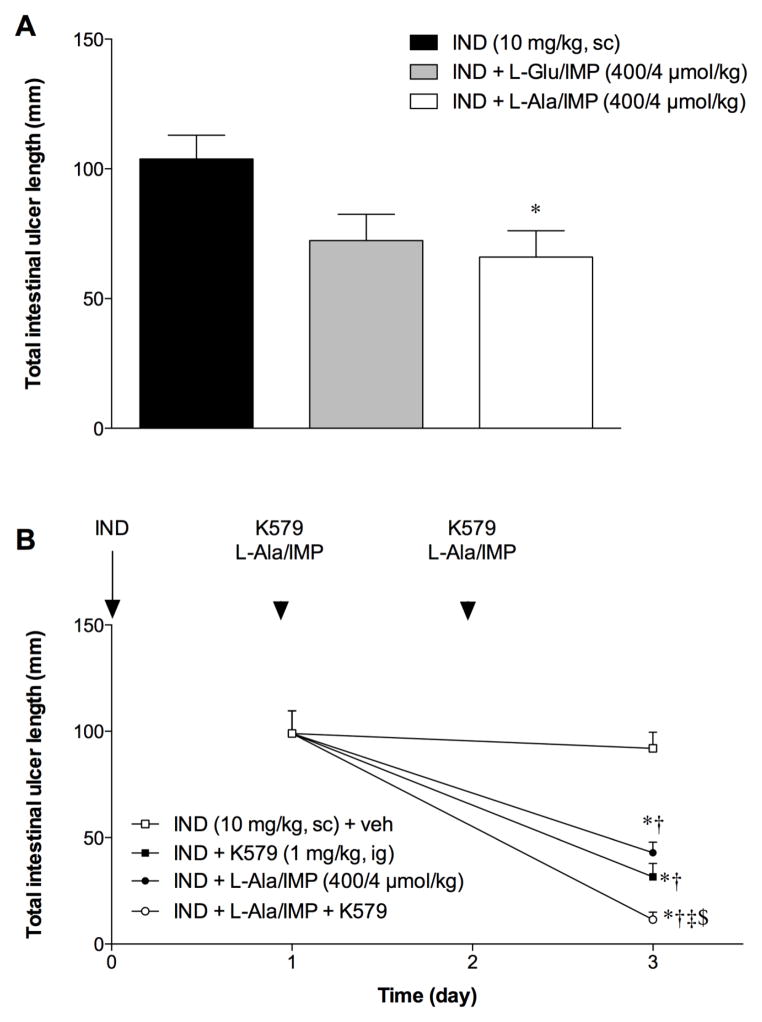
Fig. 6. Effect of L-Ala/IMP with DPPIV inhibition on intestinal ulcer healing
Total intestinal ulcer score was assessed on Days 1 and 3 after IND was given on Day 0. K579 (1 mg/kg, ig) and/or L-Ala/IMP (400/4 μmol/kg, ig) was given once a day on Day 1 and 2. Each data point represents mean ± SEM (n = 6 rats). *p < 0.05 vs. IND + veh group on Day 1, p < 0.05 vs. IND + veh group on Day 3, p < 0.05 vs. IND + K579 group on Day 3, §p < 0.05 vs. IND + L-Ala/IMP group on Day 3.
Fig. 7
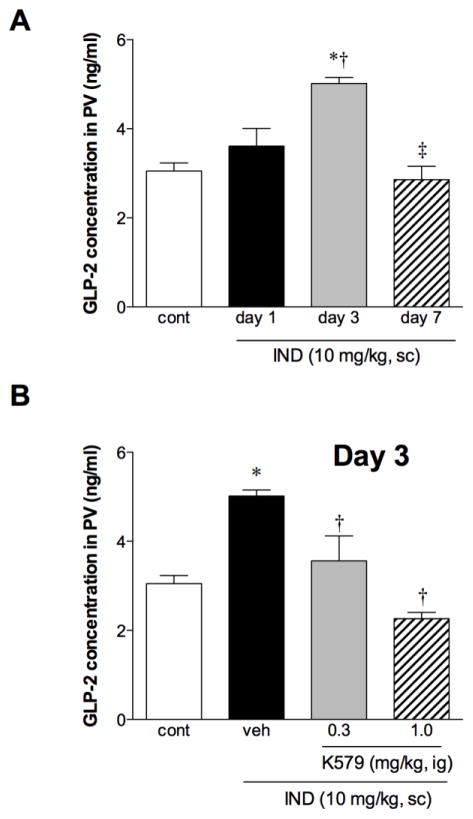
Fig. 7. GLP-2 concentration in portal vein (PV) during IND-induced intestinal ulcer healing
A: PV GLP-2 level on Days 1, 3, and 7 after IND treatment. Each data point represents mean ± SEM (n = 6 rats). *p < 0.05 vs. control, p < 0.05 vs. IND group on Day 1, p < 0.05 vs. IND group on Day 3. B: PV GLP-2 level on Day 3 after IND treatment with or without K579 daily treatment (0.3 or 1 mg/kg, ig). Each data point represents mean ± SEM (n = 6 rats). *p < 0.05 vs. control, p < 0.05 vs. IND + veh group on Day 3.

References

    1. Higuchi K, Umegaki E, Watanabe T, Yoda Y, Morita E, Murano M, Tokioka S, Arakawa T. Present status and strategy of NSAIDs-induced small bowel injury. J Gastroenterol. 2009;44:879–888. - PubMed
    1. Matsumoto T, Kudo T, Esaki M, Yano T, Yamamoto H, Sakamoto C, Goto H, Nakase H, Tanaka S, Matsui T, Sugano K, Iida M. Prevalence of non-steroidal anti-inflammatory drug-induced enteropathy determined by double-balloon endoscopy: a Japanese multicenter study. Scand J Gastroenterol. 2008;43:490–496. - PubMed
    1. Graham DY, Opekun AR, Willingham FF, Qureshi WA. Visible small-intestinal mucosal injury in chronic NSAID users. Clin Gastroenterol Hepatol. 2005;3:55–59. - PubMed
    1. Bjarnason I, Hayllar J, Smethurst P, Price A, Gumpel MJ. Metronidazole reduces intestinal inflammation and blood loss in non-steroidal anti-inflammatory drug induced enteropathy. Gut. 1992;33:1204–1208. - PMC - PubMed
    1. Morris AJ, Murray L, Sturrock RD, Madhok R, Capell HA, Mackenzie JF. Short report: the effect of misoprostol on the anaemia of NSAID enteropathy. Aliment Pharmacol Ther. 1994;8:343–346. - PubMed

Publication types

MeSH terms

Substances