


Review
doi: 10.1161/HYPERTENSIONAHA.113.00613.
Epub 2013 Dec 30.
Obstructive sleep apnea and hypertension: an update
Affiliations
- PMID: 24379177
- PMCID: PMC4249687
- DOI: 10.1161/HYPERTENSIONAHA.113.00613
Item in Clipboard
Review
Obstructive sleep apnea and hypertension: an update
Hypertension.
2014 Feb.
No abstract available
Conflict of interest statement
TKo: No conflict(s) of interest/disclosure(s). TKa: No conflict(s) of interest/disclosure(s). VKS: Philips Respironics Foundation (gift to Mayo Foundation), consultant for: Respicardia, ResMed, Medtronic, and NeuPro; working with Mayo Health Solutions and their industry partners on intellectual property related to sleep and cardiovascular disease.
Figures
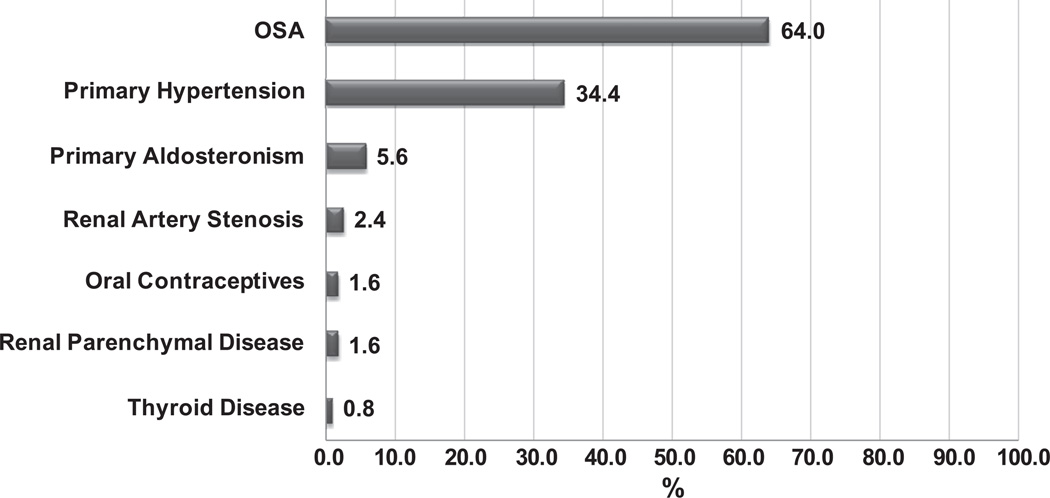
Prevalence of secondary causes of hypertension associated with resistant hypertension in a cohort of 125 patients from Brazil. Reproduced with permission: Pedrosa RP, Drager LF, Gonzaga CC, Sousa MG, de Paula LK, Amaro AC, Amodeo C, Bortolotto LA, Krieger EM, Bradley TD, Lorenzi-Filho G. Obstructive sleep apnea: The most common secondary cause of hypertension associated with resistant hypertension. Hypertension. 2011;58:811–817.
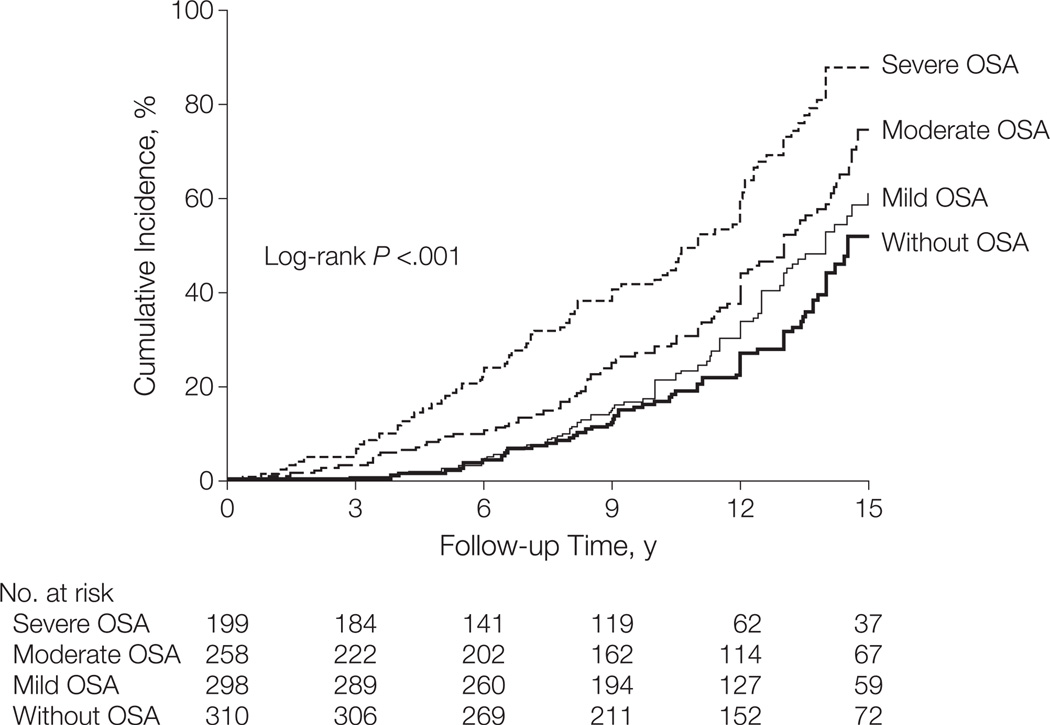
Cumulative incidence of HTN in the participants of a prospective cohort study by Marin et al. who were not treated with CPAP. (From Marin JM, Agusti A, Villar I, Forner M, Nieto D, Carrizo SJ, Barbe F, Vicente E, Wei Y, Nieto FJ, Jelic S. Association between treated and untreated obstructive sleep apnea and risk of hypertension. JAMA : the journal of the American Medical Association. 2012;307:2169–2176. Used with permission).
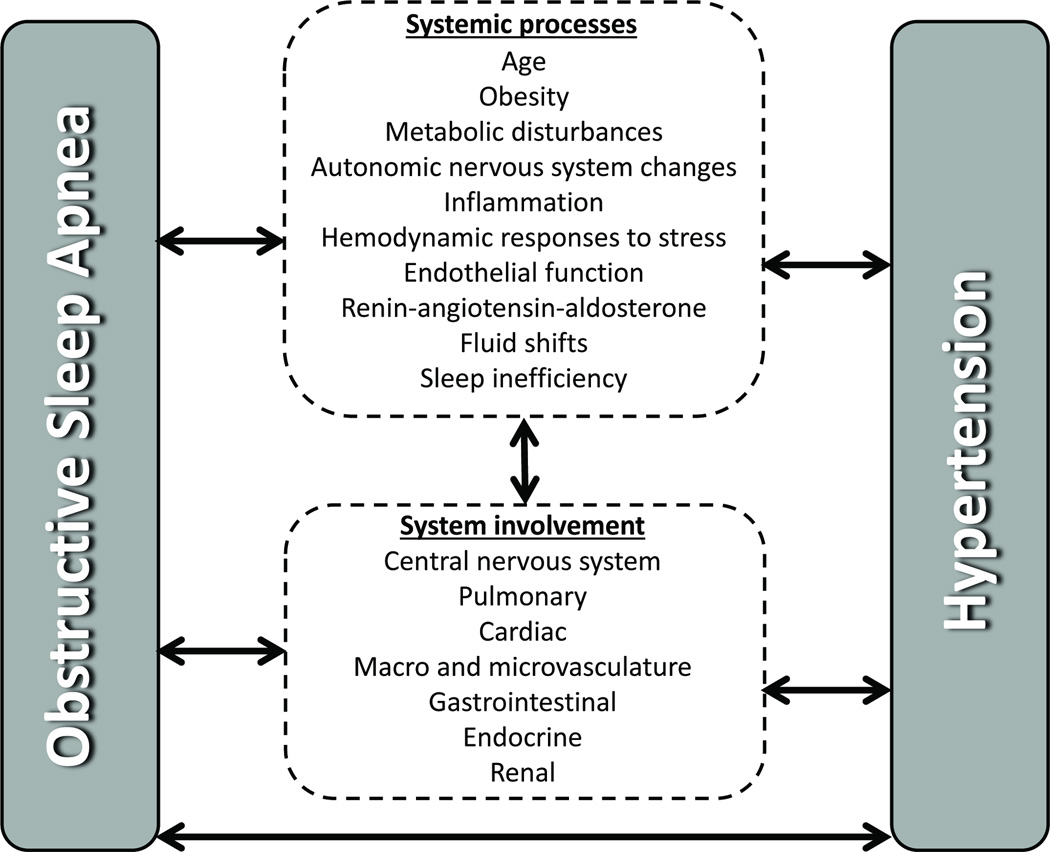
Schematic representation of the complex interactions between BP and OSA.
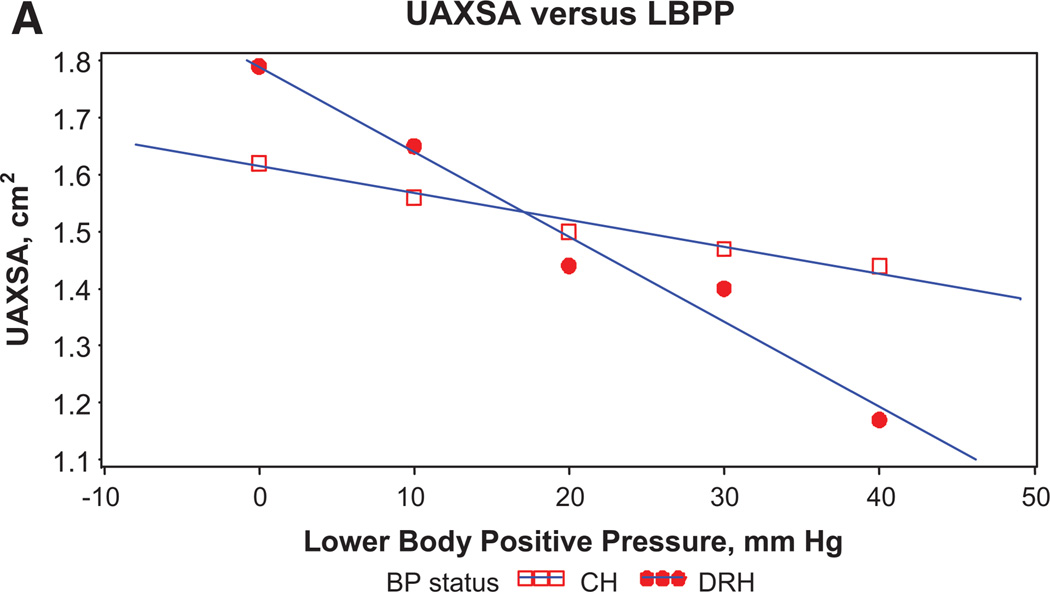
Relationship between mean upper airway cross-sectional area (UAXSA) in response to the graded lower body positive pressure (LBPP) in patients with controlled hypertension (CH) and drug resistant hypertension (DRH). Modified with permission (Friedman O, Bradley TD, Logan AG. Influence of lower body positive pressure on upper airway cross-sectional area in drug-resistant hypertension. Hypertension. 2013;61:240–245).
References
-
- Pedrosa RP, Drager LF, Gonzaga CC, Sousa MG, de Paula LK, Amaro AC, Amodeo C, Bortolotto LA, Krieger EM, Bradley TD, Lorenzi-Filho G. Obstructive sleep apnea: The most common secondary cause of hypertension associated with resistant hypertension. Hypertension. 2011;58:811–817. - PubMed
-
- Young T, Peppard P, Palta M, Hla KM, Finn L, Morgan B, Skatrud J. Population-based study of sleep-disordered breathing as a risk factor for hypertension. Arch Intern Med. 1997;157:1746–1752. - PubMed
-
- Haas DC, Foster GL, Nieto FJ, Redline S, Resnick HE, Robbins JA, Young T, Pickering TG. Age-dependent associations between sleep-disordered breathing and hypertension: Importance of discriminating between systolic/diastolic hypertension and isolated systolic hypertension in the sleep heart health study. Circulation. 2005;111:614–621. - PubMed
-
- Cano-Pumarega I, Duran-Cantolla J, Aizpuru F, Miranda-Serrano E, Rubio R, Martinez-Null C, de Miguel J, Egea C, Cancelo L, Alvarez A, Fernandez-Bolanos M, Barbe F. Obstructive sleep apnea and systemic hypertension: Longitudinal study in the general population: The vitoria sleep cohort. Am J Respir Crit Care Med. 2011;184:1299–1304. - PubMed
Publication types
MeSH terms
Grants and funding
LinkOut - more resources
Full Text Sources
Other Literature Sources
Medical
