


The inner rod protein controls substrate switching and needle length in a Salmonella type III secretion system
- PMID: 24379359
- PMCID: PMC3896146
- DOI: 10.1073/pnas.1319698111
The inner rod protein controls substrate switching and needle length in a Salmonella type III secretion system
Abstract
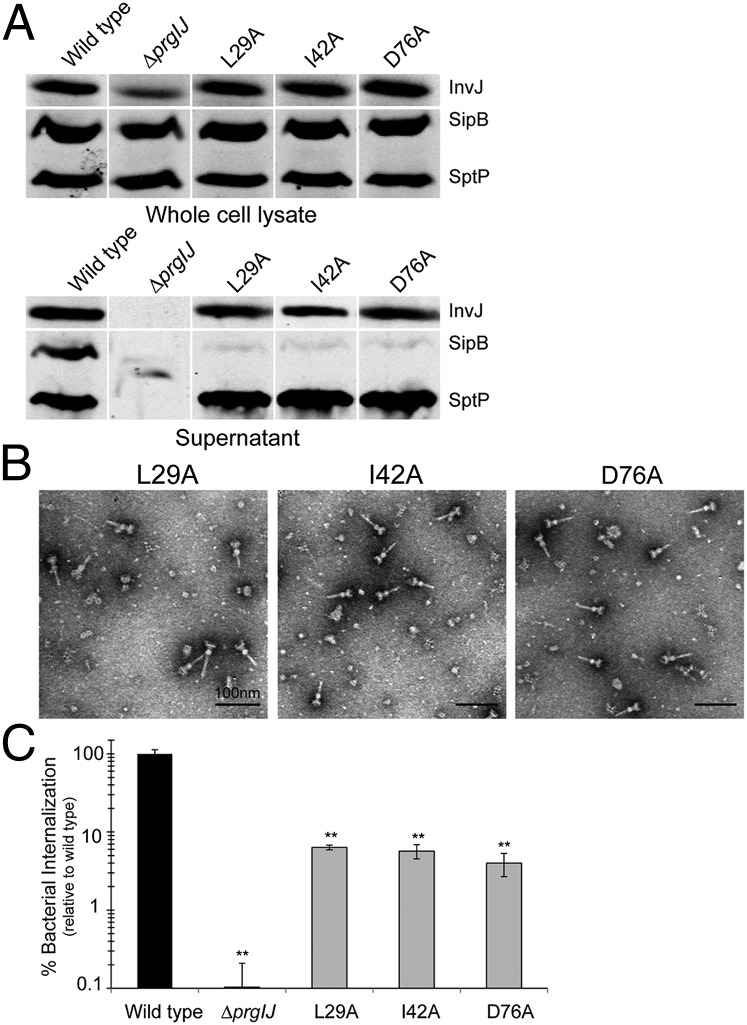
Type III secretion machines are essential for the biology of many bacteria that are pathogenic or symbiotic for animals, plants, or insects. They exert their function by delivering bacterial effector proteins into target eukaryotic cells. The core component of these machines is the needle complex, a multiprotein structure that spans the bacterial envelope and serves as a conduit for proteins that transit this secretion pathway. The needle complex is composed of a multiring base embedded in the bacterial envelope and a filament-like structure, the needle, that projects from the bacterial surface and is linked to the base by the inner rod. Assembly of the needle complex proceeds in a step-wise fashion that is initiated by the assembly of the base and is followed by the export of the building subunits for the needle and inner rod substructures. Once assembled, the needle complex reprograms its specificity and becomes competent for the secretion of effector proteins. Here through genetic, biochemical, and electron microscopy analyses of the Salmonella inner rod protein subunit PrgJ we present evidence that the assembly of the inner rod dictates the timing of substrate switching and needle length. Furthermore, the identification of mutations in PrgJ that specifically alter the hierarchy of protein secretion provides additional support for a complex role of the inner rod substructure in type III secretion.
Keywords: Salmonella pathogenesis; bacterial pathogenesis; organelle assembly.
Conflict of interest statement
The authors declare no conflict of interest.
Figures
References
Publication types
MeSH terms
Substances
Grants and funding
LinkOut - more resources
Full Text Sources
Other Literature Sources
