


Effects of antiviral therapy on preventing liver tumorigenesis and hepatocellular carcinoma recurrence
- PMID: 24379613
- PMCID: PMC3870541
- DOI: 10.3748/wjg.v19.i47.8895
Effects of antiviral therapy on preventing liver tumorigenesis and hepatocellular carcinoma recurrence
Abstract
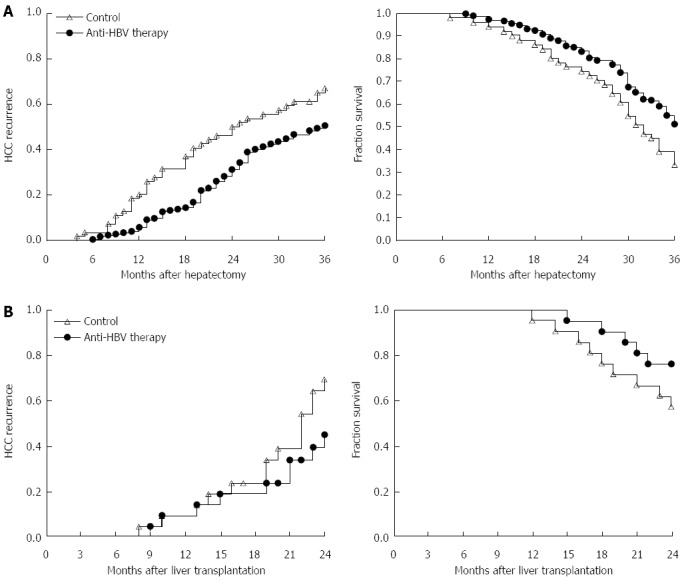
Chronic hepatitis B virus (HBV) infection is the key driving force of liver disease progression, resulting in the development of hepatic dysfunction, cirrhosis and hepatocellular carcinoma (HCC). The primary aim of therapy is to suppress or eliminate HBV replication to reduce the activity of hepatitis, thus reducing the risk of, or slowing the progression of, liver disease. Nucleos(t)ide analogues (Nucs) may result in rapid suppression of HBV replication with normalization of serum transaminases and restore liver function, thus increasing survival in patients with hepatic decompensation. Long-term Nuc therapy may result in histological improvement or reversal of advanced fibrosis and reduction in disease progression, including the development of HCC. The long-term benefits of a finite course of interferon (IFN)-α therapy also include a sustained and cumulative response, as well as hepatitis B surface antigen seroclearance and reduction in the development of cirrhosis and/or HCC. Pegylated IFN and newer Nucs may achieve better long-term outcomes because of improved efficacy and a low risk of drug resistance. However, treatment outcomes are still far from satisfactory. Understanding the effects of anti-HBV treatment against HCC incidence and recurrence after hepatectomy or liver transplantation is required for further improvement of outcome.
Keywords: Antiviral therapy; Carcinogenesis; Clinical trial; Hepatocelluar carcinoma; Interferon; Nucleos(t)ide analogues; Recurrence; Retrospective study.
Figures
References
-
- El-Serag HB, Rudolph KL. Hepatocellular carcinoma: epidemiology and molecular carcinogenesis. Gastroenterology. 2007;132:2557–2576. - PubMed
-
- Sherman M. Risk of hepatocellular carcinoma in hepatitis B and prevention through treatment. Cleve Clin J Med. 2009;76 Suppl 3:S6–S9. - PubMed
-
- Lim KC, Chow PK, Allen JC, Siddiqui FJ, Chan ES, Tan SB. Systematic review of outcomes of liver resection for early hepatocellular carcinoma within the Milan criteria. Br J Surg. 2012;99:1622–1629. - PubMed
-
- Rehermann B, Nascimbeni M. Immunology of hepatitis B virus and hepatitis C virus infection. Nat Rev Immunol. 2005;5:215–229. - PubMed
Publication types
MeSH terms
Substances
LinkOut - more resources
Full Text Sources
Other Literature Sources
Medical
Miscellaneous
