


Therapeutic uses and pharmacological properties of garlic, shallot, and their biologically active compounds
- PMID: 24379960
- PMCID: PMC3874089
Therapeutic uses and pharmacological properties of garlic, shallot, and their biologically active compounds
Abstract
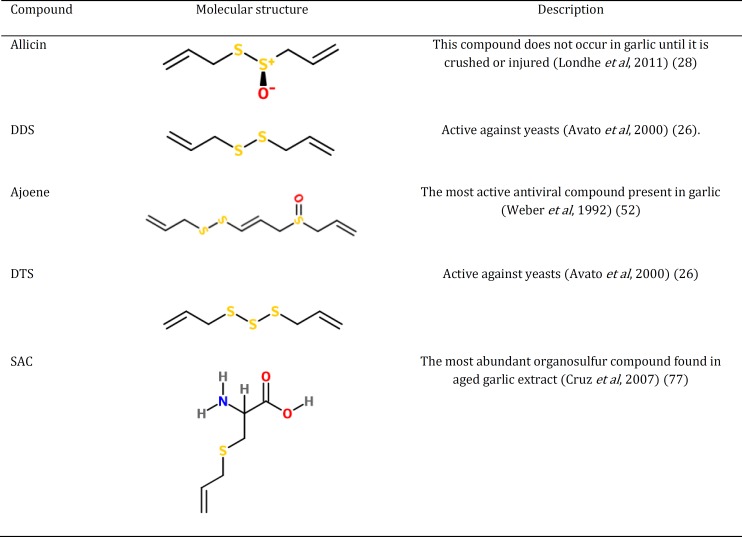
Objective(s): Garlic (Allium sativum L. family Liliaceae) is well known in Iran and its leaves, flowers, and cloves have been used in traditional medicine for a long time. Research in recent decades has shown widespread pharmacological effects of A. sativum and its organosulfur compounds especially Allicin. Studies carried out on the chemical composition of the plant show that the most important constituents of this plant are organosulfur compounds such as allicin, diallyl disulphide, S-allylcysteine, and diallyl trisulfide. Allicin represents one of the most studied among these naturally occurring compounds. In addition to A. sativum, these compounds are also present in A. hirtifolium (shallot) and have been used to treat various diseases. This article reviews the pharmacological effects and traditional uses of A. sativum, A. hirtifolium, and their active constituents to show whether or not they can be further used as potential natural sources for the development of novel drugs.
Materials and methods: For this purpose, the authors went through a vast number of sources and articles and all needed data was gathered. The findings were reviewed and classified on the basis of relevance to the topic and a summary of all effects were reported as tables.
Conclusion: Garlic and shallots are safe and rich sources of biologically active compounds with low toxicity. Further studies are needed to confirm the safety and quality of the plants to be used by clinicians as therapeutic agents.
Keywords: Allium hirtifolium; Allium sativum; Garlic; Pharmacological effects; Shallot; Traditional uses.
Figures
References
-
- Singh TU, Kumar D, Tandan SK, Mishra SK. Inhibitory effect of essential oils of Allium sativum and Piper longum on spontaneous muscular activity of liver fluke, Fasciola gigantica. Exp Parasitol. 2009;123:302–308. - PubMed
-
- Eja ME, Asikong BE, Abriba C, Arikpo GE, Anwan EE, Enyi-Idoh KH. A comparative assessinent of the antimicrobial effects of Garlic (Allium sativum) and Antibiotics on diarrheagenic organisms. Southeast Asian J Trop Med Public Health. 2007;38:2. - PubMed
-
- PDR for Herbal Medicines. Medical Economics Company, Inc: Montvale; 2000.
-
- Mikaili P, Mehdioghli R. Garlic Pharmacology. National Library and Archives Organisation of Iran; 2010. ISBN: 9789647780704. (In Persian)
-
- EL-mahmood MA. Efficacy of crude extracts of garlic (Allium sativum Linn) against nosocomial Escherichia coli, Staphylococcus aureus, Streptococcus pneumoniea and Pseudomonas aeruginosa. J Med Plants Res. 2009;3:179–185.
Publication types
LinkOut - more resources
Full Text Sources