


A dense linkage map for Chinook salmon (Oncorhynchus tshawytscha) reveals variable chromosomal divergence after an ancestral whole genome duplication event
- PMID: 24381192
- PMCID: PMC3962484
- DOI: 10.1534/g3.113.009316
A dense linkage map for Chinook salmon (Oncorhynchus tshawytscha) reveals variable chromosomal divergence after an ancestral whole genome duplication event
Erratum in
- G3 (Bethesda). 2014 Jul;4(7):1359
Abstract
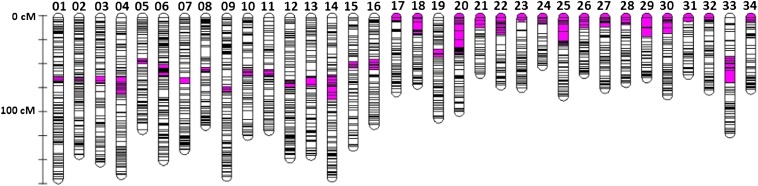
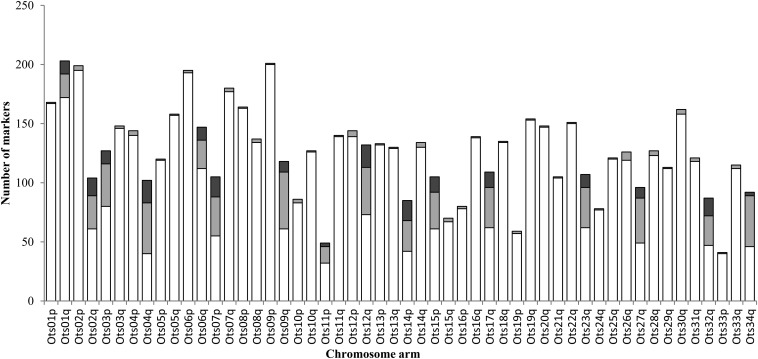
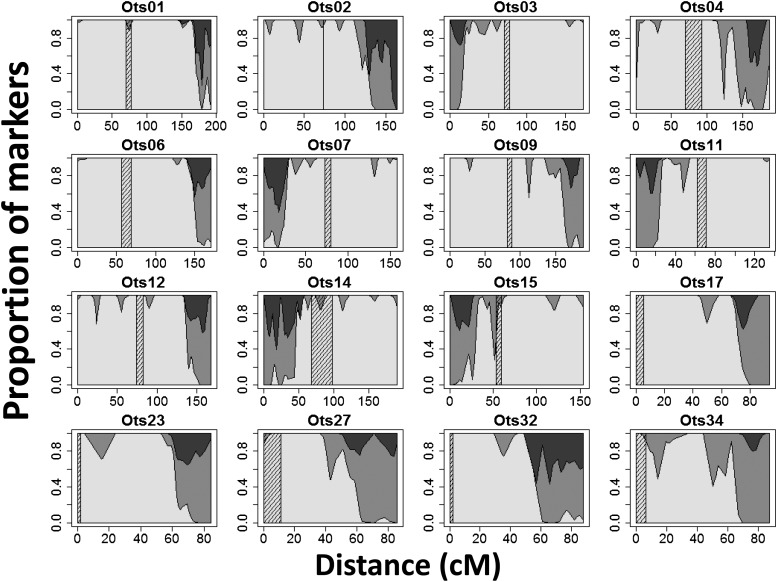
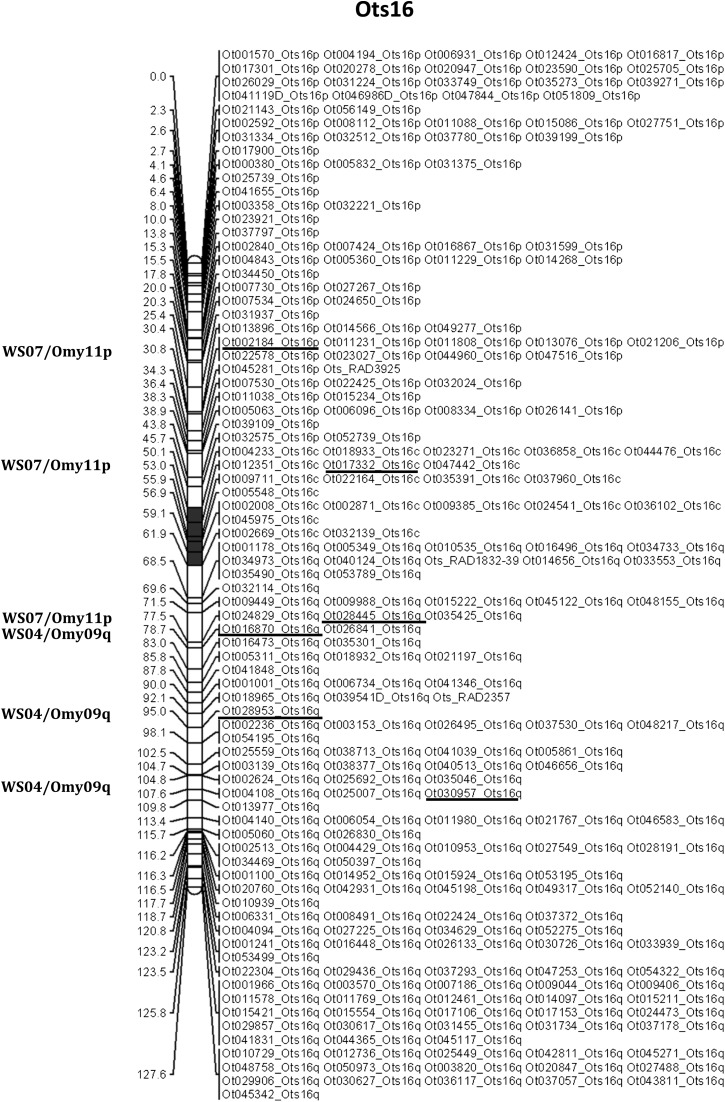
Comparisons between the genomes of salmon species reveal that they underwent extensive chromosomal rearrangements following whole genome duplication that occurred in their lineage 58-63 million years ago. Extant salmonids are diploid, but occasional pairing between homeologous chromosomes exists in males. The consequences of re-diploidization can be characterized by mapping the position of duplicated loci in such species. Linkage maps are also a valuable tool for genome-wide applications such as genome-wide association studies, quantitative trait loci mapping or genome scans. Here, we investigated chromosomal evolution in Chinook salmon (Oncorhynchus tshawytscha) after genome duplication by mapping 7146 restriction-site associated DNA loci in gynogenetic haploid, gynogenetic diploid, and diploid crosses. In the process, we developed a reference database of restriction-site associated DNA loci for Chinook salmon comprising 48528 non-duplicated loci and 6409 known duplicated loci, which will facilitate locus identification and data sharing. We created a very dense linkage map anchored to all 34 chromosomes for the species, and all arms were identified through centromere mapping. The map positions of 799 duplicated loci revealed that homeologous pairs have diverged at different rates following whole genome duplication, and that degree of differentiation along arms was variable. Many of the homeologous pairs with high numbers of duplicated markers appear conserved with other salmon species, suggesting that retention of conserved homeologous pairing in some arms preceded species divergence. As chromosome arms are highly conserved across species, the major resources developed for Chinook salmon in this study are also relevant for other related species.
Keywords: Chinook salmon; RAD sequencing; chromosome homeologies; linkage map; whole genome duplication.
Figures
References
-
- Abadia-Cardoso A., Clemento A. J., Garza J. C., 2011. Discovery and characterization of single-nucleotide polymorphisms in steelhead/rainbow trout, Oncorhynchus mykiss. Molecular Ecology Resources 11: 31–49 - PubMed
-
- Allendorf F. W., Thorgaard G. H., 1984. Tetraploidy and the Evolution of Salmonid Fishes in Evolutionary Genetics of Fishes, edited by Turner B. J. Plenum Press, New York
-
- Allendorf F. W., Seeb J. E., Knudsen K. L., Thorgaard G. H., Leary R. F., 1986. Gene-centromere mapping of 25 loci in rainbow-trout. J. Hered. 77: 307–312
-
- Altschul S. F., Gish W., Miller W., Myers E. W., Lipman D. J., 1990. Basic local alignment search tool. J. Mol. Biol. 215: 403–410 - PubMed
Publication types
MeSH terms
LinkOut - more resources
Full Text Sources
Other Literature Sources
Research Materials