


Estimating global and regional morbidity from acute bacterial meningitis in children: assessment of the evidence
- PMID: 24382845
- PMCID: PMC3893986
- DOI: 10.3325/cmj.2013.54.510
Estimating global and regional morbidity from acute bacterial meningitis in children: assessment of the evidence
Abstract
Aim: To estimate global morbidity from acute bacterial meningitis in children.
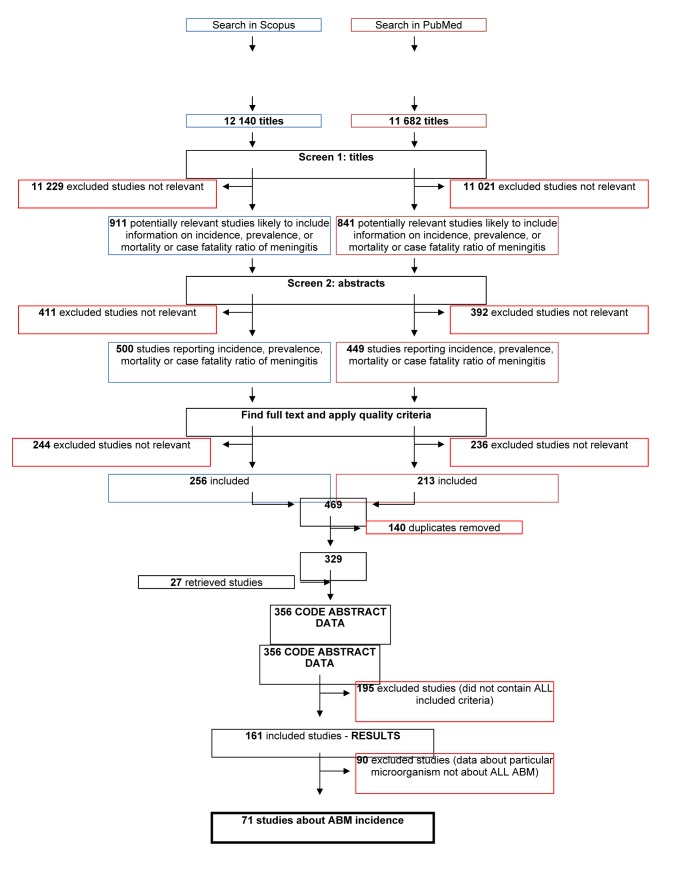
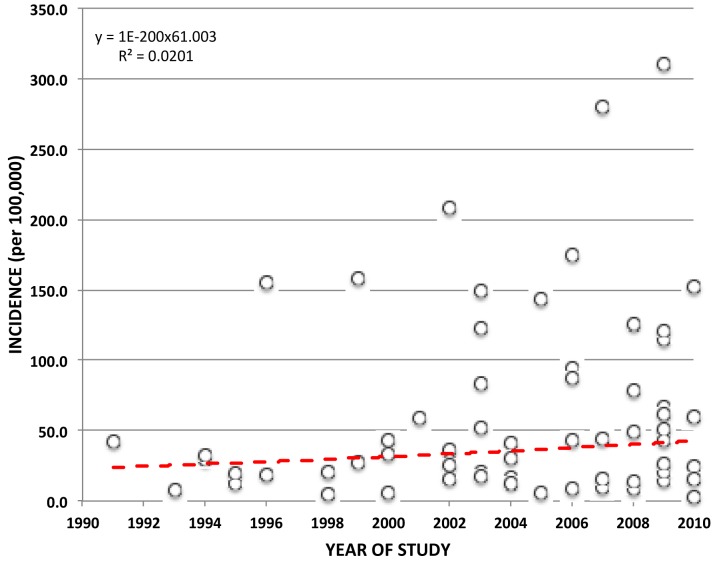
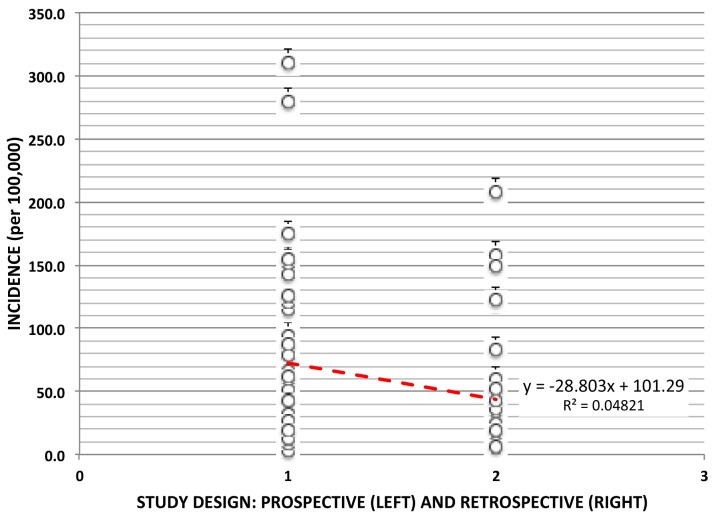
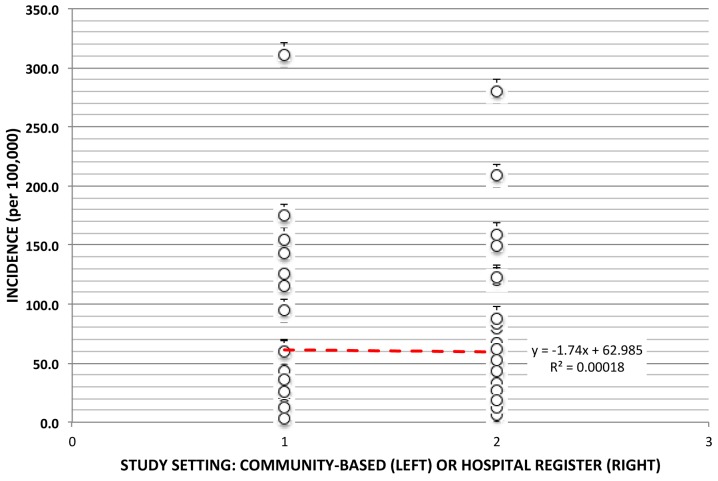
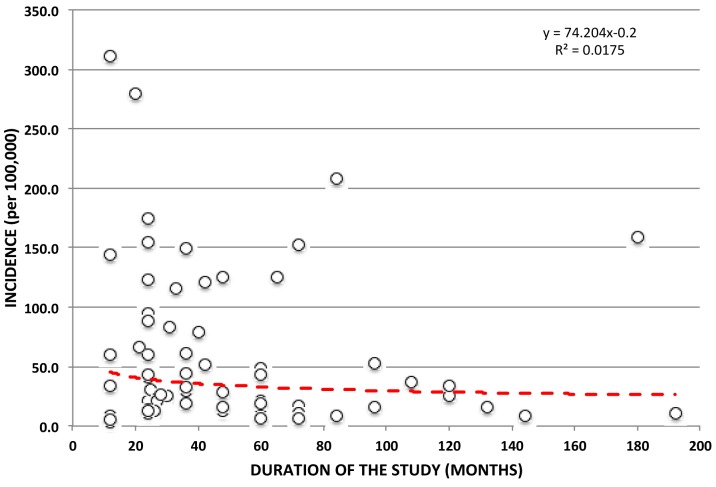
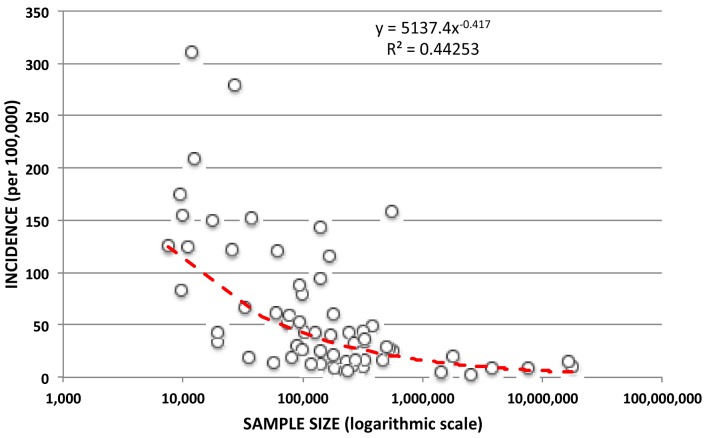
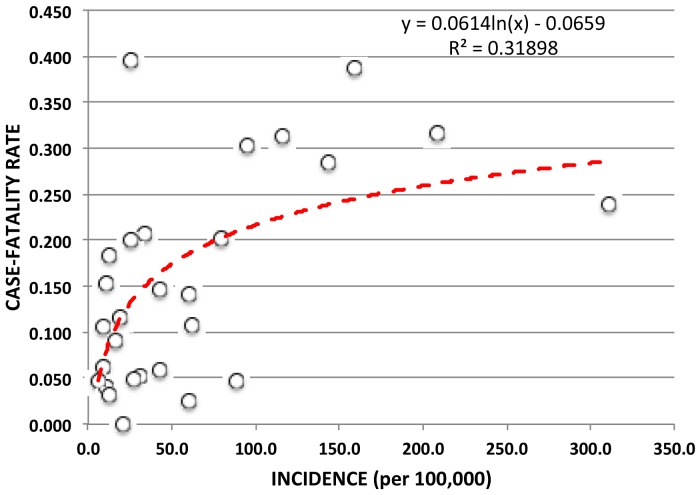
Methods: We conducted a systematic review of the PubMed and Scopus databases to identify both community-based and hospital registry-based studies that could be useful in estimation of the global morbidity from bacterial meningitis in children. We were primarily interested in the availability and quality of the information on incidence rates and case-fatality rates. We assessed the impact of the year of study, study design, study setting, the duration of study, and sample size on reported incidence values, and also any association between incidence and case-fatality rate. We also categorized the studies by 6 World Health Organization regions and analyzed the plausibility of estimates derived from the current evidence using median and inter-quartile range of the available reports in each region.
Results: We found 71 studies that met the inclusion criteria. The only two significant associations between the reported incidence and studied covariates were the negative correlation between the incidence and sample size (P<0.001) and positive correlation between incidence and case-fatality rate (P<0.001). The median incidence per 100000 child-years was highest in the African region - 143.6 (interquartile range [IQR] 115.6-174.6), followed by Western Pacific region with 42.9 (12.4-83.4), the Eastern Mediterranean region with 34.3 (9.9-42.0), South East Asia with 26.8 (21.0-60.3), Europe with 20.8 (16.2-29.7), and American region with 16.6 (10.3-33.7). The median case-fatality rate was also highest in the African region (31.3%). Globally, the median incidence for all 71 studies was 34.0 (16.0-88.0) per 100000 child-years, with a median case-fatality rate of 14.4% (5.3%-26.2%).
Conclusions: Our study showed that there was now sufficient evidence to generate improved and internally consistent estimates of the global burden of acute bacterial meningitis in children. Although some of our region-specific estimates are very uncertain due to scarcity of data from the corresponding regions, the estimates of morbidity and case-fatality from childhood bacterial meningitis derived from this study are consistent with mortality estimates derived from multi-cause mortality studies. Both lines of evidence imply that bacterial meningitis is a cause of 2% of all child deaths.
Figures
References
MeSH terms
LinkOut - more resources
Full Text Sources
Other Literature Sources
Medical
Miscellaneous
