


Neuroendocrine immunoregulation in multiple sclerosis
- PMID: 24382974
- PMCID: PMC3870621
- DOI: 10.1155/2013/705232
Neuroendocrine immunoregulation in multiple sclerosis
Abstract
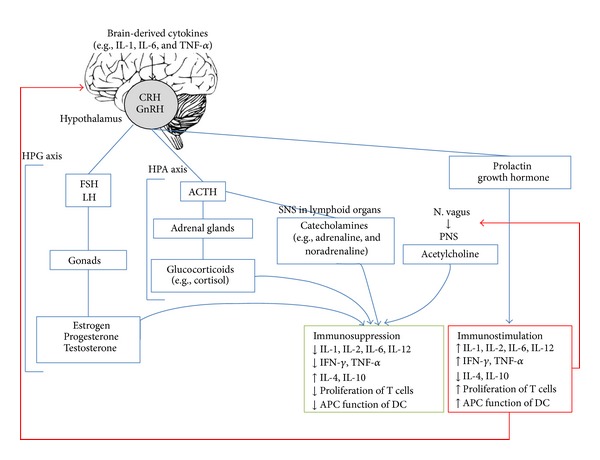
Currently, it is generally accepted that multiple sclerosis (MS) is a complex multifactorial disease involving genetic and environmental factors affecting the autoreactive immune responses that lead to damage of myelin. In this respect, intrinsic or extrinsic factors such as emotional, psychological, traumatic, or inflammatory stress as well as a variety of other lifestyle interventions can influence the neuroendocrine system. On its turn, it has been demonstrated that the neuroendocrine system has immunomodulatory potential. Moreover, the neuroendocrine and immune systems communicate bidirectionally via shared receptors and shared messenger molecules, variously called hormones, neurotransmitters, or cytokines. Discrepancies at any level can therefore lead to changes in susceptibility and to severity of several autoimmune and inflammatory diseases. Here we provide an overview of the complex system of crosstalk between the neuroendocrine and immune system as well as reported dysfunctions involved in the pathogenesis of autoimmunity, including MS. Finally, possible strategies to intervene with the neuroendocrine-immune system for MS patient management will be discussed. Ultimately, a better understanding of the interactions between the neuroendocrine system and the immune system can open up new therapeutic approaches for the treatment of MS as well as other autoimmune diseases.
Figures
References
-
- Sospedra M, Martin R. Immunology of multiple sclerosis. Annual Review of Immunology. 2005;23:683–747. - PubMed
-
- Ebers GC. Environmental factors and multiple sclerosis. The Lancet Neurology. 2008;7(3):268–277. - PubMed
-
- Sternberg EM. Neuroendocrine regulation of autoimmune/inflammatory disease. Journal of Endocrinology. 2001;169(3):429–435. - PubMed
-
- Miyake S. Mind over cytokines: crosstalk and regulation between the neuroendocrine and immune systems. Clinical and Experimental Neuroimmunology. 2012;3(1):1–15.
-
- Besedovsky HO, Del Rey A. Immune-neuro-endocrine interactions: facts and hypotheses. Endocrine Reviews. 1996;17(1):64–102. - PubMed
Publication types
MeSH terms
LinkOut - more resources
Full Text Sources
Other Literature Sources
Medical
