


Threshold and subthreshold generalized anxiety disorder among US adolescents: prevalence, sociodemographic, and clinical characteristics
- PMID: 24384401
- PMCID: PMC4079772
- DOI: 10.1017/S0033291713002997
Threshold and subthreshold generalized anxiety disorder among US adolescents: prevalence, sociodemographic, and clinical characteristics
Abstract
Background: Threshold and subthreshold forms of generalized anxiety disorder (GAD) are highly prevalent and impairing conditions among adults. However, there are few general population studies that have examined these conditions during the early life course. The primary objectives of this study were to: (1) examine the prevalence, and sociodemographic and clinical characteristics of threshold and subthreshold forms of GAD in a nationally representative sample of US youth; and (2) test differences in sociodemographic and clinical characteristics between threshold and subthreshold forms of the disorder.
Method: The National Comorbidity Survey-Adolescent Supplement is a nationally representative face-to-face survey of 10,123 adolescents 13 to 18 years of age in the continental USA.
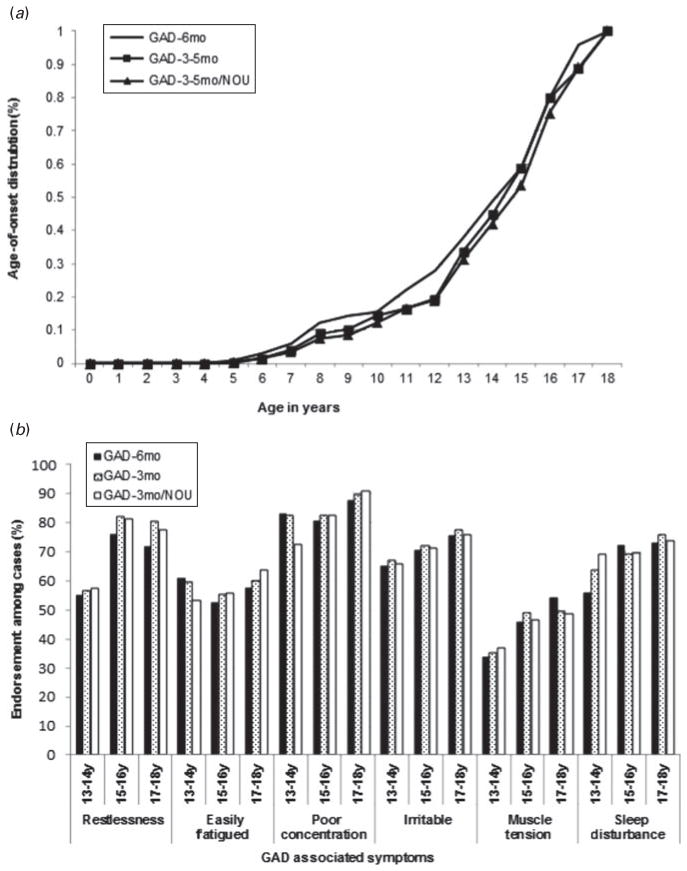
Results: Approximately 3% of adolescents met criteria for threshold GAD. Reducing the required duration from 6 months to 3 months resulted in a 65.7% increase in prevalence (5.0%); further relaxing the uncontrollability criterion led to an additional 20.7% increase in prevalence (6.1%). Adolescents with all forms of GAD displayed a recurrent clinical course marked by substantial impairment and co-morbidity with other psychiatric disorders. There were few significant differences in sociodemographic and clinical characteristics between threshold and subthreshold cases of GAD. Results also revealed age-related differences in the associated symptoms and clinical course of GAD.
Conclusions: Findings demonstrate the clinical significance of subthreshold forms of GAD among adolescent youth, highlighting the continuous nature of the GAD construct. Age-related differences in the associated symptoms and clinical course of GAD provide further support for criteria that capture variation in clinical features across development.
Conflict of interest statement
None.
Figures
References
-
- Andrews G, Hobbs MJ. The effect of the draft DSM-5 criteria for GAD on prevalence and severity. Australian and New Zealand Journal of Psychiatry. 2010;44:784–790. - PubMed
-
- Andrews G, Hobbs MJ, Borkovec TD, Beesdo K, Craske MG, Heimberg RG, Rapee RM, Ruscio AM, Stanley MA. Generalized worry disorder: a review of DSM-IV generalized anxiety disorder and options for DSM-V. Depression and Anxiety. 2010;27:134–147. - PubMed
-
- Angst J, Gamma A, Baldwin DS, Ajdacic-Gross V, Rossler W. The generalized anxiety spectrum: prevalence, onset, course and outcome. European Archives of Psychiatry and Clinical Neuroscience. 2009;259:37–45. - PubMed
-
- Angst J, Gamma A, Bienvenu OJ, Eaton WW, Ajdacic V, Eich D, Rössler W. Varying temporal criteria for generalized anxiety disorder: prevalence and clinical characteristics in a young age cohort. Psychological Medicine. 2006;36:1283–1292. - PubMed
Publication types
MeSH terms
Grants and funding
LinkOut - more resources
Full Text Sources
Other Literature Sources
Medical
Miscellaneous
