


Metal concentrations in cosmetics commonly used in Nigeria
- PMID: 24385889
- PMCID: PMC3872107
- DOI: 10.1155/2013/959637
Metal concentrations in cosmetics commonly used in Nigeria
Abstract
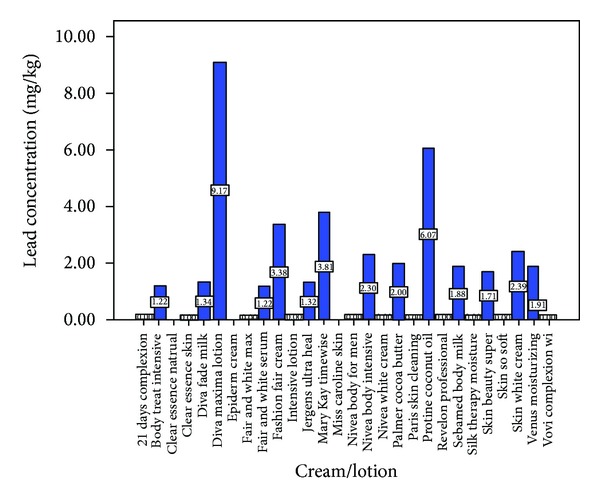
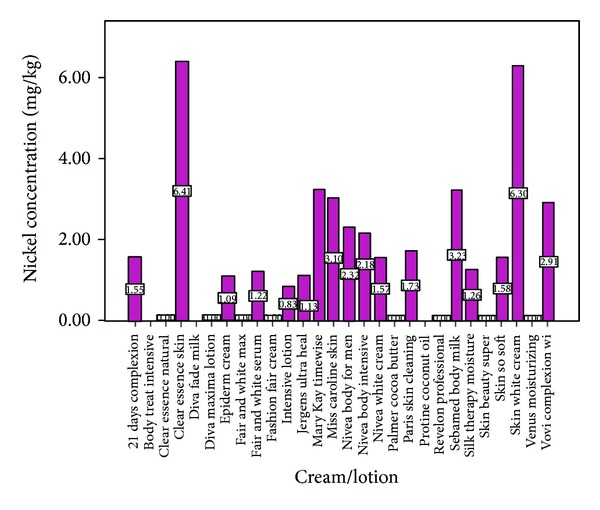
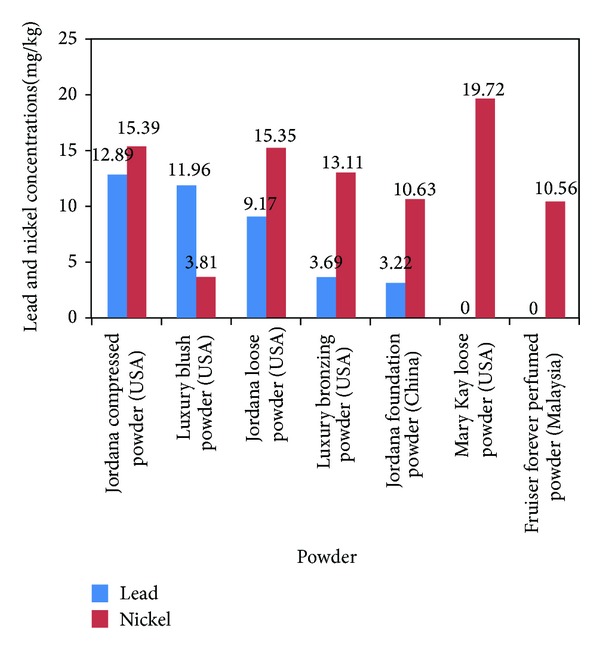
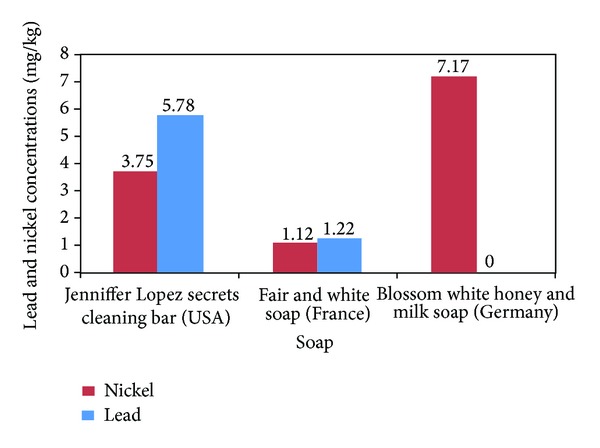
Trace amounts of potentially toxic metals can be either intentionally added to cosmetics or present as impurities in the raw materials. In the present study, the levels of lead, cadmium, nickel, chromium, and mercury have been assessed in 28 body creams and lotions, 10 powders, 3 soaps, 5 eye make-ups, and 4 lipsticks widely available on Nigerian markets. The increases over suggested or mandated levels of lead in these creams and lotions ranged from 6.1 to 45.9 and from 1.2 to 9.2 mg kg⁻¹ when compared with Cosmetic Ingredients Review Expert Panel 2007 and German safe maximum permissible limit of lead in cosmetics, respectively. About 61% of the body cosmetics, the lotions, and the creams contained detectable levels of nickel ranging from 1.1 to 6.4-9.2 mg kg⁻¹. Chromium and mercury were undetected in 100% of the cosmetic product. Taken together, lead and cadmium were high in creams and lotions. Most of the imported creams and creamy white coloured cosmetics contained higher levels of metal contaminants than the other colours. Regulatory Agencies in developing nations should take appropriate action for cosmetics that contain lead and cadmium beyond the reference limits.
Figures
References
-
- Abdel-Fattah A, Pingitore NE., Jr. Low levels of toxic elements in Dead Sea black mud and mud-derived cosmetic products. Environmental Geochemistry and Health. 2009;31(4):487–492. - PubMed
-
- Al-Saleh I, Al-Enazi S, Shinwari N. Assessment of lead in cosmetic products. Regulatory Toxicology and Pharmacology. 2009;54(2):105–113. - PubMed
-
- Ayenimo JG, Yusuf AM, Adekunle AS, Makinde OW. Heavy metal exposure from personal care products. Bulletin of Environmental Contamination and Toxicology. 2010;84(1):8–14. - PubMed
-
- Hepp NM, Mindak WR, Cheng J. Determination of total lead in lipstick: development and validation of a microwave-assisted digestion, inductively coupled plasma-mass spectrometric method. Journal of Cosmetic Science. 2009;60(4):405–414. - PubMed
-
- Lee S-M, Jeong H-J, Chang IS. Simultaneous determination of heavy metals in cosmetic products. Journal of Cosmetic Science. 2008;59(5):441–448. - PubMed
MeSH terms
Substances
LinkOut - more resources
Full Text Sources
Other Literature Sources
Medical
