. 2013;9(12):e1003825.
doi: 10.1371/journal.ppat.1003825. Epub 2013 Dec 26.

Cyclin A degradation by primate cytomegalovirus protein pUL21a counters its innate restriction of virus replication

Affiliations

Cyclin A degradation by primate cytomegalovirus protein pUL21a counters its innate restriction of virus replication

Nicolas Caffarelli et al. PLoS Pathog. 2013.

Abstract

Cyclin A is critical for cellular DNA synthesis and S phase progression of the cell cycle. Human cytomegalovirus (HCMV) can reduce cyclin A levels and block cellular DNA synthesis, and cyclin A overexpression can repress HCMV replication. This interaction has only been previously observed in HCMV as murine CMV does not downregulate cyclin A, and the responsible viral factor has not been identified. We previously reported that the HCMV protein pUL21a disrupted the anaphase-promoting complex (APC), but a point mutant abrogating this activity did not phenocopy a UL21a-deficient virus, suggesting that pUL21a has an additional function. Here we identified a conserved arginine-x-leucine (RxL) cyclin-binding domain within pUL21a, which allowed pUL21a to interact with cyclin A and target it for proteasome degradation. Homologous pUL21a proteins from both chimpanzee and rhesus CMVs also contained the RxL domain and similarly degraded cyclin A, indicating that this function is conserved in primate CMVs. The RxL point mutation disabled the virus' ability to block cellular DNA synthesis and resulted in a growth defect similar to pUL21a-deficient virus. Importantly, knockdown of cyclin A rescued growth of UL21a-deficient virus. Together, these data show that during evolution, the pUL21a family proteins of primate CMVs have acquired a cyclin-binding domain that targets cyclin A for degradation, thus neutralizing its restriction on virus replication. Finally, the combined proteasome-dependent degradation of pUL21a and its cellular targets suggests that pUL21a may act as a novel suicide protein, targeting its protein cargos for destruction.


Conflict of interest statement

The authors have declared that no competing interests exist.

Figures
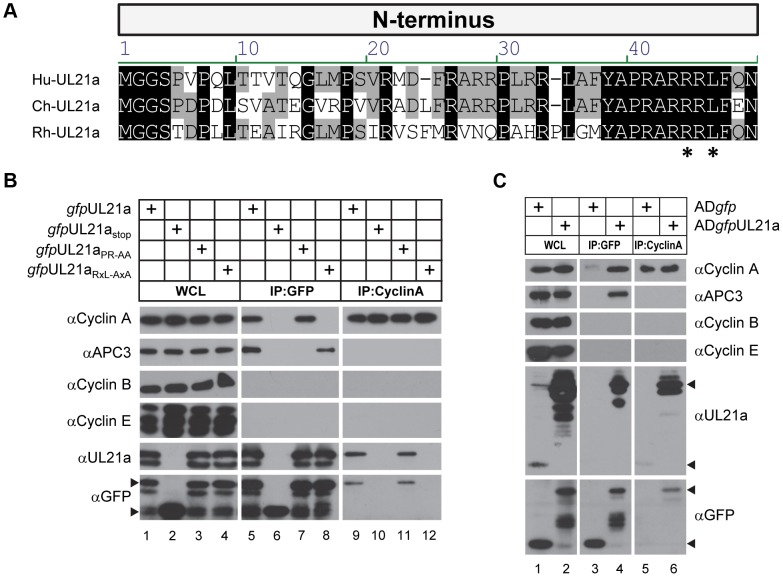
Figure 1
Figure 1. HCMV pUL21a interacts with cyclin A through its cyclin-binding domain.
(A) Alignment of the N-terminus of the UL21a coding sequence from HCMV (top), ChCMV (middle) and RhCMV (bottom). Asterisks denote the residues of the RxL motif that were subject to mutagenesis. (B) 293T cells were transfected with construct expressing a GFP tagged version of wildtype (gfpUL21a), stop mutant (gfpUL21astop), APC-binding domain mutant (gfpUL21aPR-AA), or cyclin-binding domain mutant (gfpUL21aRxL-AxA) pUL21a. Lysates were collected at 72 hours post infection (hpi), and immunoprecipitated with GFP or cyclin A antibody. Cell lysates and eluted proteins were analyzed by immunoblotting with indicated antibodies. Arrow indicates free GFP (bottom) or GFP-tagged pUL21a (top). Partial proteolysis was often seen with the GFP-tagged UL21a protein. (C) MRC-5 cells were infected with wildtype HCMV expressing free GFP (ADgfp) or GFP-tagged UL21a (ADgfpUL21a). Lysates were collected at 48 hpi and immunoprecipitated with GFP or cyclin A antibody. Cell lysates and eluted proteins were analyzed by immunoblotting. Arrow indicates free GFP, native pUL21a, or GFP-tagged pUL21a.
Figure 2
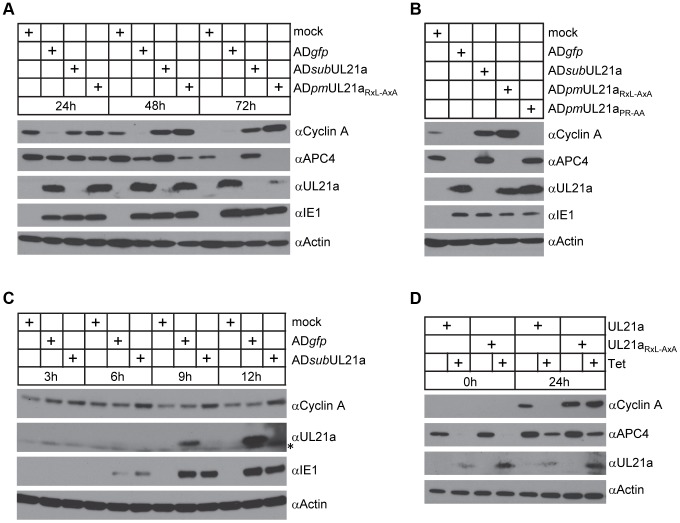
Figure 2. pUL21a reduces cyclin A protein levels.
(A) MRC-5 cells were mock infected or infected with indicated recombinant HCMV. Cell lysates were collected at 24, 48, or 72 hpi, and analyzed by immunoblotting. IE1 and actin were used as infection and loading controls, respectively. (B) MRC-5 cells were infected as in A with indicated recombinant HCMV. Cell lysates were collected at 48 hpi and analyzed by immunoblotting. (C) MRC-5 cells were infected as in A with indicated HCMV. Cell lysates were collected at indicated times and analyzed by immunoblotting. * indicates nonspecific cross-reacting bands. (D) MRC-5 cells expressing wildtype pUL21a (UL21a) or RxL mutant (UL21aRxL-AxA) under a tetracycline-inducible promoter were created by lentiviral transduction. Transduced cells were serum-starved for 24 hours, then treated with or without tetracycline (1 µg/ml) for 24 hours and re-stimulated with serum to induce cyclin A expression. Cell lysates were collected at 0 or 24 hours post serum stimulation and analyzed by immunoblotting.
Figure 3
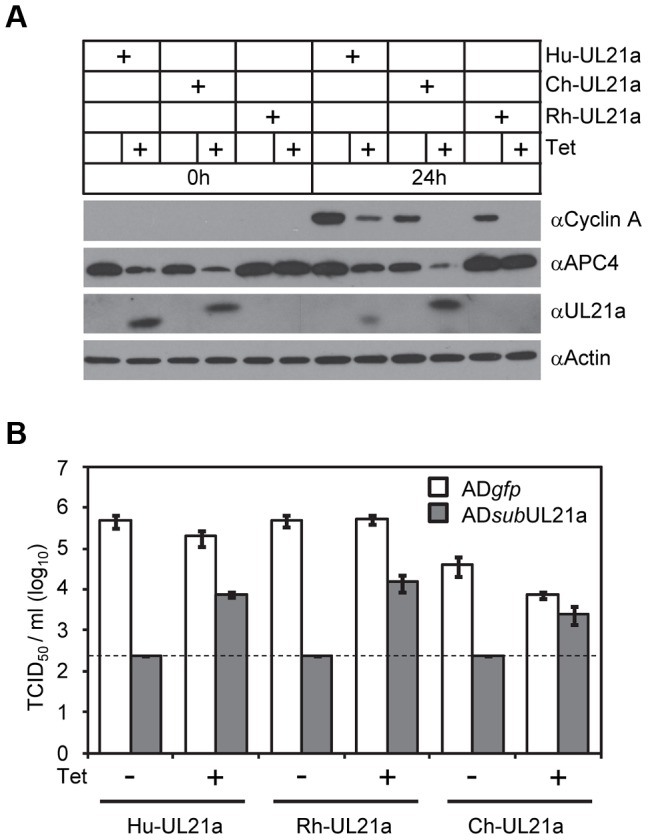
Figure 3. Activity to regulate Cyclin A is conserved in pUL21a of primate CMVs.
(A) MRC-5 cells expressing tetracycline-inducible pUL21a from HCMV (Hu-UL21a), ChCMV (Ch-UL21a), or RhCMV (Rh-UL21a) were analyzed as described in 2D. Note that the HCMV pUL21a antibody recognized the slightly larger ChCMV pUL21a but not RhCMV pUL21a, likely due to the lack of cross-reactivity with this more divergent protein. (B) Cells expressing pUL21a variants from (A) were infected with either ADgfp or ADsubUL21a at an MOI of 0.1 TCID50/cell with or without tetracycline. Culture supernatant was collected 6 days post infection (dpi) and titer of cell free virus was determined by TCID50 assay. Dashed line indicates the limit of detection.
Figure 4
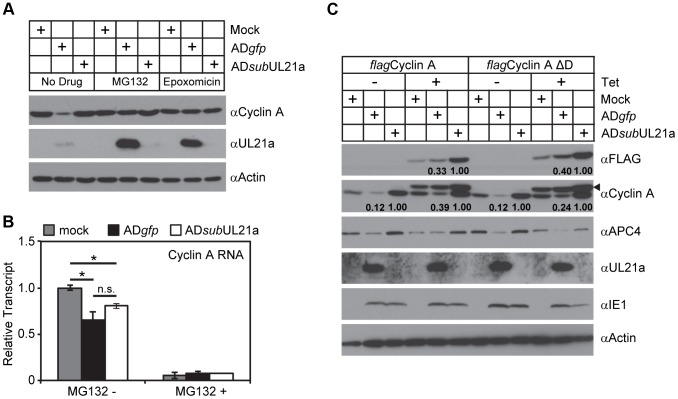
Figure 4. pUL21a induces proteasome-dependent degradation of cyclin A.
(A) MRC-5 cells were mock infected or infected with ADgfp or ADsubUL21a. Infected cells were treated with or without MG132 or epoxomicin for 9 hours prior to collection. Cell lysates were collected at 24 hpi and analyzed by immunoblotting. (B) MRC-5 cells were infected as described in A. Cells were treated with or without MG132 at 9 hpi, and RNA was extracted at 18 hpi. Cyclin A transcripts were quantified by real-time quantitative PCR (RT-qPCR) and normalized to GAPDH. The normalized levels of cyclin A transcripts in mock infected samples were arbitrarily set to 1. p values were determined using the student's t test. *, p value <0.05; n.s. (not significant), p value >0.05. (C) MRC-5 cells expressing tetracycline-inducible wildtype cyclin A (flagCyclin A) or D-box mutant cyclin A (flagCyclin A ΔD) were created by lentiviral transduction. Cells were then infected with indicated viruses, treated with or without tetracycline, and analyzed by immunoblotting at 24 hpi. Arrow indicates FLAG-tagged cyclin A variants detected by cyclin A antibody. Protein bands of FLAG-tagged cyclin A (in anti-FLAG blot) and endogenous cyclin A (in anti-cyclin A blot) were quantitated using Image J software and normalized to ADsubUL21a under each condition.
Figure 5
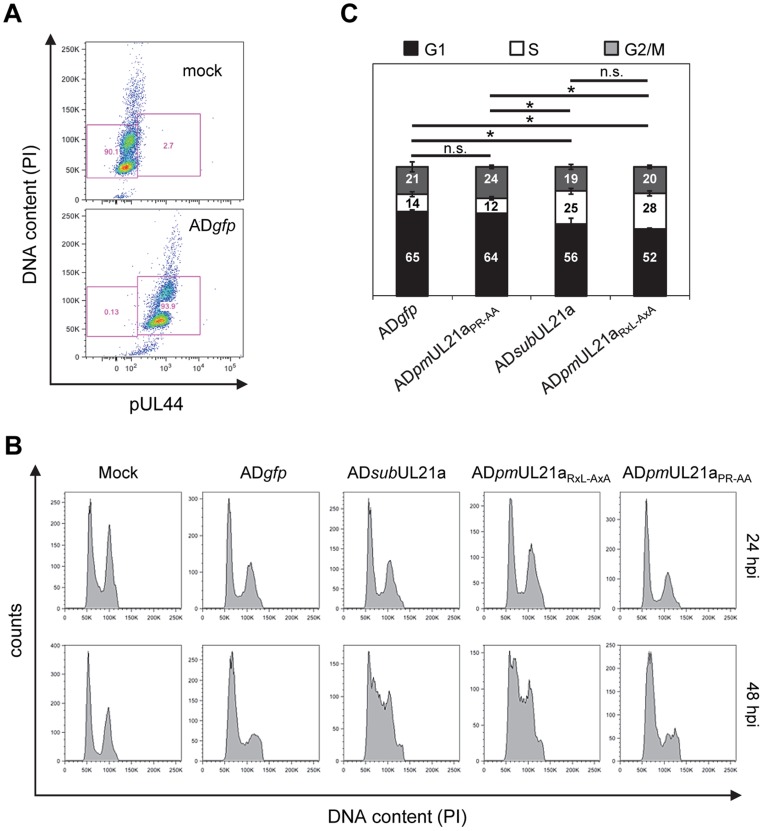
Figure 5. The pUL21a cyclin-binding domain is essential for HCMV to prevent cellular DNA synthesis.
MRC-5 cells were infected with indicated viruses in the presence of viral DNA replication inhibitor phosphonoacetic acid (PAA). Cells were collected at 24 and 48 hpi, fixed, and co-stained with propidium iodide (PI) and antibody to viral protein pUL44. Cell cycle profiles were analyzed by flow cytometry. (A) The PI and pUL44 staining profiles of representative mock- and wildtype virus- infected cells at 48 hpi. Also shown is gating used to separate pUL44-positive (infected) and pUL44-negative (uninfected) cells. (B) Both 24 and 48 hpi DNA content profiles of mock-infected cells or pUL44-positive, virus-infected cells. (C) Percentage of pUL44-positive, virus-infected cells in G1, S, or G2/M phase at 48 hpi based on DNA content. p values were based on the numbers of S phase cells and determined using the student's t test. *, p value <0.05; n.s. (not significant), p value >0.05. Shown are data from two independent experiments.
Figure 6
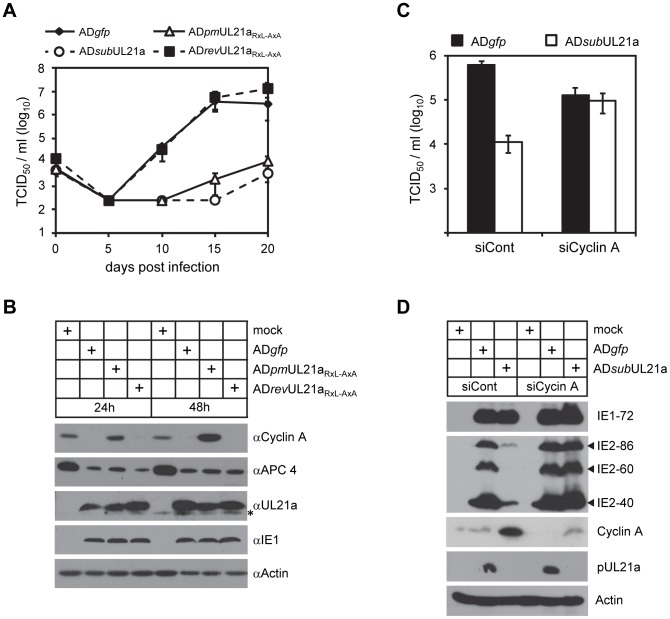
Figure 6. Depletion of cyclin A alleviates the requirement of pUL21a for HCMV replication.
(A) MRC-5 cells were infected with indicated viruses at an MOI of 0.01 TCID50/cell and production of cell free virus was determined by TCID50 assay at indicated time points. (B) MRC-5 cells were infected with indicated viruses at an MOI of 3, and cell lysates were collected at 24 and 48 hpi and analyzed by immunoblotting. * indicates nonspecific cross-reacting bands. (C) MRC-5 cells were treated with siRNA against cyclin A (siCyclin A) or luciferase control (siCont), and then infected with indicated virus at an MOI of 3. At 96 hpi, production of cell free virus was determined by TCID50 assay, and (D) cell lysates were analyzed by immunoblotting.
Figure 7
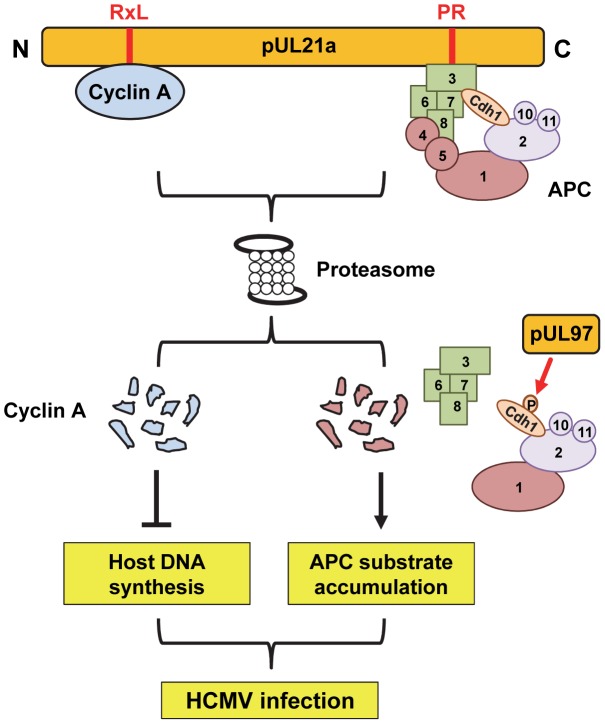
Figure 7. Model for dual roles of pUL21a in HCMV infection.
pUL21a independently binds to cyclin A or the anaphase-promoting complex (APC) through the RxL or PR domain, respectively, and targets each for proteasome-dependent degradation. pUL21a-induced degradation of the APC bridge, in concordance with pUL97-induced phosphorylation of Cdh1, leads to an increase in APC substrates, which helps to create a favorable, S-phase like cellular environment for DNA synthesis. However, pUL21a-induced degradation of cyclin A allows HCMV to specifically prevent host DNA synthesis. Together, these two independent activities of pUL21a help to subvert host cells for efficient HCMV growth.

References

    1. Revello MG, Gerna G (2002) Diagnosis and management of human cytomegalovirus infection in the mother, fetus, and newborn infant. Clin Microbiol Rev 15: 680–715. - PMC - PubMed
    1. Poma EE, Kowalik TF, Zhu L, Sinclair JH, Huang ES (1996) The human cytomegalovirus IE1-72 protein interacts with the cellular p107 protein and relieves p107-mediated transcriptional repression of an E2F-responsive promoter. J Virol 70: 7867–7877. - PMC - PubMed
    1. Kamil JP, Hume AJ, Jurak I, Munger K, Kalejta RF, et al. (2009) Human papillomavirus 16 E7 inactivator of retinoblastoma family proteins complements human cytomegalovirus lacking UL97 protein kinase. Proc Natl Acad Sci U S A 106: 16823–16828. - PMC - PubMed
    1. Hagemeier C, Caswell R, Hayhurst G, Sinclair J, Kouzarides T (1994) Functional interaction between the HCMV IE2 transactivator and the retinoblastoma protein. Embo J 13: 2897–2903. - PMC - PubMed
    1. Song YJ, Stinski MF (2002) Effect of the human cytomegalovirus IE86 protein on expression of E2F-responsive genes: a DNA microarray analysis. Proc Natl Acad Sci U S A 99: 2836–2841. - PMC - PubMed

Publication types

LinkOut - more resources