. 2013 Dec 27;8(12):e85079.
doi: 10.1371/journal.pone.0085079. eCollection 2013.

Transcriptome analysis in cotton boll weevil (Anthonomus grandis) and RNA interference in insect pests

Affiliations

Transcriptome analysis in cotton boll weevil (Anthonomus grandis) and RNA interference in insect pests

Alexandre Augusto Pereira Firmino et al. PLoS One. .

Abstract

Cotton plants are subjected to the attack of several insect pests. In Brazil, the cotton boll weevil, Anthonomus grandis, is the most important cotton pest. The use of insecticidal proteins and gene silencing by interference RNA (RNAi) as techniques for insect control are promising strategies, which has been applied in the last few years. For this insect, there are not much available molecular information on databases. Using 454-pyrosequencing methodology, the transcriptome of all developmental stages of the insect pest, A. grandis, was analyzed. The A. grandis transcriptome analysis resulted in more than 500.000 reads and a data set of high quality 20,841 contigs. After sequence assembly and annotation, around 10,600 contigs had at least one BLAST hit against NCBI non-redundant protein database and 65.7% was similar to Tribolium castaneum sequences. A comparison of A. grandis, Drosophila melanogaster and Bombyx mori protein families' data showed higher similarity to dipteran than to lepidopteran sequences. Several contigs of genes encoding proteins involved in RNAi mechanism were found. PAZ Domains sequences extracted from the transcriptome showed high similarity and conservation for the most important functional and structural motifs when compared to PAZ Domains from 5 species. Two SID-like contigs were phylogenetically analyzed and grouped with T. castaneum SID-like proteins. No RdRP gene was found. A contig matching chitin synthase 1 was mined from the transcriptome. dsRNA microinjection of a chitin synthase gene to A. grandis female adults resulted in normal oviposition of unviable eggs and malformed alive larvae that were unable to develop in artificial diet. This is the first study that characterizes the transcriptome of the coleopteran, A. grandis. A new and representative transcriptome database for this insect pest is now available. All data support the state of the art of RNAi mechanism in insects.


Conflict of interest statement

Competing Interests: The authors have declared that no competing interests exist.

Figures

Figure 1
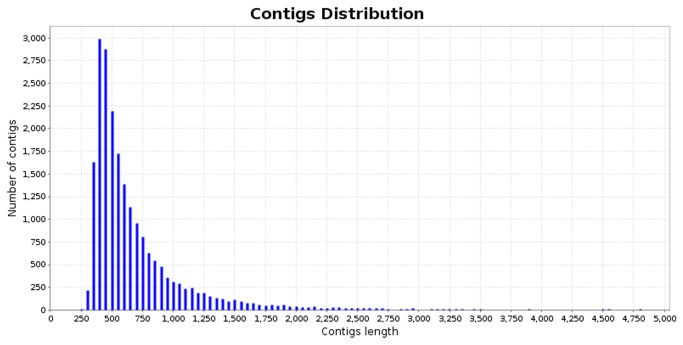
Figure 1. Contigs length distribution showing the major number ranging from 350 to 1000 pb.
The average contig length was 676pb.
Figure 2
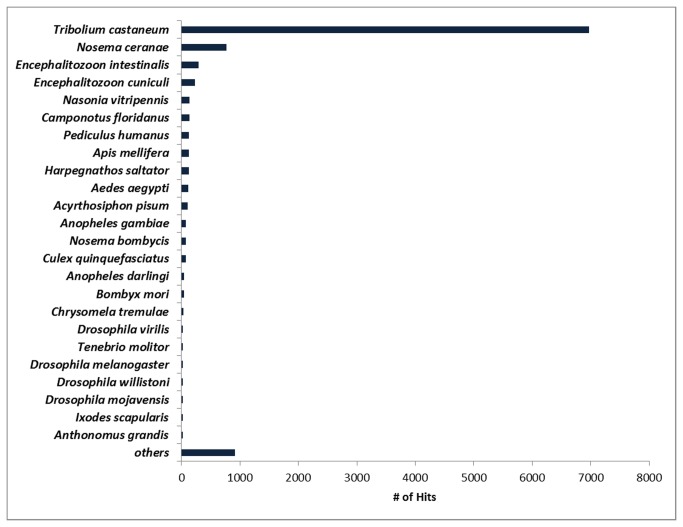
Figure 2. Species distribution of top BLASTx matches of A. grandis contigs.
A great number of contigs matched insect genes, mainly another coleopteran, T. castaneum. E-value cutoff is 1x10⁻³.
Figure 3
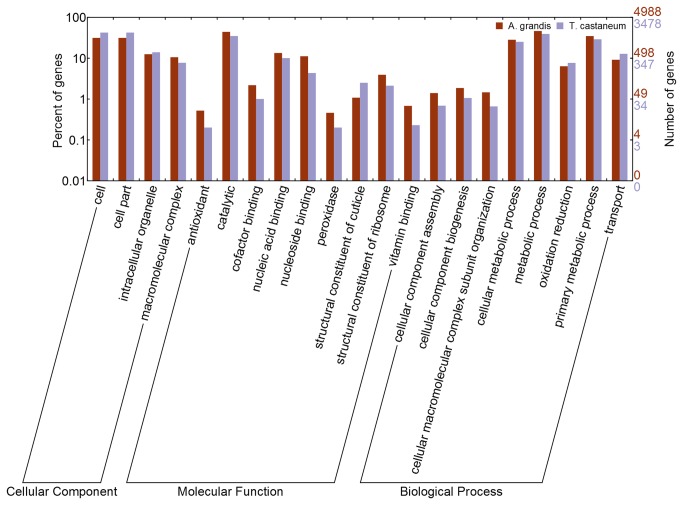
Figure 3. Comparison of the distribution of GO terms.
The X-axis shows subgroups of cellular component, molecular functions and biological process from GO. Distribution of GO terms of gene families of T. castaneum and A. grandis are compared. The Y-axis shows the percentage (left) and the number of genes (right) of the matched Pfam entries.
Figure 4
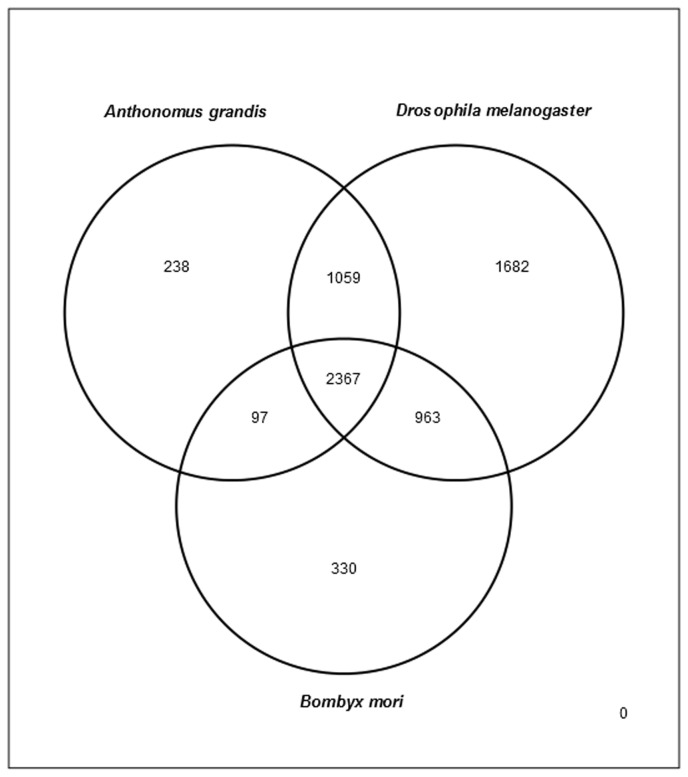
Figure 4. Venn diagram of the number of contigs from A. grandis which show IPR matches to D. melanogaster and/or B. mori.
Numbers are unique Butterflybase and Flybase IPR results. The number of similar protein families between A.grandis and D. melanogaster is higher than A.grandis and B. mori.
Figure 5
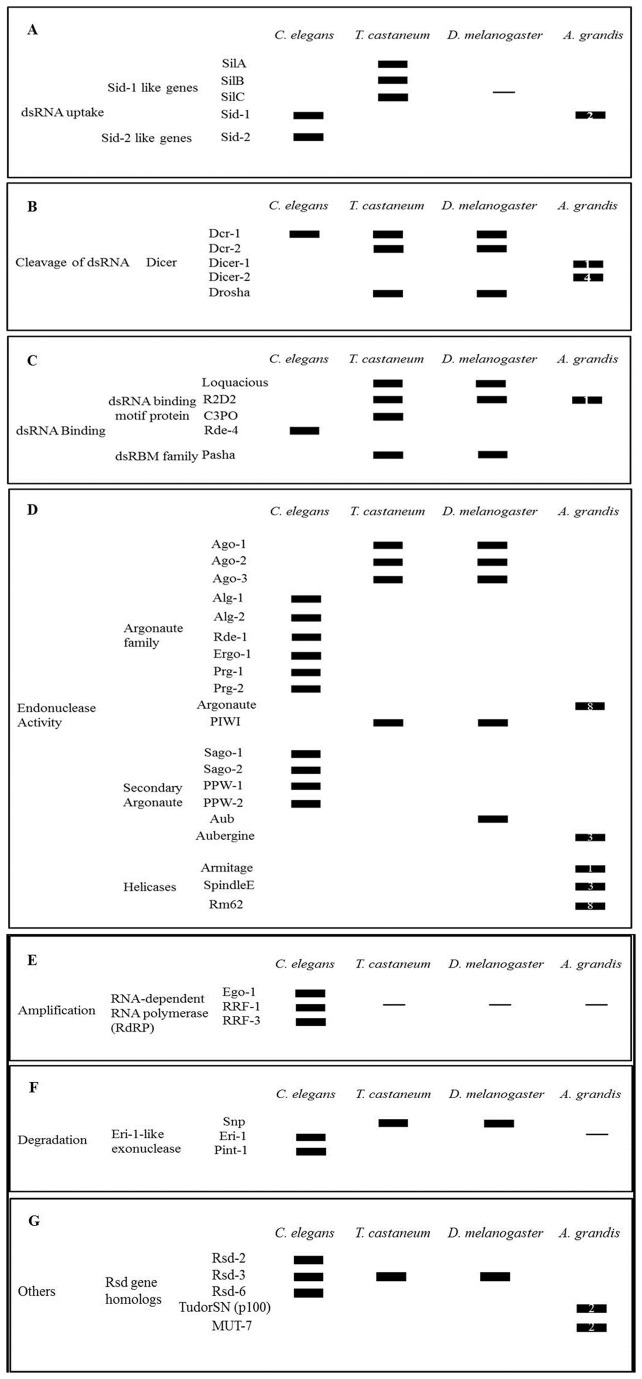
Figure 5. Genes involved in RNAi mechanism found in A. grandis transcriptome.
The comparison with genes of C. elegans, T. castaneum, and D. melanogaster suggested that RNAi mechanism is well conserved in insects (A, B, C, D), including lack of amplification (E). No gene involved in dsRNA degradation was found (F). The number of contigs found in A. grandis transcriptome for each gene class is shown.
Figure 6
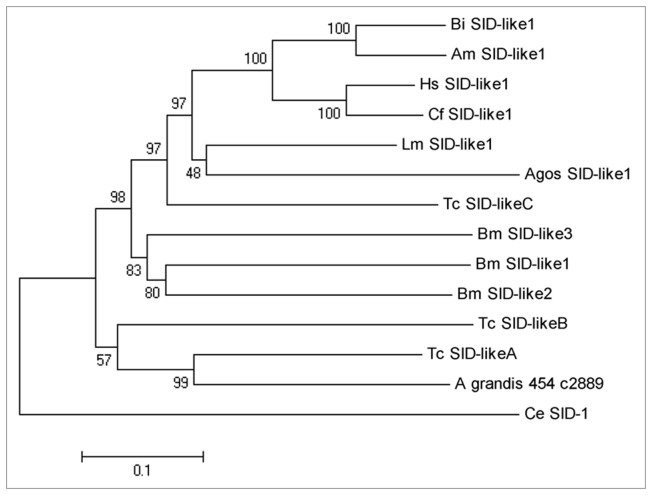
Figure 6. Distance neighbor-joining tree showing the phylogeny of a SID-like contig of A. grandis (A_grandis_454_c2889) and SID-like proteins of the insects T. castaneum, B. impatiens, A. mellifera, L. migratoria, B. mori, A. gossypii, H. saltator, Camponotus floridanus.
The percentage of percentage of bootstrap confidence values is shown at the nodes.
Figure 7
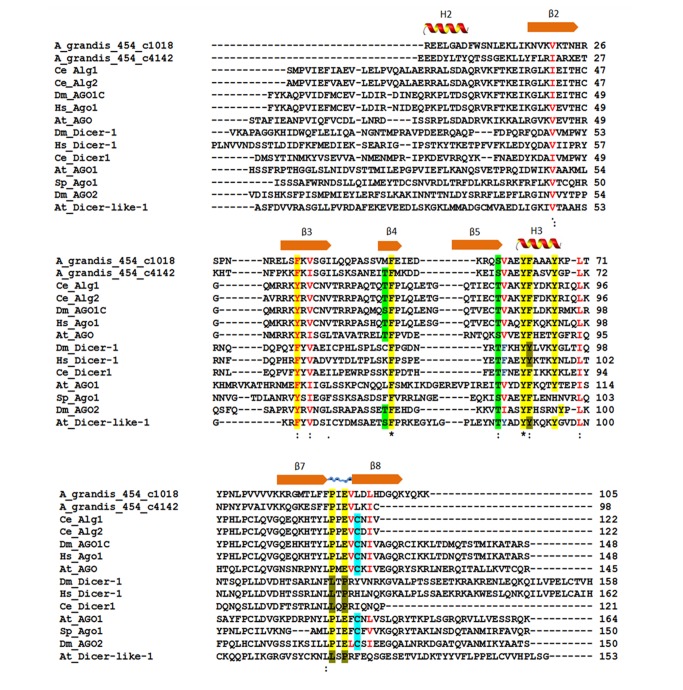
Figure 7. Comparison of dicer and argonaute PAZ domains.
Two cotton boll weevil contigs were aligned to five species sequences: D. melanogaster (Dm_Dicer-1, Dm_AGO1C, Dm_AGO2), C. elegans (Ce_Dicer1, Ce_Alg1, Ce_Alg2), Homo sapiens (Hs_Dicer-1, Hs_Ago1), A. thaliana (At_Dicer-like-1, At_AGO, At_AGO1) and Schizosaccharomyces pombe (Sp_AGO1). The sequence IDs are the same found in the NCBI Protein Database. Secondary structures within the domain are indicated as α-helices and β structures. The highlighted residues are responsible for the stabilization of the dsRNA-binding region. In yellow, a subdomain of aromatic residues. Along with a cysteine residue (blue), preceded by a proline and a glutamate (yellow), some invariant residues (red) create a hydrophobic subdomain that interacts with RNA. Residues that differ in dicer and argonaute PAZ domains are shown in brown.
Figure 8
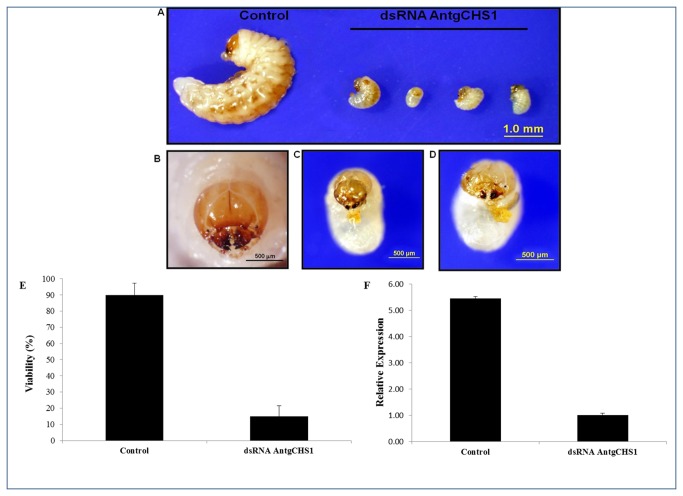
Figure 8. Effect of AntgCHS1 on A. grandis on oviposition.
Larvae that emerged from eggs laid by females previously microinjected with 200 ng of either GUS (control) or AntgCHS1 dsRNA (A). After egg hatching, larvae were fed in artificial diet for 7 days. Details of head capsule show malformations in AntgCHS1 dsRNA-treated larvae (C and D) when compared to control (B). The viability was reduced (E) and as well as the number of transcripts of AntgCHS1 (F) in eggs laid by females previously microinjected with AntgCHS1 dsRNA.

References

    1. Consortium ikI (2012) 5,000 Insect Genome Project. Arthropod Genomes
    1. Legrand S, Valot N, Nicolé F, Moja S, Baudino S et al. (2010) One-step identification of conserved miRNAs, their targets, potential transcription factors and effector genes of complete secondary metabolism pathways after 454 pyrosequencing of calyx cDNAs from the Labiate Salvia sclarea L. Gene 450: 55-62. doi: 10.1016/j.gene.2009.10.004. PubMed: 19840835. - DOI - PubMed
    1. Shin H, Hirst M, Bainbridge MN, Magrini V, Mardis E et al. (2008) Transcriptome analysis for Caenorhabditis elegans based on novel expressed sequence tags. BMC Biol 6: 30. doi: 10.1186/1741-7007-6-30. PubMed: 18611272. - DOI - PMC - PubMed
    1. Mardis ER (2008) Next-generation DNA sequencing methods. Annu Rev Genomics Hum Genet 9: 387-402. doi: 10.1146/annurev.genom.9.081307.164359. PubMed: 18576944. - DOI - PubMed
    1. Ahmadian A, Ehn M, Hober S (2006) Pyrosequencing: history, biochemistry and future. Clin Chim Acta 363: 83-94. doi: 10.1016/j.cccn.2005.04.038. PubMed: 16165119. - DOI - PubMed

Publication types

Substances