Favipiravir (T-705) inhibits Junín virus infection and reduces mortality in a guinea pig model of Argentine hemorrhagic fever
- PMID: 24386500
- PMCID: PMC3873268
- DOI: 10.1371/journal.pntd.0002614
Favipiravir (T-705) inhibits Junín virus infection and reduces mortality in a guinea pig model of Argentine hemorrhagic fever
Abstract
Background: Junín virus (JUNV), the etiologic agent of Argentine hemorrhagic fever (AHF), is classified by the NIAID and CDC as a Category A priority pathogen. Presently, antiviral therapy for AHF is limited to immune plasma, which is readily available only in the endemic regions of Argentina. T-705 (favipiravir) is a broadly active small molecule RNA-dependent RNA polymerase inhibitor presently in clinical evaluation for the treatment of influenza. We have previously reported on the in vitro activity of favipiravir against several strains of JUNV and other pathogenic New World arenaviruses.
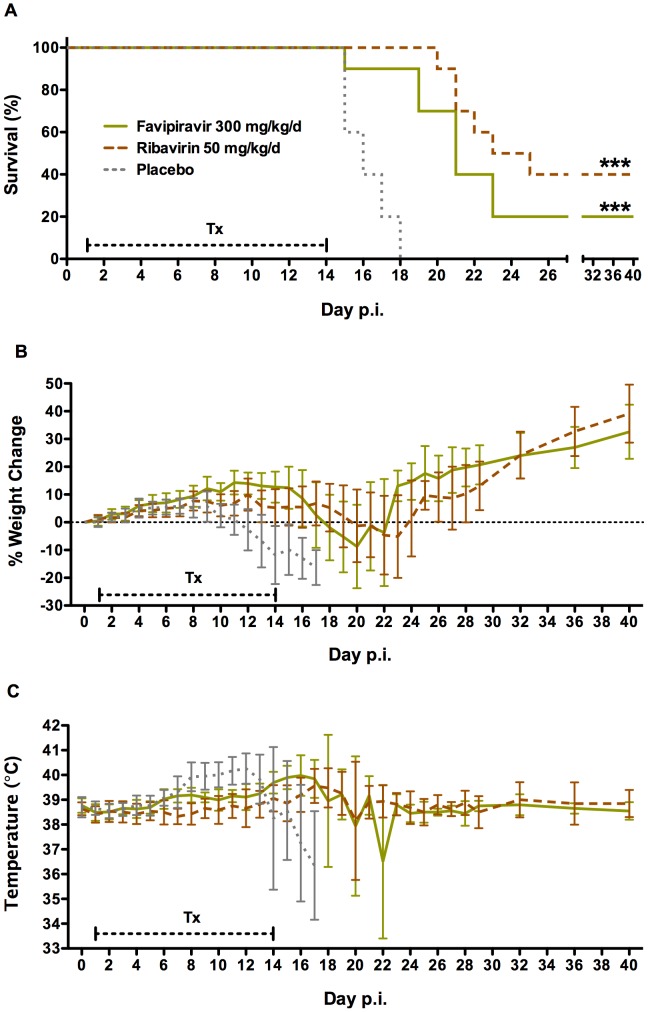
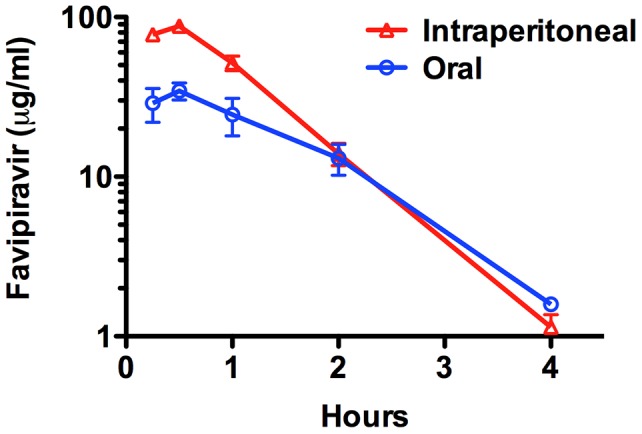
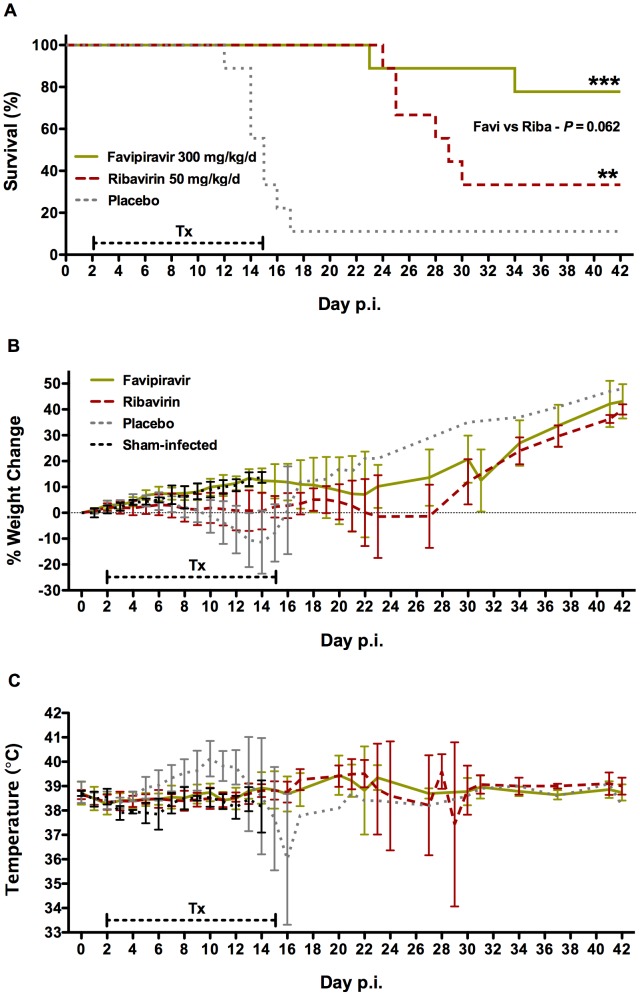
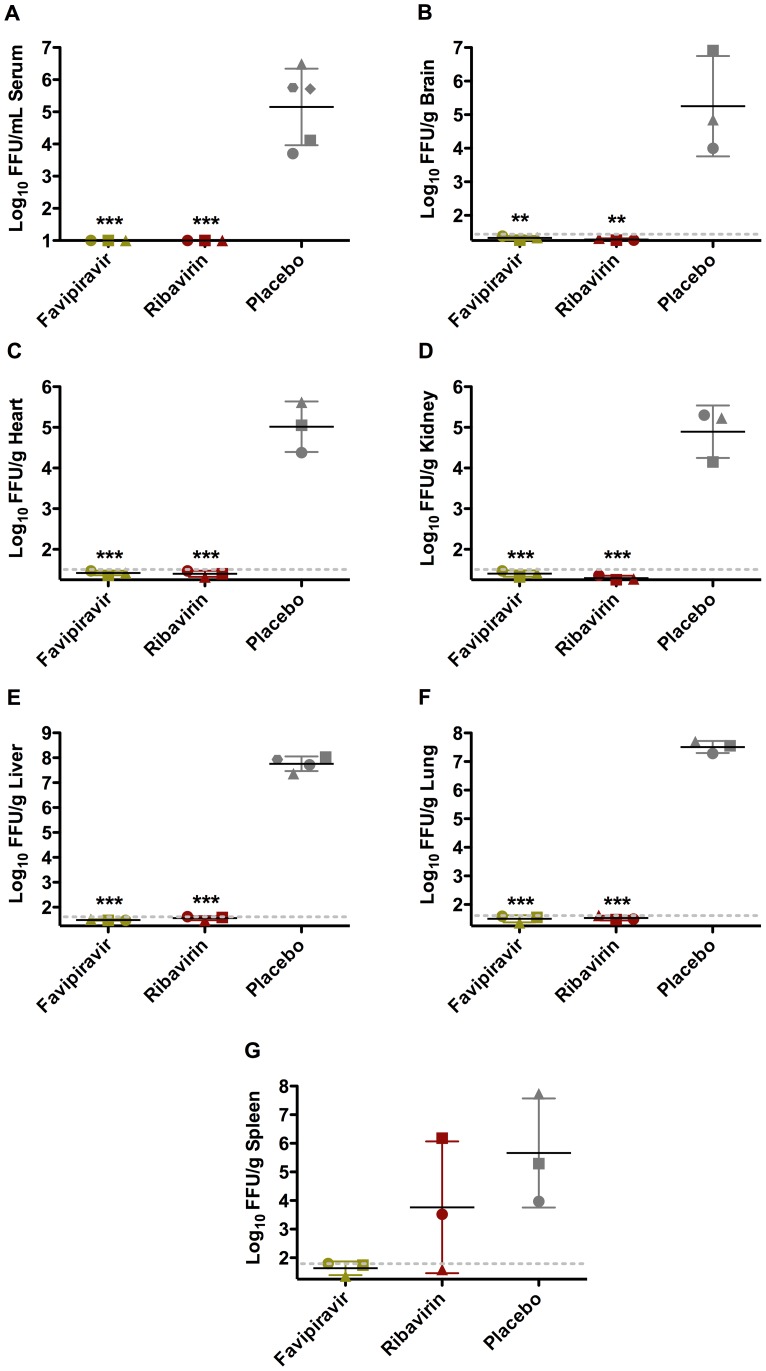
Methodology/principal findings: To evaluate the efficacy of favipiravir in vivo, guinea pigs were challenged with the pathogenic Romero strain of JUNV, and then treated twice daily for two weeks with oral or intraperitoneal (i.p.) favipiravir (300 mg/kg/day) starting 1-2 days post-infection. Although only 20% of animals treated orally with favipiravir survived the lethal challenge dose, those that succumbed survived considerably longer than guinea pigs treated with placebo. Consistent with pharmacokinetic analysis that showed greater plasma levels of favipiravir in animals dosed by i.p. injection, i.p. treatment resulted in a substantially higher level of protection (78% survival). Survival in guinea pigs treated with ribavirin was in the range of 33-40%. Favipiravir treatment resulted in undetectable levels of serum and tissue viral titers and prevented the prominent thrombocytopenia and leucopenia observed in placebo-treated animals during the acute phase of infection.
Conclusions/significance: The remarkable protection afforded by i.p. favipiravir intervention beginning 2 days after challenge is the highest ever reported for a small molecule antiviral in the difficult to treat guinea pig JUNV challenge model. These findings support the continued development of favipiravir as a promising antiviral against JUNV and other related arenaviruses.
Conflict of interest statement
I have read the journal's policy and have the following conflicts: YF is an employee of the Toyama Chemical Co., Ltd., the manufacturer of favipiravir. This does not alter our adherence to all PLOS policies on sharing data and materials.
Figures
References
-
- Moraz ML, Kunz S (2011) Pathogenesis of arenavirus hemorrhagic fevers. Expert Rev Anti Infect Ther 9: 49–59. - PubMed
-
- McCormick JB (1999) Lassa fever. In: Saluzzo JF, Dodet B, editors. Emergence and control of rodent-borne viral diseases. Elsevier. pp. 177–195.
-
- Maiztegui JI, Fernandez NJ, de Damilano AJ (1979) Efficacy of immune plasma in treatment of Argentine haemorrhagic fever and association between treatment and a late neurological syndrome. Lancet 2: 1216–1217. - PubMed
-
- McCormick JB, King IJ, Webb PA, Scribner CL, Craven RB, et al. (1986) Lassa fever. Effective therapy with ribavirin. New England Journal of Medicine 314: 20–26. - PubMed
Publication types
MeSH terms
Substances
Grants and funding
LinkOut - more resources
Full Text Sources
Other Literature Sources