


The detection of foodborne bacteria on beef: the application of the electronic nose
- PMID: 24386629
- PMCID: PMC3874285
- DOI: 10.1186/2193-1801-2-687
The detection of foodborne bacteria on beef: the application of the electronic nose
Abstract
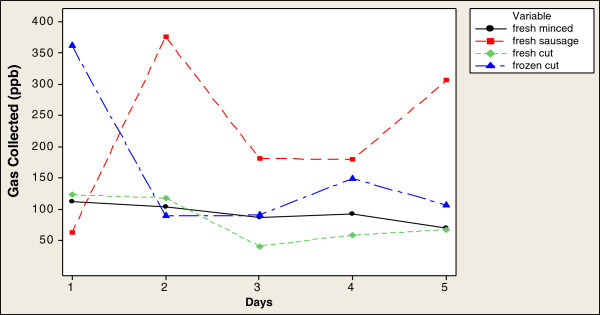
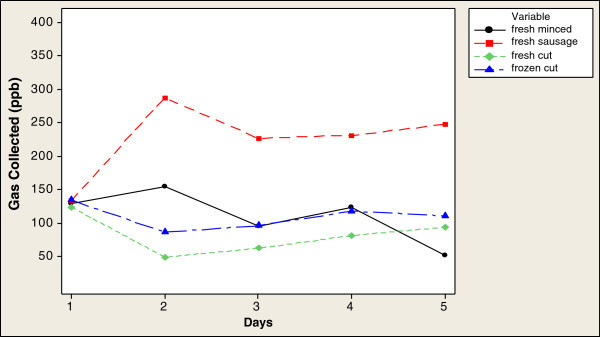
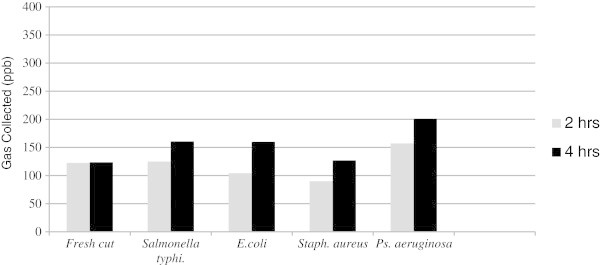
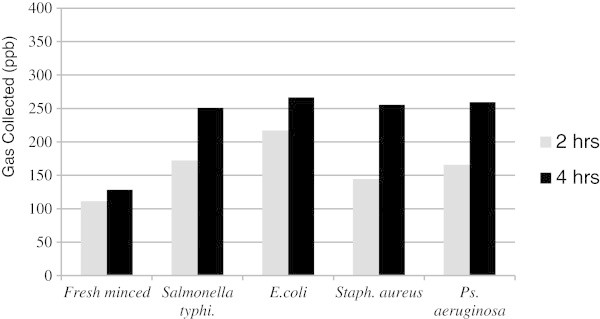
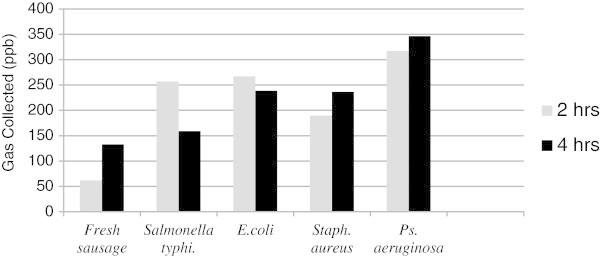
This study aims to investigate the application of a fast electronic nose system (Cyranose 320) for detecting foodborne bacteria. The system proved to be very efficient in detecting microbes in beef and sausage samples. In the first part of the study, the total viable counts (TVC) from fresh and frozen beef samples were determined using the standard microbiological method and by the application of the electronic nose. The second part applied the electronic nose to beef before and after contamination with different bacterial pathogens separately: E. coli O157: H7, Salmonellatyphimurium 857, Staphylococcus aureus 29213 and Pseudomonas aeruginosa 27853. The results revealed that the Cyranose 320 can detect the TVC in different beef and sausage samples and quantify the volatile organic compounds produced at concentrations from 50 ppb to > 350 ppb. The concentrations of gases collected from the samples before and after separate contamination with these pathogenic bacteria were highly significantly correlated (P < 0.005). From this study one can conclude that the electronic nose system is a rapid way for detecting volatile organic compounds produced by foodborne bacteria that contaminate beef.
Keywords: Electronic nose; Food; Pathogens; Rapid detection.
Figures
References
-
- Akgul A. Spice Science and Technology. Ankara, Turkey: Turkish Association Food Technologists, Publ. No. 15; 1993.
-
- Balasubramanian S, Panigrahi S, Logue CM, Marchello M, Sherwood JS. Identification of Salmonella-inoculated beef using a portable electronic nose system. J Rapid Meth Autom Microbiol. 2005;13:71–95. doi: 10.1111/j.1745-4581.2005.00011.x. - DOI
-
- Beran GW, Shoeman HP, Anderson KF. Food safety: an overview of problems. Dairy Food Environ Sanit. 1991;11:189–194.
LinkOut - more resources
Full Text Sources
Other Literature Sources
