


Stabilometric parameters analysis in children with visual disorder
- PMID: 24387244
- PMCID: PMC3882287
- DOI: 10.1186/1755-7682-7-1
Stabilometric parameters analysis in children with visual disorder
Abstract
Background: Although postural changes were already reported in blind adults, no previous study has investigated postural stability in blind children. Moreover, there are few studies which used a stabilometric instrument to measure postural balance. In this study we evaluated stabilometric paramaters in blind children.
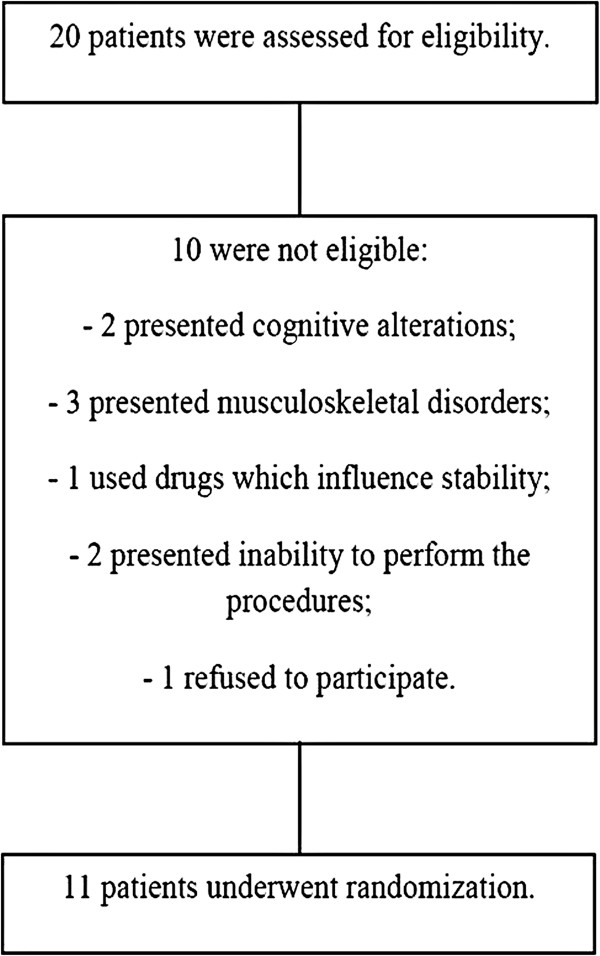
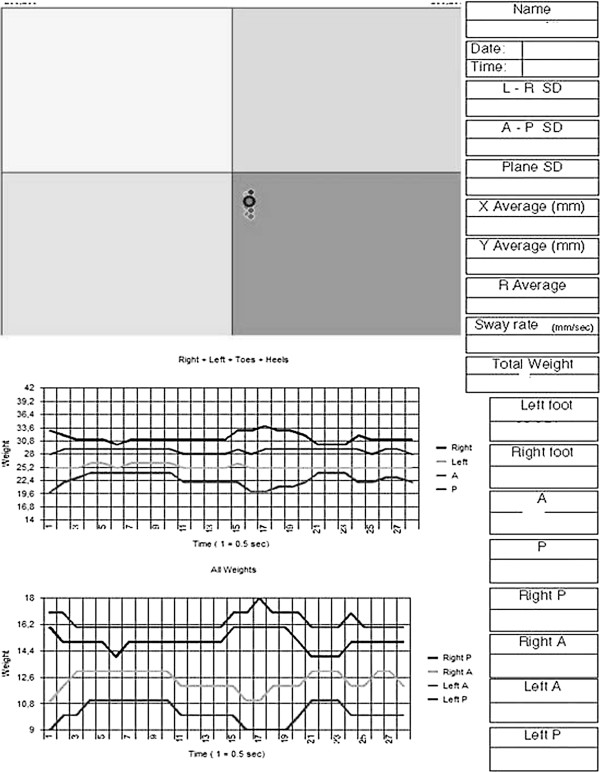
Methods: We evaluated children between 7 to 12 years old, they were divided into two groups: Blind (n = 11) and age-matched control (n = 11) groups by using computerized stabilometry. The stabilometric examination was performed taking the gravity centers displacement of the individual projected into the platform. Thirthy seconds after the period in which this information was collected, the program defined a medium-pressure center, which was used to define x and y axes displacement and the distance between the pressure center and the platform center. Furthermore, the average sway rate and the body sway area were obtained by dividing the pressure center displacement and the time spent on the task; and by an ellipse function (95% percentille), respectively. Percentages of anterior, posterior, left and right feet weight also were calculated. Variables were compared by using the Student's t test for unpaired data. Significance level was considered for p <0.05.
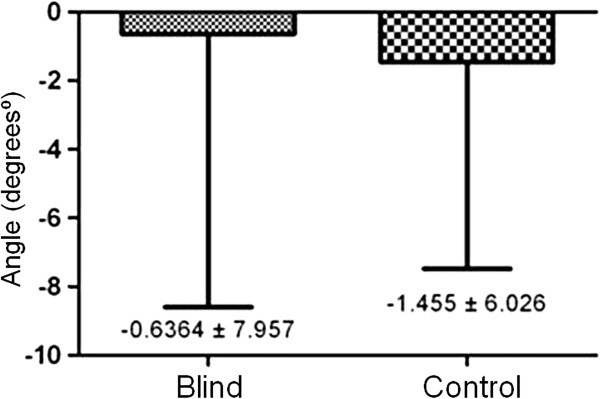
Results: Displacement of the x axis (25.55 ± 9.851 vs. -3.545 ± 7.667; p <0.05) and average sway rate (19.18 ± 2.7 vs. -10.55 ± 1.003; p <0.001) were increased in the blind children group. Percentage of left foot weight was reduced (45.82 ± 2.017 vs. 52.36 ± 1.33; p <0.05) while percentage of right foot weight was increased (54.18 ± 2.17 vs. 47.64 ± 1.33; p <0.05) in blind children. Other variables did not show differences.
Conclusions: Blind children present impaired stabilometric parameters.
Figures
References
-
- Tabak O, Gelisgen R, Uzun H, Kalender B, Balci H, Curgunlu A. et al. Hypertension and hemostatic/fibrinolytic balance disorders. Clin Invest Med. 2009;32(6):E285. - PubMed
-
- MacLeod SM. Research in medical schools: rationale, priorities, roles and balance. Clin Invest Med. 1996;19(3):204–213. - PubMed
LinkOut - more resources
Full Text Sources
Other Literature Sources