


To evaluate the effectiveness of health care ethics consultation based on the goals of health care ethics consultation: a prospective cohort study with randomization
- PMID: 24387594
- PMCID: PMC3898237
- DOI: 10.1186/1472-6939-15-1
To evaluate the effectiveness of health care ethics consultation based on the goals of health care ethics consultation: a prospective cohort study with randomization
Erratum in
-
Correction: To evaluate the effectiveness of health care ethics consultation based on the goals of health care ethics consultation: a prospective cohort study with randomization.BMC Med Ethics. 2025 Nov 25;26(1):164. doi: 10.1186/s12910-025-01335-w. BMC Med Ethics. 2025. PMID: 41291656 Free PMC article. No abstract available.
Abstract
Background: The growing prevalence of health care ethics consultation (HCEC) services in the U.S. has been accompanied by an increase in calls for accountability and quality assurance, and for the debates surrounding why and how HCEC is evaluated. The objective of this study was to evaluate the effectiveness of HCEC as indicated by several novel outcome measurements in East Asian medical encounters.
Methods: Patients with medical uncertainty or conflict regarding value-laden issues, and requests made by the attending physicians or nurses for HCEC from December 1, 2009 to April 30, 2012 were randomly assigned to the usual care group (UC group) and the intervention group (HCEC group). The patients in the HCEC group received HCEC conducted by an individual ethics consultant. Data analysis was based on the intention-to-treat principle. Mann-Whitney test and Chi-squared test were used depending on the scale of measurement.
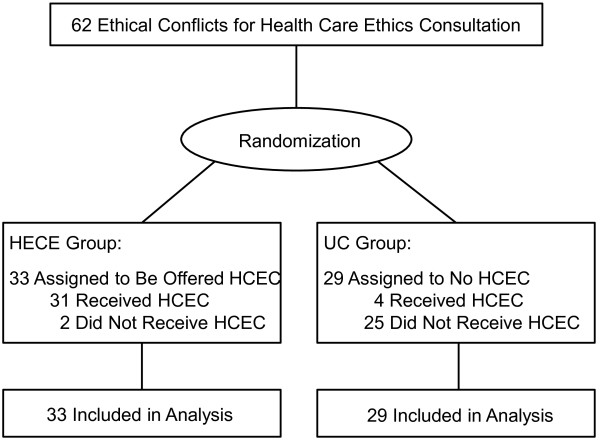
Results: Thirty-three patients (53.23%) were randomly assigned to the HCEC group and 29 patients were randomly assigned to the UC group. Among the 33 patients in the HCEC group, two (6.06%) of them ultimately did not receive a HCEC service. Among the 29 patients in the UC group, four (13.79%) of them received a HCEC service. The survival rate at hospital discharge did not differ between the two groups. Patients in the HCEC group showed significant reductions in the entire ICU stay and entire hospital stay. HCEC significantly facilitated achieving the goal of medical care (p < .01). Furthermore, patients in the HCEC group had a shorter ICU stay and shorter hospital stay after the occurrence of medical uncertainty or conflict regarding value-laden issues than those in the UC group.
Conclusions: Our findings demonstrated that HCEC were associated with reduced consumption of medical resources as indicated by shorter entire ICU stay, entire hospital stay, and shorter ICU and hospital stay after the occurrence of the medical uncertainty or conflict regarding value-laden issues. This study also showed that HCEC facilitated achieving a consensus regarding the goal of medical care, which conforms to the goal of HCEC.
References
-
- American Society for Bioethics and Humanities Task Force on Standards for Bioethics and Humanities. Core Competencies for Health Care Ethics Consultation: The Report of the American Society of Bioethics and Humanities. Glenview, IL: The American Society of Bioethics and Humanities; 1998. pp. 1–32.
-
- Johnson LS, Lesandrini J, Rozycki GS. Use of the medical ethics consultation service in a busy level I trauma center: impact on decision-making and patient care. Am Surg. 2012;78(7):735–740. - PubMed
Publication types
MeSH terms
LinkOut - more resources
Full Text Sources
Other Literature Sources
Medical
Miscellaneous
