Review
. 2014 Apr;25(4):168-77.
doi: 10.1016/j.tem.2013.12.004. Epub 2014 Jan 2.

Brown fat fuel utilization and thermogenesis

Affiliations
Review

Brown fat fuel utilization and thermogenesis

Kristy L Townsend et al. Trends Endocrinol Metab. 2014 Apr.

Abstract

Brown adipose tissue (BAT) dissipates energy as heat to maintain optimal thermogenesis and to contribute to energy expenditure in rodents and possibly humans. The energetic processes executed by BAT require a readily-available fuel supply, which includes glucose and fatty acids (FAs). FAs become available by cellular uptake, de novo lipogenesis, and multilocular lipid droplets in brown adipocytes. BAT also possesses a great capacity for glucose uptake and metabolism, and an ability to regulate insulin sensitivity. These properties make BAT an appealing target for the treatment of obesity, diabetes, and other metabolic disorders. Recent research has provided a better understanding of the processes of fuel utilization carried out by brown adipocytes, which is the focus of the current review.

Keywords: brown adipose tissue; energy expenditure; uncoupling protein 1.


Figures

Figure 1
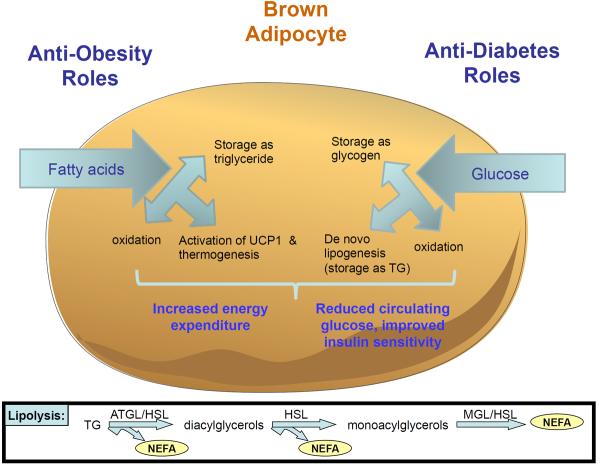
Figure 1. Glucose and FAs in BAT Combat Diabetes and Obesity
BAT holds great promise for combating metabolic diseases such as obesity and diabetes, in part through its ability to take up and oxidize (or store) FAs and glucose. By targeting glucose and fatty acid as fuels, BAT may be able to mitigate the weight gain caused by high sugar and high fat diets. Fatty acids may be stored as TG, oxidized, or utilized to activate thermogenesis via UCP1 (Box 2). Glucose may be oxidized, stored as glycogen, or it may undergo de novo lipogenesis to provide TG for storage. Pathways involved in lipolysis are presented in the lower box. (NEFA = non-esterified fatty acids; ATGL = adipose triglyceride lipase; HSL = hormone sensitive lipase; MGL = monoglyceride lipase)
Figure 2
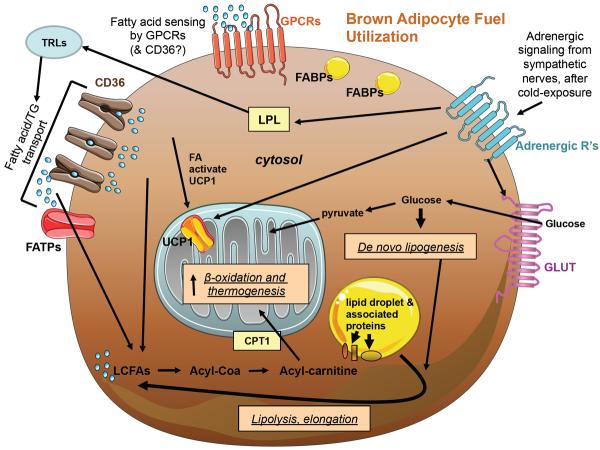
Figure 2. Fuel Utilization in Brown Adipocytes
The schematic shows a summary of FA sensing, uptake and oxidation pathways, as well as glucose uptake and downstream metabolism pathways in a typical brown adipocyte. Shown are glucose uptake by GLUT transporters, including GLUT translocation stimulated by adrenergic signaling, and the fate of glucose in de novo lipogenesis, storage as glycogen, or conversion to pyruvate and mitochondrial oxidation. FAs are sensed by GPCRs and possibly also CD36, and are taken up by CD36 and FATPs. LPL produced and secreted by adipocytes after adrenergic stimulation is also able to break down triglyceride-rich lipoproteins (TRLs), providing additional lipid fuel for uptake. FAs activate mitochondrial UCP1, as does activation from the sympathetic nervous system and adrenergic signaling, enabling energy expenditure via thermogenesis. FAs also become available from the lipolysis of lipid droplets (which is partially under regulation by lipid droplet-associated proteins). FAs may be elongated and/or converted to acyl-carnitine for transport into the mitochondria via the carnitine shuttle, where they become fuel for β-oxidation. FABPs also contribute to intracellular FA handling.

References

    1. Townsend KL, Tseng YH. Brown adipose tissue: recent insights into development, metabolic function, and therapeutic potential. Adipocyte. 2012;1:13–24. - PMC - PubMed
    1. Hany TF, et al. Brown adipose tissue: a factor to consider in symmetrical tracer uptake in the neck and upper chest region. Eur. J. Nucl. Med. Mol. Imaging. 2002;29:1393–1398. - PubMed
    1. Nedergaard J, et al. Unexpected evidence for active brown adipose tissue in adult humans. Am. J. Physiol. Endocrinol. Metab. 2007;293:E444–E452. - PubMed
    1. Cypess AM, et al. Identification and importance of brown adipose tissue in adult humans. N. Engl. J. Med. 2009;360:1509–1517. - PMC - PubMed
    1. Marken Lichtenbelt WD, et al. Cold-activated brown adipose tissue in healthy men. N. Engl. J. Med. 2009;360:1500–1508. - PubMed

Publication types