Review
. 2014 Jan;32(1):56-67.
doi: 10.1055/s-0033-1361823. Epub 2014 Jan 3.

Fetal immune response to chorioamnionitis

Affiliations
Review

Fetal immune response to chorioamnionitis

Suhas G Kallapur et al. Semin Reprod Med. 2014 Jan.

Abstract

Chorioamnionitis is a frequent cause of preterm birth and is associated with an increased risk for injury responses in the lung, gastrointestinal tract, brain, and other fetal organs. Chorioamnionitis is a polymicrobial nontraditional infectious disease because the organisms causing chorioamnionitis are generally of low virulence and colonize the amniotic fluid often for extended periods, and the host (mother and the fetus) does not have typical infection-related symptoms such as fever. In this review, we discuss the effects of chorioamnionitis in experimental animal models that mimic the human disease. Our focus is on the immune changes in multiple fetal organs and the pathogenesis of chorioamnionitis-induced injury in different fetal compartments. As chorioamnionitis disproportionately affects preterm infants, we discuss the relevant developmental context for the immune system. We also provide a clinical context for the fetal responses.


Figures

Figure 1
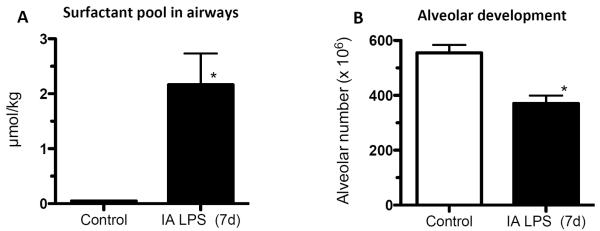
Figure 1. IA LPS induces lung maturation but interrupts normal alveolar development in preterm lambs
Sheep were given IA LPS (E. coli lipopolysaccharide) and delivered 7d later at 125d gestational age (80% gestation). (A) IA LPS increased surfactant saturated phosphatidyl choline (the largest component of pulmonary surfactant) in the airways. (B) Lung morphometry revealed ~30% fewer alveoli in the IA LPS group. (*p<0.05 vs. control, Data from [39] and [40]).
Figure 2
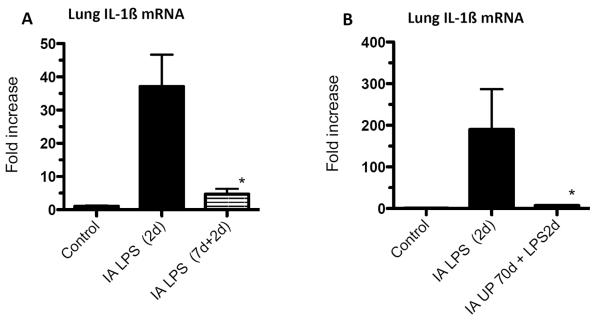
Figure 2. Repeated exposure to IA LPS or a chronic exposure to IA U. parvum induces endotoxin tolerance in preterm lambs
IL-1ß mRNA expression was measured in the lung obtained at autopsy from sheep delivered at 125d gestational age (80% gestation). (A) Compared to a single exposure to IA LPS (E. coli lipopolysaccharide) 2d before delivery, a second exposure to IA LPS 7d before delivery decreased IL-1ß mRNA expression induced by IA LPS 2d prior to delivery B) A chronic exposure to live UP (U. parvum) given 70d before delivery decreased lung IL-1ß mRNA induced by IA LPS 2d prior to delivery. In frame A IL-1ß expression was measured by a RNAse protection assay while frame B used quantitative rt-PCR using Taqman probes accounting for the different values (*p<0.05 vs. IA LPS 2d, Data from [60] and [65]).
Figure 3
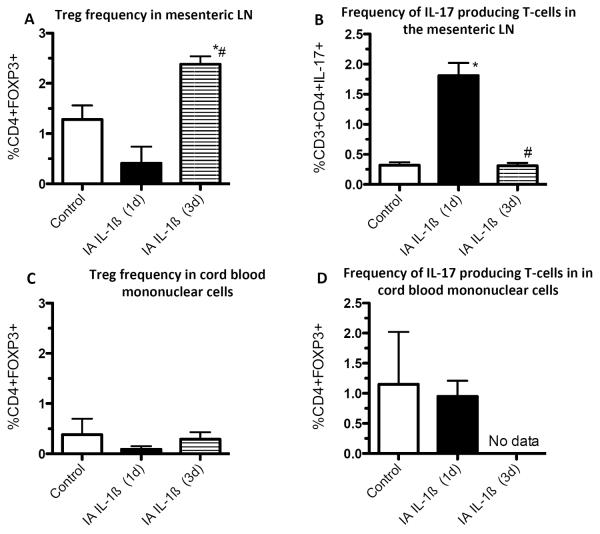
Figure 3. IA IL-1ß induces changes in the Tregs and IL-17 producing cells in the mesenteric lymph node but not the blood in preterm rhesus macaques
Changes in the frequency of Tregs (CD4+, FOXP3+) and IL-17 producing CD3+ CD4+ cells were measured by flow cytometry 1d or 3d after IA IL-1ß in rhesus macaques delivered at 80% gestation. Note the large dynamic changes with an initial reduction and a subsequent rebound in Tregs in the mesenteric LN (lymph node). The changes in IL-17 producing cells were reciprocal to the Treg frequency in the mesenteric LN. In contrast no changes in either Tregs or IL-17+ cells were detected in the blood mononuclear cells. (*p<0.05 vs. control, #p<0.05 vs. IA IL-1ß (1d), Data from [20]).
Figure 4
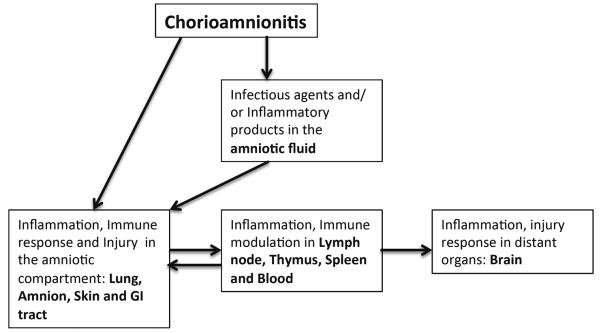
Figure 4. Schematic representation of the pathogenesis of FIRS after chorioamnionitis
The initial event is the inflammation and immune response in the amniotic compartment consisting of the amniotic fluid and the organs in contact with the amniotic fluid – amnion/chorion, skin, lung and the GI tract. Immune modulation in the lymphoid organs (thymus, spleen and lymph nodes) and the blood likely occurs via signaling from the amniotic compartment. The injury response in the fetal organs is either due to direct contact (in the amniotic compartment) with the inflammatory products/microorganisms or in distant organs due to immune changes in the blood or lymphatic tissues.

References

    1. DiGiulio DB, Romero R, Kusanovic JP, Gomez R, Kim CJ, Seok KS, et al. Prevalence and diversity of microbes in the amniotic fluid, the fetal inflammatory response, and pregnancy outcome in women with preterm pre-labor rupture of membranes. Am J Reprod Immunol. 2010;64:38–57. - PMC - PubMed
    1. Gravett MG, Rubens CE, Nunes TM. Global report on preterm birth and stillbirth (2 of 7): discovery science. BMC Pregnancy Childbirth. 2010;10(Suppl 1):S2. - PMC - PubMed
    1. DiGiulio DB, Romero R, Amogan HP, Kusanovic JP, Bik EM, Gotsch F, et al. Microbial prevalence, diversity and abundance in amniotic fluid during preterm labor: a molecular and culture-based investigation. PloS one. 2008;3:e3056. - PMC - PubMed
    1. Onderdonk AB, Delaney ML, DuBois AM, Allred EN, Leviton A. Detection of bacteria in placental tissues obtained from extremely low gestational age neonates. American journal of obstetrics and gynecology. 2008;198:110, e111–117. - PubMed
    1. Goldenberg RL, Hauth JC, Andrews WW. Intrauterine infection and preterm delivery. New England Journal of Medicine. 2000;342:1500–1507. - PubMed

Publication types

MeSH terms