Lifespan extension conferred by endoplasmic reticulum secretory pathway deficiency requires induction of the unfolded protein response
- PMID: 24391512
- PMCID: PMC3879150
- DOI: 10.1371/journal.pgen.1004019
Lifespan extension conferred by endoplasmic reticulum secretory pathway deficiency requires induction of the unfolded protein response
Abstract
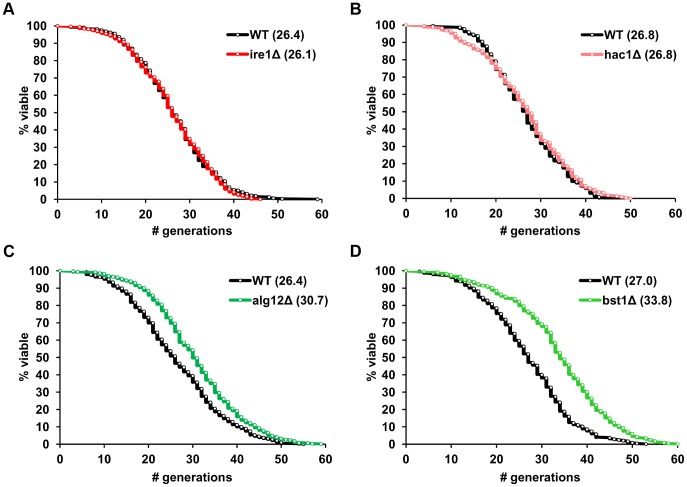
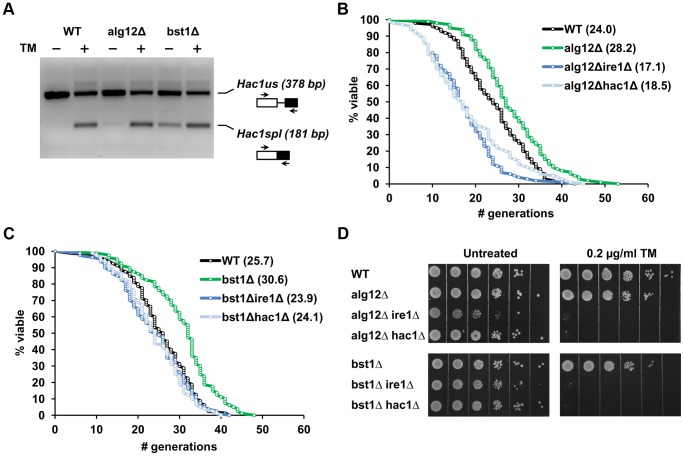
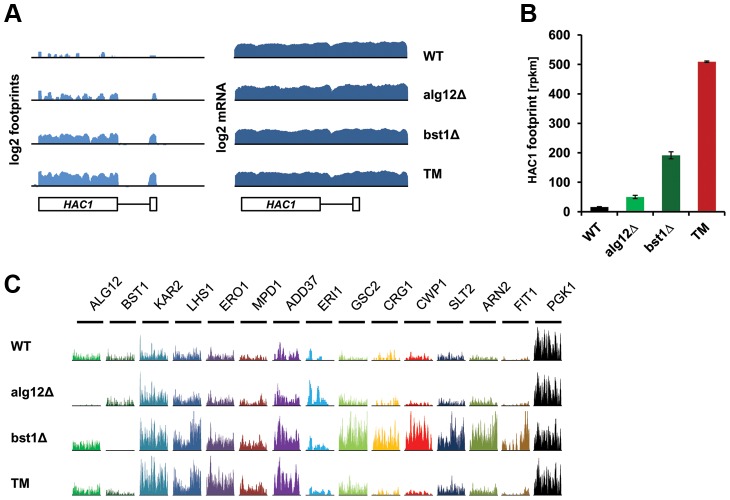
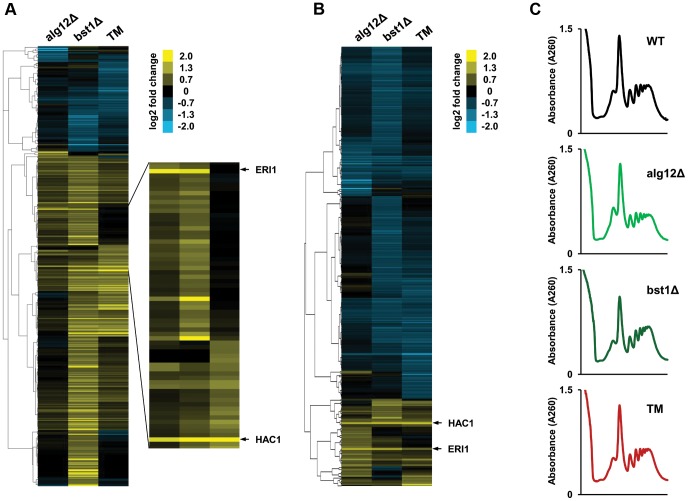
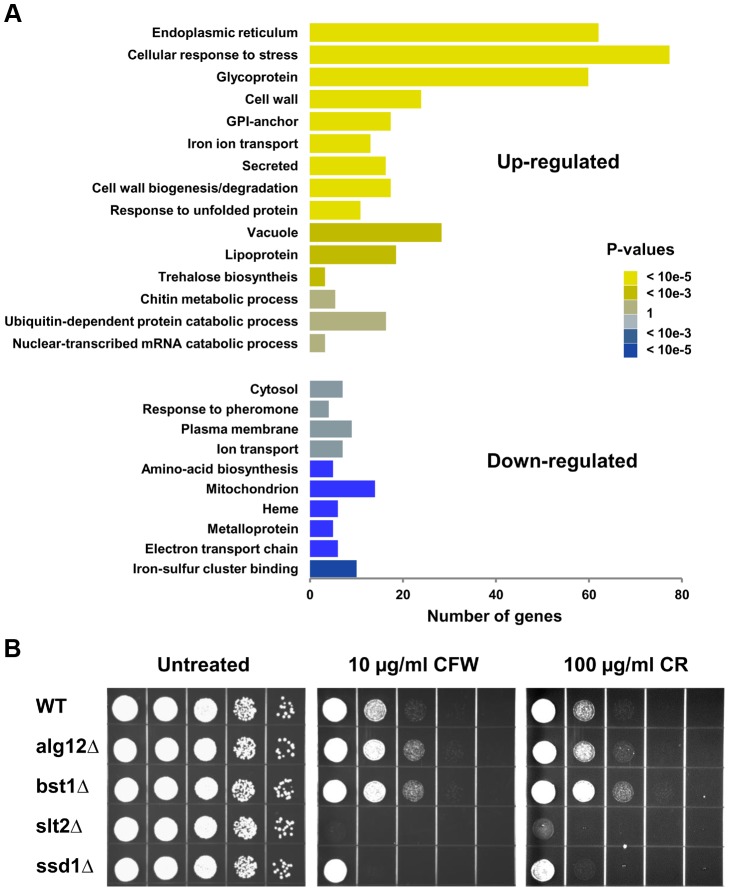
Cells respond to accumulation of misfolded proteins in the endoplasmic reticulum (ER) by activating the unfolded protein response (UPR) signaling pathway. The UPR restores ER homeostasis by degrading misfolded proteins, inhibiting translation, and increasing expression of chaperones that enhance ER protein folding capacity. Although ER stress and protein aggregation have been implicated in aging, the role of UPR signaling in regulating lifespan remains unknown. Here we show that deletion of several UPR target genes significantly increases replicative lifespan in yeast. This extended lifespan depends on a functional ER stress sensor protein, Ire1p, and is associated with constitutive activation of upstream UPR signaling. We applied ribosome profiling coupled with next generation sequencing to quantitatively examine translational changes associated with increased UPR activity and identified a set of stress response factors up-regulated in the long-lived mutants. Besides known UPR targets, we uncovered up-regulation of components of the cell wall and genes involved in cell wall biogenesis that confer resistance to multiple stresses. These findings demonstrate that the UPR is an important determinant of lifespan that governs ER stress and identify a signaling network that couples stress resistance to longevity.
Conflict of interest statement
The authors have declared that no competing interests exist.
Figures
References
-
- Ron D, Walter P (2007) Signal integration in the endoplasmic reticulum unfolded protein response. Nat Rev Mol Cell Biol 8: 519–529. - PubMed
-
- McCracken AA, Brodsky JL (2003) Evolving questions and paradigm shifts in endoplasmic-reticulum-associated degradation (ERAD). Bioessays 25: 868–877. - PubMed
-
- Harding HP, Zhang Y, Bertolotti A, Zeng H, Ron D (2000) Perk is essential for translational regulation and cell survival during the unfolded protein response. Mol Cell 5: 897–904. - PubMed
-
- Sidrauski C, Walter P (1997) The transmembrane kinase Ire1p is a site-specific endonuclease that initiates mRNA splicing in the unfolded protein response. Cell 90: 1031–1039. - PubMed
-
- Cox JS, Shamu CE, Walter P (1993) Transcriptional induction of genes encoding endoplasmic reticulum resident proteins requires a transmembrane protein kinase. Cell 73: 1197–1206. - PubMed
Publication types
MeSH terms
Substances
Grants and funding
- R00 AG040191/AG/NIA NIH HHS/United States
- R01 AG038004/AG/NIA NIH HHS/United States
- R01 AG039390/AG/NIA NIH HHS/United States
- AG043080/AG/NIA NIH HHS/United States
- AG038004/AG/NIA NIH HHS/United States
- K99 AG040191/AG/NIA NIH HHS/United States
- T32 AG000057/AG/NIA NIH HHS/United States
- GM065204/GM/NIGMS NIH HHS/United States
- R01 GM065204/GM/NIGMS NIH HHS/United States
- R01 AG043080/AG/NIA NIH HHS/United States
- AG039390/AG/NIA NIH HHS/United States
- T32AG000057/AG/NIA NIH HHS/United States
- R37 GM065204/GM/NIGMS NIH HHS/United States
- AG040191/AG/NIA NIH HHS/United States
LinkOut - more resources
Full Text Sources
Other Literature Sources
Molecular Biology Databases