


Sequential dosing in chemosensitization: targeting the PI3K/Akt/mTOR pathway in neuroblastoma
- PMID: 24391739
- PMCID: PMC3877010
- DOI: 10.1371/journal.pone.0083128
Sequential dosing in chemosensitization: targeting the PI3K/Akt/mTOR pathway in neuroblastoma
Abstract
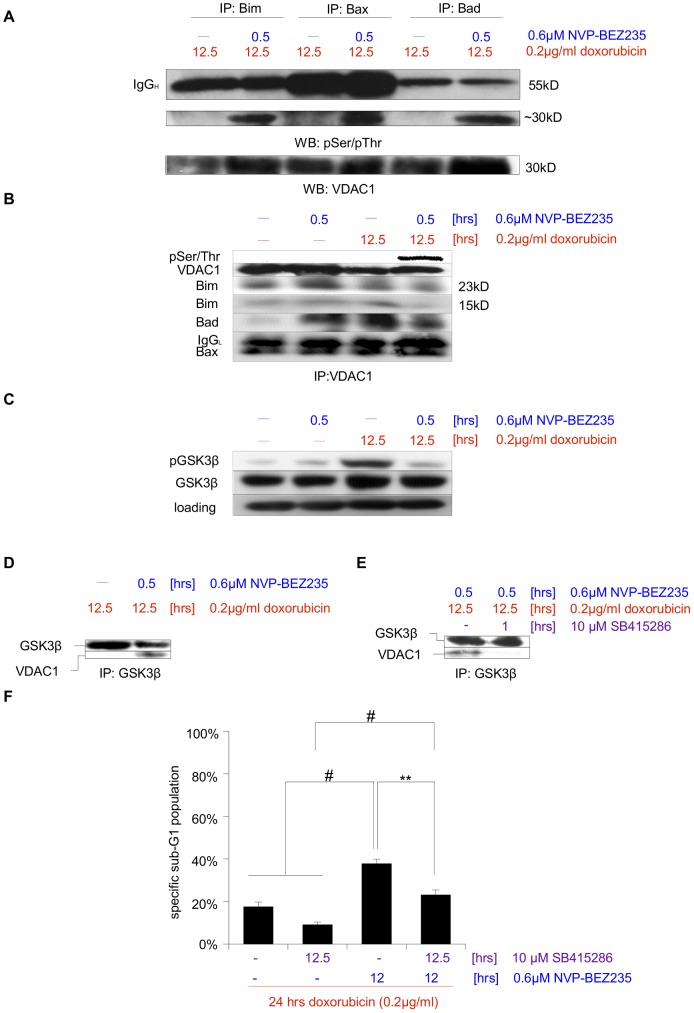
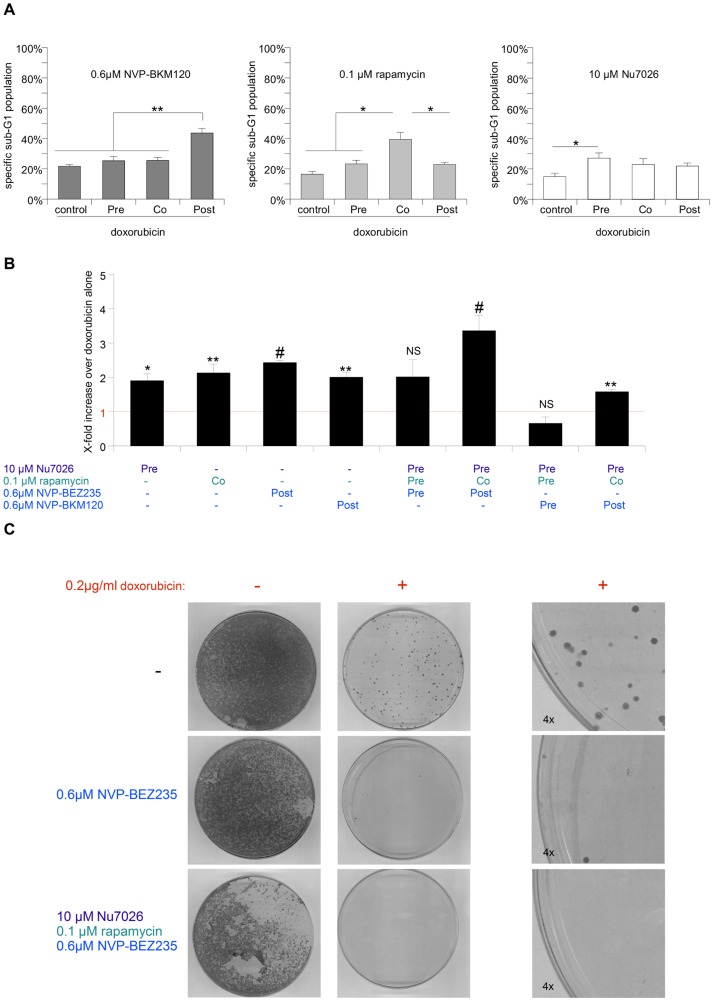
Breaking resistance to chemotherapy is a major goal of combination therapy in many tumors, including advanced neuroblastoma. We recently demonstrated that increased activity of the PI3K/Akt network is associated with poor prognosis, thus providing an ideal target for chemosensitization. Here we show that targeted therapy using the PI3K/mTOR inhibitor NVP-BEZ235 significantly enhances doxorubicin-induced apoptosis in neuroblastoma cells. Importantly, this increase in apoptosis was dependent on scheduling: while pretreatment with the inhibitor reduced doxorubicin-induced apoptosis, the sensitizing effect in co-treatment could further be increased by delayed addition of the inhibitor post chemotherapy. Desensitization for doxorubicin-induced apoptosis seemed to be mediated by a combination of cell cycle-arrest and autophagy induction, whereas sensitization was found to occur at the level of mitochondria within one hour of NVP-BEZ235 posttreatment, leading to a rapid loss of mitochondrial membrane potential with subsequent cytochrome c release and caspase-3 activation. Within the relevant time span we observed marked alterations in a ∼30 kDa protein associated with mitochondrial proteins and identified it as VDAC1/Porin protein, an integral part of the mitochondrial permeability transition pore complex. VDAC1 is negatively regulated by the PI3K/Akt pathway via GSK3β and inhibition of GSK3β, which is activated when Akt is blocked, ablated the sensitizing effect of NVP-BEZ235 posttreatment. Our findings show that cancer cells can be sensitized for chemotherapy induced cell death - at least in part - by NVP-BEZ235-mediated modulation of VDAC1. More generally, we show data that suggest that sequential dosing, in particular when multiple inhibitors of a single pathway are used in the optimal sequence, has important implications for the general design of combination therapies involving molecular targeted approaches towards the PI3K/Akt/mTOR signaling network.
Conflict of interest statement
Figures
References
-
- Park JR, Eggert A, Caron H (2010) Neuroblastoma: biology, prognosis, and treatment. Hematol Oncol Clin North Am 24: 65–86. - PubMed
-
- Berthold F, Boos J, Burdach S, Erttmann R, Henze G, et al. (2005) Myeloablative megatherapy with autologous stem-cell rescue versus oral maintenance chemotherapy as consolidation treatment in patients with high-risk neuroblastoma: a randomised controlled trial. Lancet Oncol 6: 649–658. - PubMed
-
- Brodeur GM (2003) Neuroblastoma: biological insights into a clinical enigma. Nat Rev Cancer 3: 203–216. - PubMed
-
- Opel D, Poremba C, Simon T, Debatin KM, Fulda S (2007) Activation of Akt predicts poor outcome in neuroblastoma. Cancer Res 67: 735–745. - PubMed
-
- Boller D, Schramm A, Doepfner KT, Shalaby T, von Bueren AO, et al. (2008) Targeting the phosphoinositide 3-kinase isoform p110delta impairs growth and survival in neuroblastoma cells. Clin Cancer Res 14: 1172–1181. - PubMed
Publication types
MeSH terms
Substances
LinkOut - more resources
Full Text Sources
Other Literature Sources
Medical
Research Materials
Miscellaneous
