


Tolerance to ethanol intoxication after chronic ethanol: role of GluN2A and PSD-95
- PMID: 24397780
- PMCID: PMC4085154
- DOI: 10.1111/adb.12110
Tolerance to ethanol intoxication after chronic ethanol: role of GluN2A and PSD-95
Abstract
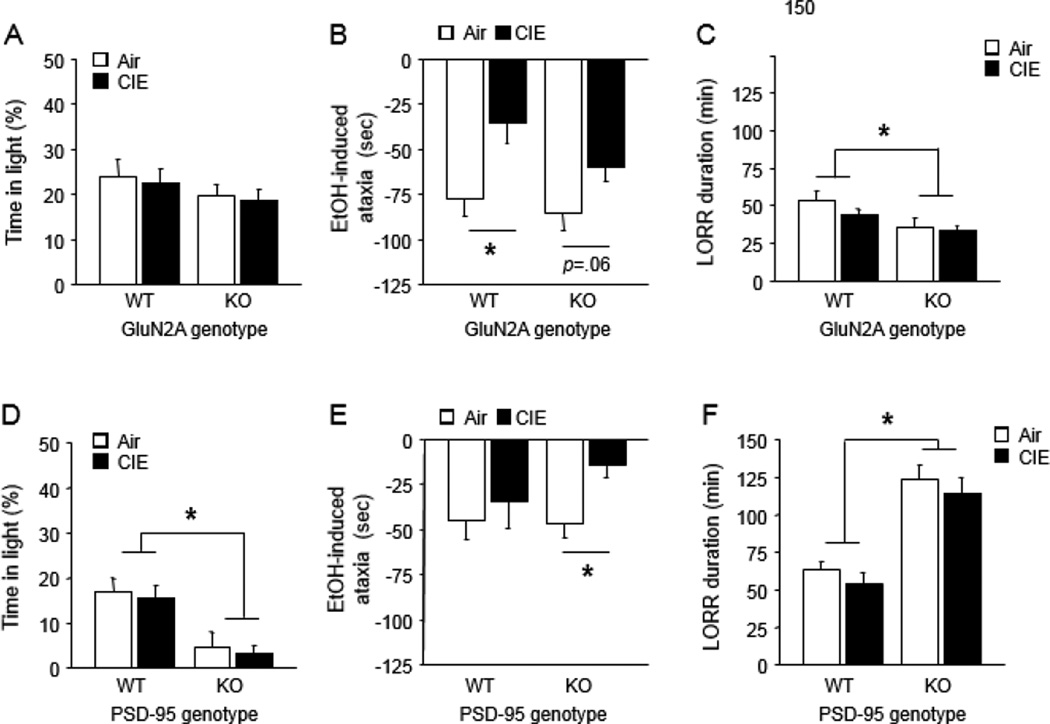
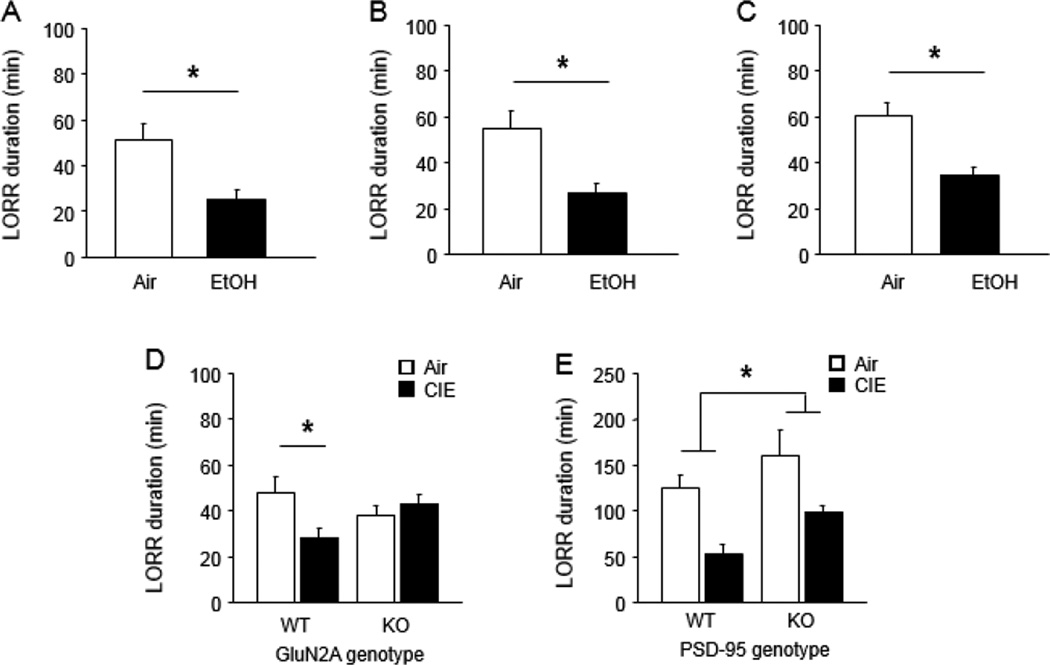
The neural and genetic factors underlying chronic tolerance to alcohol are currently unclear. The GluN2A N-methyl-D-aspartate receptors (NMDAR) subunit and the NMDAR-anchoring protein PSD-95 mediate acute alcohol intoxication and represent putative mechanisms mediating tolerance. We found that chronic intermittent ethanol exposure (CIE) did not produce tolerance [loss of righting reflex (LORR)] or withdrawal-anxiety in C57BL/6J, GluN2A or PSD-95 knockout mice assayed 2-3 days later. However, significant tolerance to LORR was evident 1 day after CIE in C57BL/6J and PSD-95 knockouts, but absent in GluN2A knockouts. These data suggest a role for GluN2A in tolerance, extending evidence that human GluN2A gene variation is involved in alcohol dependence.
Keywords: GluN2A and PSD-95; chronic ethanol; tolerance.
© 2014 Society for the Study of Addiction.
Figures
References
-
- Boyce-Rustay JM, Holmes A. Functional roles of NMDA receptor NR2A and NR2B subunits in the acute intoxicating effects of ethanol in mice. Synapse. 2005;56:222–225. - PubMed
-
- Boyce-Rustay JM, Holmes A. Ethanol-related behaviors in mice lacking the NMDA receptor NR2A subunit. Psychopharmacology (Berl) 2006;187:455–466. - PubMed
Publication types
MeSH terms
Substances
Grants and funding
LinkOut - more resources
Full Text Sources
Other Literature Sources
Medical
