


Psychological and educational interventions for atopic eczema in children
- PMID: 24399641
- PMCID: PMC6457897
- DOI: 10.1002/14651858.CD004054.pub3
Psychological and educational interventions for atopic eczema in children
Abstract
Background: Psychological and educational interventions have been used as an adjunct to conventional therapy for children with atopic eczema to enhance the effectiveness of topical therapy. This is an update of the original Cochrane review.
Objectives: To assess the effect of psychological and educational interventions for atopic eczema in children.
Search methods: We updated our searches of the following databases to January 2013: the Cochrane Skin Group Specialised Register, CENTRAL in The Cochrane Library (2012, Issue 12), MEDLINE (from 1946), EMBASE (from 1974), OpenGrey, and PsycINFO (from 1806). We also searched six trials registers and checked the reference lists of included and excluded studies for further references to relevant randomised controlled trials (RCTs).
Selection criteria: Randomised controlled trials of psychological or educational interventions, or both, used to assist children and their carers in managing atopic eczema.
Data collection and analysis: Three authors independently applied eligibility criteria, assessed trial quality, and extracted data. A lack of comparable data prevented data synthesis, and we were unable to conduct meta-analysis because there were insufficient data.
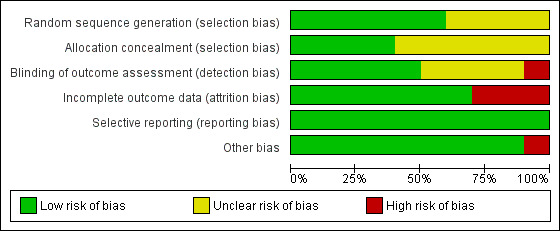
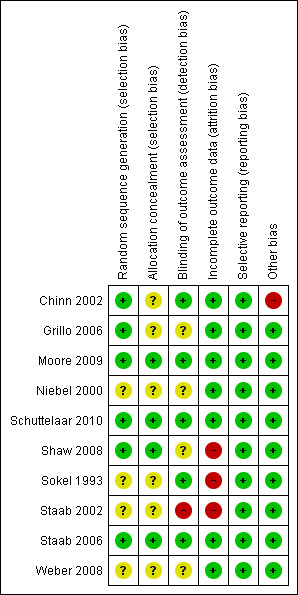
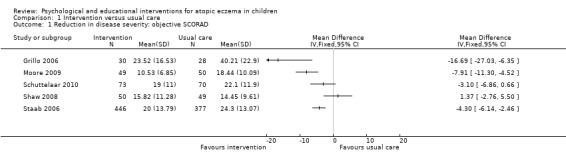
Main results: We included 10 RCTs, of which 5 were new to this update; all interventions were adjuncts to conventional therapy and were delivered in primary- and secondary-care settings. There were 2003 participants in the 9 educational interventions and 44 participants in the 1 psychological study. Some included studies had methodological weaknesses; for example, we judged four studies to have high risk of detection bias, attrition bias, or other bias. Our primary outcomes were participant-rated global assessment, reduction in disease severity (reported as objective SCORAD (SCORing Atopic Dermatitis)), and improvement in sleep and quality of life. No study reported participant-rated global assessment or improvement of sleep.The largest and most robust study (n = 992) demonstrated significant reduction in disease severity and improvement in quality of life, in both nurse- and dermatologist-led intervention groups. It provided six standardised, age-appropriate group education sessions. Statistically significant improvements in objective severity using the SCORAD clinical tool were recorded for all intervention groups when compared with controls. Improvements in objective severity (intervention minus no intervention) by age group were as follows: age 3 months to 7 years = 4.2, 95% confidence interval (CI) 1.7 to 6.8; age 8 to 12 years = 6.7, 95% CI 2.1 to 11.2; and age 13 to 18 years = 9.9, 95% CI 4.3 to 15.5. In three of five studies, which could not be combined because of their heterogeneity, the objective SCORAD measure was statistically significantly better in the intervention group compared with the usual care groups. However, in all of the above studies, the confidence interval limits do not exceed the minimum clinically important difference of 8.2 for objective SCORAD.The largest study measured quality of life using the German 'Quality of life in parents of children with atopic dermatitis' questionnaire, a validated tool with five subscales. Parents of children under seven years had significantly better improvements in the intervention group on all five subscales. Parents of children aged 8 to 12 years experienced significantly better improvements in the intervention group on 3 of the 5 subscales.
Authors' conclusions: This update has incorporated five new RCTs using educational interventions as an adjunct to conventional treatment for children with atopic eczema. We did not identify any further studies using psychological interventions. The inclusion of new studies has not substantially altered the conclusions from the original review. The educational studies in both the original review and this update lack detail about intervention design and do not use a complex interventions framework. Few use an explicit theoretical base, and the components of each intervention are not sufficiently well described to allow replication. A relative lack of rigorously designed trials provides limited evidence of the effectiveness of educational and psychological interventions in helping to manage the condition of atopic eczema in children. However, there is some evidence from included paediatric studies using different educational intervention delivery models (multiprofessional eczema interventions and nurse-led clinics) that these may lead to improvements in disease severity and quality of life. Educational and psychological interventions require further development using a complex interventions framework. Comparative evaluation is needed to examine their impact on eczema severity, quality of life, psychological distress, and cost-effectiveness. There is also a need for comparison of educational interventions with stand-alone psychosocial self-help.
Conflict of interest statement
None.
Figures

Update of
-
Psychological and educational interventions for atopic eczema in children.Cochrane Database Syst Rev. 2007 Jul 18;(3):CD004054. doi: 10.1002/14651858.CD004054.pub2. Cochrane Database Syst Rev. 2007. Update in: Cochrane Database Syst Rev. 2014 Jan 07;(1):CD004054. doi: 10.1002/14651858.CD004054.pub3. PMID: 17636745 Updated.
Comment in
-
Cochrane Review update: psychological and educational interventions for atopic eczema in children.Community Pract. 2014 Sep;87(9):11-2. Community Pract. 2014. PMID: 25286735 No abstract available.
-
From the Cochrane Library: Psychologic and educational interventions for atopic eczema in children.J Am Acad Dermatol. 2021 Nov;85(5):e309-e311. doi: 10.1016/j.jaad.2021.07.058. Epub 2021 Aug 4. J Am Acad Dermatol. 2021. PMID: 34358583 No abstract available.
References
References to studies included in this review
Chinn 2002 {published data only}
-
- Chinn DJ, Poyner T, Sibley G. Randomized controlled trial of a single dermatology nurse consultation in primary care on the quality of life of children with atopic eczema. British Journal of Dermatology 2002;146(3):432‐9. [MEDLINE: ] - PubMed
Grillo 2006 {published data only}
-
- Grillo M, Ng, M, Gassner L, Marshman G, Dunn S, Hudson P. Pediatric atopic eczema: the impact of an educational intervention. Pediatric Dermatology 2006;23(5):428‐36. [MEDLINE: ] - PubMed
Moore 2009 {published data only}
-
- Moore EJ, Williams A, Manias E, Varigos G, Donath S. Eczema workshops reduce severity of childhood atopic eczema. Australasian Journal of Dermatology 2009;50(2):100‐6. [MEDLINE: ] - PubMed
Niebel 2000 {published data only}
-
- Niebel G, Kallweit C, Lange I, Folster‐Holst R. Direct versus video‐aided parental education in atopic eczema in childhood as supplement to specialty physician treatment. A controlled pilot study [Direkte versus videovermittelte Elternschulung bei atopischem Ekzem im Kindesalter als Erganzung facharztlicher Behandlung. Eine Kontrollierte Pilotstudie]. Hautarzt 2000;51(6):401‐11. [MEDLINE: ] - PubMed
Schuttelaar 2010 {published data only}
-
- Schuttelaar ML, Vermeulen KM, Drukker N, Coenraads PJ. A randomized controlled trial in children with eczema: nurse practitioner vs. dermatologist. British Journal of Dermatology 2010;162(1):162‐70. [MEDLINE: ] - PubMed
Shaw 2008 {published data only}
-
- Shaw M, Morrell DS, Goldsmith LA. A study of targeted enhanced patient care for pediatric atopic dermatitis (STEP PAD). Pediatric Dermatology 2008;25(1):19‐24. [MEDLINE: ] - PubMed
Sokel 1993 {published data only}
-
- Sokel B, Christie D, Kent A, Glover M, Lansdown R, Knibbs J, et al. A comparison of hypnotherapy and biofeedback in the treatment of childhood atopic eczema. Contemporary Hypnosis 1993;10(3):145,54.
Staab 2002 {published data only}
-
- Staab D, Rueden U, Kehrt R, Erhart M, Wenninger K, Kamtsiuris P, et al. Evaluation of a parental training program for the management of atopic dermatitis. Pediatric Allergy and Immunology 2002;13(2):84‐90. [MEDLINE: ] - PubMed
Staab 2006 {published data only}
-
- Kupfer J, Gieler U, Diepgen TL, Fartasch M, Lob‐Corzilius T, Ring J, et al. Structured education program improves the coping with atopic dermatitis in children and their parents ‐ a multicenter, randomized controlled trial. Journal of Psychosomatic Research 2010;68(4):353‐8. [MEDLINE: ] - PubMed
Weber 2008 {published data only}
-
- Weber MB, Fontes Neto Pde T, Prati C, Soirefman M, Mazzotti NG, Barzenski B, et al. Improvement of pruritus and quality of life of children with atopic dermatitis and their families after joining support groups. Journal of the European Academy of Dermatology and Venereology 2008;22(8):992‐7. [MEDLINE: ] - PubMed
References to studies excluded from this review
Bae 2012 {published data only}
-
- Bae BG, Oh SH, Park CO, Noh S, Noh JY, Kim KR, et al. Progressive muscle relaxation therapy for atopic dermatitis: objective assessment of efficacy. Acta Dermato‐Venereologica 2012;92(1):57‐61. [MEDLINE: ] - PubMed
Broberg 1990 {published data only}
-
- Broberg A, Kalimo K, Lindblad B, Swanbeck G. Parental education in the treatment of childhood atopic eczema. Acta Dermato‐Venereologica 1990;70(6):495‐9. [MEDLINE: ] - PubMed
Greene 1997 {published data only}
-
- Greene DH. The comparative effects of relaxation techniques in the treatment of atopic dermatitis. Dissertation Abstracts International: Section B; The Sciences and Engineering (California School of Professional Psychology ‐ San Diego, US) 1996; Vol. 57, issue 7726:ISSN: 0419–4217.
Kardorff 2003 {published data only}
-
- Kardorff B, Schelle‐Parker G, Kardoff M, Wahlen M, d'Orville IH, Dorittke P. Successful reduction of the SCORAD score by a short‐time teaching method using a simplified skin model in children with atopic eczema in a 6‐week comparison. [Erfolgreiche Reduktion des SCORAD‐Scores bei Kindern mit atopischem Ekzem im 6‐Wochen‐Vergleich durch Kurzschulung mit einem vereinfachten Hautmodell.]. Journal der Deutschen Dermatologischen Gesellschaft 2003;1(6):451‐6. [MEDLINE: ] - PubMed
van Os‐Mendendorp 2012 {published data only}
-
- Os‐Medendorp H, Koffijberg H, Eland‐de Kok PC, Zalm A, Bruin‐Weller MS, Pasmans SG, et al. E‐health in caring for patients with atopic dermatitis: a randomized controlled cost‐effectiveness study of internet‐guided monitoring and online self‐management training. British Journal of Dermatology 2012;166(5):1060‐8. [PUBMED: 22268960] - PubMed
References to studies awaiting assessment
Futamura 2013 {published data only}
-
- Futamura M, Masuko I, Hayashi K, Ohya Y, Ito K. Effects of a short‐term parental education program on childhood atopic dermatitis: A randomized controlled trial. Pediatric Dermatology 2013;30(4):438‐43. [MEDLINE: ] - PubMed
References to ongoing studies
ISRCTN98560867 {published data only}
-
- ISRCTN98560867. Supporting Parents and Carer's management of Childhood Eczema (SPaCE). www.controlled‐trials.com/ISRCTN98560867 (accessed 12 February 2013).
N0060047013 {published data only (unpublished sought but not used)}
-
- N0060047013. Atopic eczema and habit reversal. www.nihr.ac.uk/Profile/Pages/NRRResults.aspx?publication_id=N0060047013 (accessed 12 February 2013).
NCT01138761 {published data only}
-
- NCT01138761. Health Literacy for Children With Atopic Dermatitis and Their Caregivers. clinicaltrials.gov/ct2/show/NCT01138761 (accessed 12 February 2013).
NCT01143012 {unpublished data only}
-
- NCT01143012. Group Eczema Education Visits: Impact on Patient and Family Quality of Life. clinicaltrials.gov/show/NCT01143012 (accessed 12 February 2013).
Additional references
Altman 1999
-
- Altman DG. Practical Statistics for Medical Research. CRC Press, 1999.
Armstrong 2011
-
- Armstrong AW, Kim RH, Idriss NZ, Larsen LN, Lio PA. Online video improves clinical outcomes in adults with atopic dermatitis: a randomized controlled trial. Journal of the American Academy of Dermatology 2011;64(3):502‐7. [MEDLINE: ] - PubMed
Asher 2006
-
- Asher MI, Montefort S, Björkstén, Lai CK, Strachan DP, Weiland SK, et al. Worldwide time trends in the prevalence of symptoms of asthma, allergic rhinoconjunctivitis, and eczema in childhood: ISAAC Phases One and Three repeat multicountry cross‐sectional surveys. Lancet 2006;368(9537):733‐43. [MEDLINE: ] - PubMed
Bandura 1997
-
- Bandura, A. Self‐efficacy: the exercise of control. New York: WH Freeman, 1997.
Barbarot 2013
-
- Barbarot S, Bernier C, Deleuran M, Raeve L, Eichenfield L, Hachem M, et al. Therapeutic patient education in children with atopic dermatitis: position paper on objectives and recommendations. Pediatric Dermatology 2013;30(2):199‐206. [MEDLINE: ] - PubMed
Ben‐Gashir 2004
-
- Ben‐Gashir MA, Seed PT, Hay RJ. Quality of life and disease severity are correlated in children with atopic dermatitis. British Journal of Dermatology 2004;150(2):284–90. [MEDLINE: ] - PubMed
Benjamin 2004
-
- Benjamin K, Waterston K, Russell M, Schofield O, Diffey B, Rees JL. The development of an objective method for measuring scratch in children with atopic dermatitis suitable for clinical use. Journal of the American Academy of Dermatology 2004;50(1):33‐40. [MEDLINE: ] - PubMed
Bridgett 1995
-
- Bridgett CK, Roberts N. Cognitive therapy of itch and scratch in atopic dermatitis ‐ a review of 50 cases. Proceedings of the 6th International Congress of Dermatological Psychiatry. Amsterdam, 1995.
Bridgett 2000
-
- Bridgett C. Psychodermatology and atopic skin disease in London 1989‐1999 ‐ Helping patients to help themselves. Dermatology Psychosomatics 2000;1(4):183‐6. [DOI: 10.1159/000057975] - DOI
Coenraads 2001
-
- Coenraads PJ, Span L, Jaspers JP, Fidler V. Intensive patient education and treatment program for young adults with atopic eczema. Hautarzt 2001;52(5):428‐33. [MEDLINE: ] - PubMed
Cork 2006
-
- Cork MJ, Robinson DA, Vasilopoulos Y, Ferguson A, Moustafa M, MacGowan A, et al. New perspectives on epidermal barrier dysfunction in atopic dermatitis: gene‐environment interactions. Journal of Allergy and Clinical Immunology 2006;118(1):3‐21. [MEDLINE: ] - PubMed
Coster 2009
-
- Coster S, Norman I. Cochrane reviews of education al and self‐management interventions to guide nursing practice: a review. International Journal of Nursing Studies 2009;46(4):508‐28. [MEDLINE: ] - PubMed
Coulter 2006
-
- Coulter A, Ellins J. Patient‐focused interventions: a review of the evidence. www.health.org.uk/publications/patient‐focused‐interventions/ (accessed 19 November 2013):1‐277.
de Bes 2011
-
- Bes J, Legierse CM, Prinsen CA, Korte J. Patient education in chronic skin diseases: a systematic review. Acta Dermato‐Venereologica 2011;91(1):12‐7. [MEDLINE: ] - PubMed
de L Horne 1999
-
- L Horne DJ, Taylor M, Varigos G. The effects of relaxation with and without imagery in reducing anxiety and itchy skin in patients with eczema. Behavioural & Cognitive Psychotherapy 1999;27(2):143‐51. [EMBASE: 1999201504]
Ehlers 1995
-
- Ehlers A, Stangier U, Gieler U. Treatment of atopic dermatitis: a comparison of psychological and dermatological approaches to relapse prevention. Journal of Consulting and Clinical Psychology 1995;63(4):624‐35. [MEDLINE: ] - PubMed
Elliott 1997
-
- Elliott BE, Luker K. The experiences of mothers caring for a child with severe atopic eczema. Journal of Clinical Nursing 1997;6(3):241‐7. [MEDLINE: ] - PubMed
Emerson 2000
-
- Emerson RM, Charman CR, Williams HC. The Nottingham Eczema Severity Score: a preliminary refinement of the Rajka and Langeland grading. British Journal of Dermatology 2000;142(2):288‐97. [MEDLINE: ] - PubMed
Ersser 2011
-
- Ersser SJ, Cowdell FC, Nicholls PG, Latter SM, Healy E. A pilot randomised controlled trial to examine the feasibility and efficacy of an educational nursing intervention to improve self‐management practices in patients with mild‐moderate psoriasis. Journal of the European Academy of Dermatology and Venereology 2011;26(6):738‐45. [DOI: ] - PubMed
Ersser 2013
-
- Ersser SJ, Farasat H, Jackson K, Dennis H, Sheppard ZA, More A. A service evaluation of the Eczema Education Programme: an analysis of child, parent and service impact outcomes. British Journal of Dermatology 2013;169(3):629‐36. [MEDLINE: ] - PubMed
Fallon 2009
Flohr 2010
-
- Flohr C, England K, Radulovic S, McLean WH, Campbell LE, Barker J, et al. Filaggrin loss‐of‐function mutations are associated with early onset eczema, eczema severity and transepidermal water loss at 3 months of age. British Journal of Dermatology 2010;163(6):1333‐6. [MEDLINE: ] - PubMed
Giannini 1997
-
- Giannini AV. Habit reversal technique and eczema. Journal of Allergy and Clinical Immunology 1997;100(4):580. [MEDLINE: ] - PubMed
Gieler 2000
-
- Gieler U, Kupfer J, Niemeier V, Brosig B, Standier U. Atopic eczema prevention programmes ‐ a new therapeutic concept for secondary prevention. Dermatology & Psychosomatics 2000;1(4):138‐47. [DOI: 10.1159/000057969] - DOI
Gradwell 2002
-
- Gradwell C, Thomas KS, English JS, Williams HC. A randomized controlled trial of nurse follow‐up clinics: do they help patients and do they free up consultants’ time?. British Journal of Dermatology 2002;147(3):513‐7. [MEDLINE: ] - PubMed
Guevara 2003
Hanifin 1980
-
- Hanifin JM, Rajka G. Diagnostic features of atopic dermatitis. Acta Dermato‐Venereologica 1980;92:44‐7.
Hanifin 2007
-
- Hanifin JM, Reed ML, Eczema Prevalence and Impact Working Group. A population‐based survey of eczema prevalence in the USA. Dermatitis 2007;18(2):82‐91. [MEDLINE: ] - PubMed
Health Foundation 2011
-
- Health Foundation, Silva D. Helping people help themselves. A review of the evidence considering whether it is worthwhile to support self‐management. www.health.org.uk/publications/evidence‐helping‐people‐help‐themselves/ (accessed 19 November 2013).
Herd 1996
-
- Herd RM, Tidman MJ, Prescott RJ, Hunter JA. Prevalence of atopic eczema in the community: the Lothian atopic dermatitis study. British Journal of Dermatology 1996;135(1):18‐9. [MEDLINE: ] - PubMed
Higgins 2011
-
- Higgins JPT, Green S (editors). Cochrane Handbook for Systematic Reviews of Interventions Version 5.1.0 [updated March 2011]. The Cochrane Collaboration, 2011. The Cochrane Collaboration, 2011. Available from www.cochrane‐handbook.org., Available from www.cochrane‐handbook.org.
Hoare 2000
Holman 2000
HOME 2013
-
- Harmonising Outcome Measures for Eczema (HOME). HOME III Meeting. homeforeczema.org/ (accessed 19 November 2013).
Hägermark 1995
-
- Hägermark Ö, Wahlgren CF. Treatment of itch. Seminars in Dermatology 1995;14(4):320‐5. [MEDLINE: ] - PubMed
Jackson 2013
Jaspers 2000
-
- Jaspers JPC, Span L, Molier L, Coenraads PJ. A multimodal education and treatment program for young adults with atopic dermatitis: a randomized controlled trial. Dermatology and Psychosomatics 2000;1(4):148‐53. [DOI: 10.1159/000057970] - DOI
Johnson 1991
-
- Johnson CM. Infant and toddler sleep: a telephone survey of parents in one community. Journal of Developmental and Behavioral Pediatrics 1991;12(2):108‐14. [MEDLINE: ] - PubMed
Juni 2001
Kemp 2003
-
- Kemp AS. Cost of illness of atopic dermatitis in children: a societal perspective. Pharmacoeconomics 2003;21(2):105‐13. [MEDLINE: ] - PubMed
Kunz 1997
-
- Kunz B, Oranje AP, Labreze L, Stalder JF, Ring J, Taieb A. Clinical validation and guidelines for the SCORAD index: consensus report of the European Task Force on Atopic Dermatitis. Dermatology 1997;195(1):10‐9. [MEDLINE: ] - PubMed
Lavda 2012
-
- Lavda AC, Webb TL, Thompson AR. A meta‐analysis of the effectiveness of psychological interventions for adults with skin conditions. British Journal of Dermatology 2012;167(5):970‐9. [MEDLINE: ] - PubMed
Lawton 2005
-
- Lawton S, Roberts A, Gibb C. Supporting the parents of children with atopic eczema. British Journal of Nursing 2005;14(13):693‐6. [MEDLINE: ] - PubMed
Lewis‐Jones 1995
-
- Lewis‐Jones MS, Finlay AY. The children's dermatology life quality index (CDLQI): initial validation and practical use. British Journal of Dermatology 1995;132(6):942‐9. [MEDLINE: ] - PubMed
Lewis‐Jones 2001
-
- Lewis‐Jones MS, Finlay AY, Dykes PJ. The infants' dermatitis quality of life index. British Journal of Dermatology 2001;144(1):104‐10. [MEDLINE: ] - PubMed
McNally 1998
-
- McNally NJ, Phillps DR, Williams HC. The problem of atopic eczema: aetiological clues from the environment and lifestyles. Social Science & Medicine 1998;46(6):729‐41. [MEDLINE: ] - PubMed
Medical Research Council 2008
-
- Medical Research Council. Developing and Evaluating Complex Interventions: New Guidance. London: Medical Research Council, 2008.
Melin 1986
-
- Melin L, Frederiksen T, Noren P, Swebilius BG. Behavioural treatment of scratching in patients with atopic dermatitis. British Journal of Dermatology 1986;115(4):467‐74. [MEDLINE: ] - PubMed
Miltenberger 1998
NICE 2013
-
- National Institute for Health And Clinical Excellence. Behaviour change. www.nice.org.uk/guidance/index.jsp?action=download&o=64039 2013.
Norén 1989
-
- Norén P, Melin L. The effect of combined topical steroids and habit‐reversal treatment in patients with atopic dermatitis. British Journal of Dermatology 1989;121(3):359‐66. [MEDLINE: ] - PubMed
Palmer 2006
-
- Palmer CN, Irvine AD, Terron‐Kwiatkowski A, Zhao Y, Liao H, Lee SP, et al. Common loss‐of‐function variants of the epidermal barrier protein filaggrin are a major predisposing factor for atopic dermatitis. Nature Genetics 2006;38(4):441‐6. [MEDLINE: ] - PubMed
Paternoster 2012
Pucci 2005
-
- Pucci N, Novembre E, Cammarata MG, Bernardini R, Monaco MG, Calogero C, et al. Scoring atopic dermatitis in infants and young children: distinctive features of the SCORAD index. Allergy 2005;60(1):113‐6. [MEDLINE: ] - PubMed
Rajka 1989
-
- Rajka G, Langeland T. Grading of the severity of atopic dermatitis. Acta Dermato‐Venereologica. Supplementum 1989;144:13‐4. [MEDLINE: ] - PubMed
Reid 1995
-
- Reid P, Lewis‐Jones MS. Sleep difficulties and their management in pre‐schoolers with atopic eczema. Clinical and Experimental Dermatology 1995;20(1):38‐41. [MEDLINE: ] - PubMed
Ring 2012
-
- Ring J, Alomar A, Bieber T, Deleuran M, Fink‐Wagner A, Gelmetti C, et al. Guidelines for treatment of atopic eczema (atopic dermatitis) Part II. Journal of the European Academy of Dermatology and Venereology 2012;26(9):1176‐93. [MEDLINE: ] - PubMed
Santer 2012
Schmitt 2007
-
- Schmitt J, Langan S, Williams H, European Dermato‐Epidemiology Network. What are the best outcome measurements for atopic eczema? A systematic review. Journal of Allergy and Clinical Immunology 2007;120(6):1389‐98. [MEDLINE: ] - PubMed
Schmitt 2012
-
- Schmitt J, Spuls P, Boers M, Thomas K, Chalmers J, Roekevisch E, et al. Towards global consensus on outcome measures for atopic eczema research: results of the HOME II meeting. Allergy 2012;67(9):1111‐7. [MEDLINE: ] - PubMed
Schram 2010
-
- Schram ME, Tedja AM, Spijker R, Bos JD, Williams HC, Spuls PI. Is there a rural/urban gradient in the prevalence of eczema? A systematic review. British Journal of Dermatology 2010;162(5):964‐73. [MEDLINE: ] - PubMed
Schram 2012
-
- Schram ME, Spuls PI, Leeflang MM, Lindeboom R, Bos JD, Schmitt J. EASI, (objective) SCORAD and POEM for atopic eczema: responsiveness and minimal clinically important difference. Allergy 2012;67(1):99‐106. [MEDLINE: ] - PubMed
Sherriff 2002
Simpson‐Dent 1999
-
- Simpson‐Dent SL, Staughton RCD, Bridgett CK, Farell A. The combined approach to chronic atopic eczema. A prospective comparison of behavioural modification with standard dermatological treatment against standard treatment alone. Proceedings of the International Congress of Dermatological Psychiatry. Paris, 1999.
Smith 2006
-
- Smith FJ, Irvine AD, Terron‐Kwiatkowski A, Sandilans A, Campbell LE, Zhao Y, et al. Loss‐of‐function mutations in the gene encoding filaggrin causes ichthyosis vulgaris. Nature Genetics 2006;38(3):337‐42. [MEDLINE: ] - PubMed
van den Oord 2009
Verboom 2002
-
- Verboom P, Hakkaart‐Van L, Sturkenboom M, Zeeuw R, Menke H, Rutten F. The cost of atopic dermatitis in the Netherlands: an international comparison. British Journal of Dermatology 2002;147(4):716‐24. [MEDLINE: ] - PubMed
Verhoeven 2008
-
- Verhoeven EW, Klerk S, Kraaimaat FW, Kerkhof PC, Jong EM, Evers AW. Biopsychosocial mechanisms of chronic itch in patients with skin disease: a review. Acta Dermato‐Veneroelogica 2008;88(3):211‐8. [MEDLINE: ] - PubMed
Von Rueden 1999
-
- Rueden U, Kerht R, Staab D, Wahn U. Development and validation of a disease specific questionnaire on quality of life of parents of children with atopic eczema. Zeitschrift für Gesundheitswissenschaften = Journal of public health 1996;4:335‐50.
Webb 2006
-
- Webb TL, Sheeran P. Does changing behavioral intentions engender behavior change? A meta‐analysis of the experimental evidence. Psychological Bulletin 2006;132(2):249‐68. [MEDLINE: ] - PubMed
Williams 1997
-
- Williams HC. Dermatology. Health Care Needs Assessment. Oxford: Radcliffe Medical Press, 1997.
Williams 2002
Williams 2005
-
- Williams HC. Clinical practice. Atopic dermatitis. New England Journal of Medicine 2005;352(22):2314‐24. [MEDLINE: ] - PubMed
Williams 2006
Wolf 2002
Yosipovitch 2002
-
- Yosipovitch G, Goon AT, Wee J, Chan YH, Zucker I, Goh CL. Itch characteristics in Chinese patients with atopic dermatitis using a new questionnaire for the assessment of pruritus. International Journal of Dermatology 2002;41(4):212‐6. [MEDLINE: ] - PubMed
References to other published versions of this review
Publication types
MeSH terms
Substances
LinkOut - more resources
Full Text Sources
Other Literature Sources
