


Coronary arterial development: a review of normal and congenitally anomalous patterns
- PMID: 24399787
- PMCID: PMC6649459
- DOI: 10.1002/clc.22237
Coronary arterial development: a review of normal and congenitally anomalous patterns
Abstract
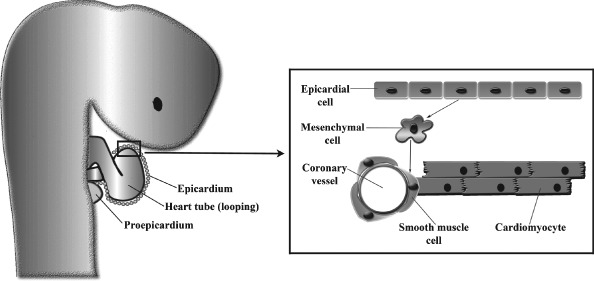
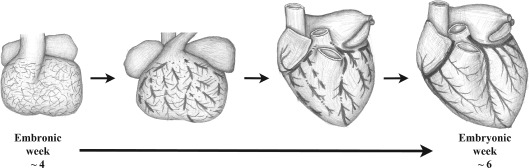
Coronary artery development is a delicate, complex, and finely tuned process that includes multiple interactions among many pathways, especially in the pericardium and the developing myocardium. There still exists some controversy on the exact origin of certain cellular components. Nevertheless, an understanding of this extremely important developmental process is paramount in identifying some of the causes of anomalous coronary development. There are different patterns of anomalous coronary arteries, with variable risk of myocardial ischemia, malignant arrhythmias, and sudden cardiac death. These anomalies can be broadly categorized into 2 basic anatomic subsets: those with origin of the anomalous coronary artery from the opposite aortic sinus, and those with origin of the anomalous coronary artery from the pulmonary artery. Diagnosis and management of such patterns continues to be challenging. A good knowledge of the normal and abnormal coronary artery development could potentially help us explore new avenues in the treatment of ischemic heart disease as well as anomalous coronary arteries.
© 2014 Wiley Periodicals, Inc.
Figures
References
-
- Angelini P. Coronary artery anomalies: an entity in search of an identity. Circulation. 2007;115:1296–1305. - PubMed
-
- Bogers AJ, Gittenberger‐de Groot AC, Poelmann RE, et al. Development of the origin of the coronary arteries, a matter of ingrowth or outgrowth? Anat Embryol (Berl). 1989;180:437–441. - PubMed
-
- Pérez‐Pomares JM, de la Pompa JL. Signaling during epicardium and coronary vessel development. Circ Res. 2011;109:1429–1442. - PubMed
-
- Kirby ML. Cardiac Development Oxford and New York, NY: Oxford University Press; 2007.
-
- Viragh S, Challice CE. The origin of the epicardium and the embryonic myocardial circulation in the mouse. Anat Rec. 1981;201:157–168. - PubMed
Publication types
MeSH terms
LinkOut - more resources
Full Text Sources
Other Literature Sources
