


Acyl-homoserine lactone quorum sensing in the Roseobacter clade
- PMID: 24402124
- PMCID: PMC3907830
- DOI: 10.3390/ijms15010654
Acyl-homoserine lactone quorum sensing in the Roseobacter clade
Abstract
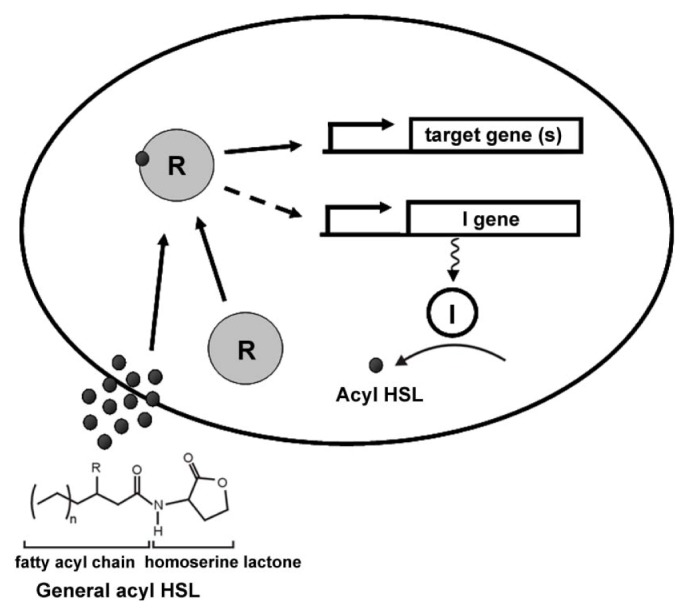
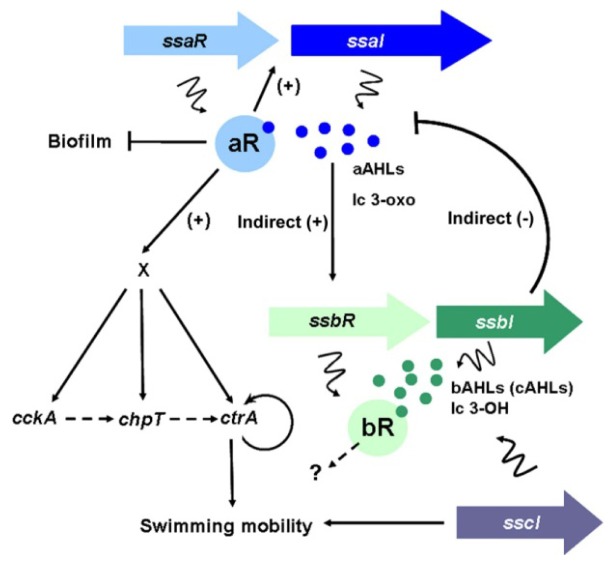
Members of the Roseobacter clade are ecologically important and numerically abundant in coastal environments and can associate with marine invertebrates and nutrient-rich marine snow or organic particles, on which quorum sensing (QS) may play an important role. In this review, we summarize current research progress on roseobacterial acyl-homoserine lactone-based QS, particularly focusing on three relatively well-studied representatives, Phaeobacter inhibens DSM17395, the marine sponge symbiont Ruegeria sp. KLH11 and the dinoflagellate symbiont Dinoroseobacter shibae. Bioinformatic survey of luxI homologues revealed that over 80% of available roseobacterial genomes encode at least one luxI homologue, reflecting the significance of QS controlled regulatory pathways in adapting to the relevant marine environments. We also discuss several areas that warrant further investigation, including studies on the ecological role of these diverse QS pathways in natural environments.
Figures
References
-
- Wagner-Döbler I., Thiel V., Eberl L., Allgaier M., Bodor A., Meyer S., Ebner S., Hennig A., Pukall R., Schulz S. Discovery of complex mixtures of novel long-chain quorum sensing signals in free-living and host-associated marine alphaproteobacteria. ChemBioChem. 2005;6:2195–2206. - PubMed
-
- Moran M.A., Buchan A., Gonzalez J.M., Heidelberg J.F., Whitman W.B., Kiene R.P., Henriksen J.R., King G.M., Belas R., Fuqua C., et al. Genome sequence of Silicibacter pomeroyi reveals adaptations to the marine environment. Nature. 2004;432:910–913. - PubMed
-
- Wagner-Dobler I., Biebl H. Environmental biology of the marine Roseobacter lineage. Annu. Rev. Microbiol. 2006;60:255–280. - PubMed
Publication types
MeSH terms
Substances
LinkOut - more resources
Full Text Sources
Other Literature Sources
Molecular Biology Databases
