


Predictors of olfactory dysfunction in rhinosinusitis using the brief smell identification test
- PMID: 24402746
- PMCID: PMC4109707
- DOI: 10.1002/lary.24587
Predictors of olfactory dysfunction in rhinosinusitis using the brief smell identification test
Abstract
Objectives/hypothesis: Associations between olfactory function to quality-of-life (QOL) and disease severity in patients with rhinosinusitis is poorly understood. We sought to evaluate and compare olfactory function between subgroups of patients with rhinosinusitis using the Brief Smell Identification Test (B-SIT).
Study design: Cross-sectional evaluation of a multicenter cohort.
Methods: Patients with recurrent acute sinusitis and chronic rhinosinusitis with and without nasal polyposis were prospectively enrolled from three academic tertiary care sites. Each subject completed the B-SIT, in addition to measures of disease-specific QOL. Patient demographics, comorbidities, and clinical measures of disease severity were compared between patients with normal (BSIT≥9) and abnormal (BSIT<9) olfaction scores. Regression modeling was used to identify potential risk factors associated with olfactory impairment.
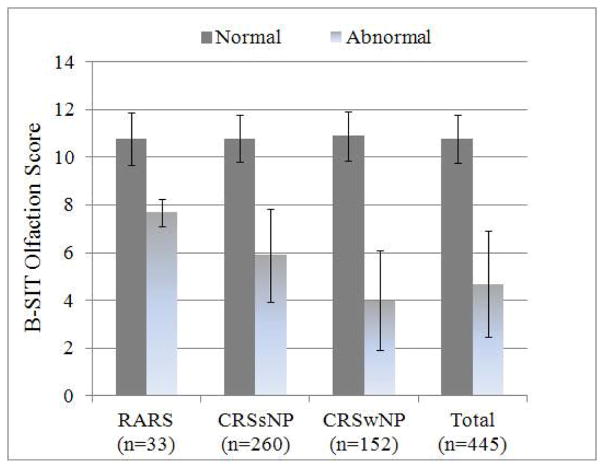
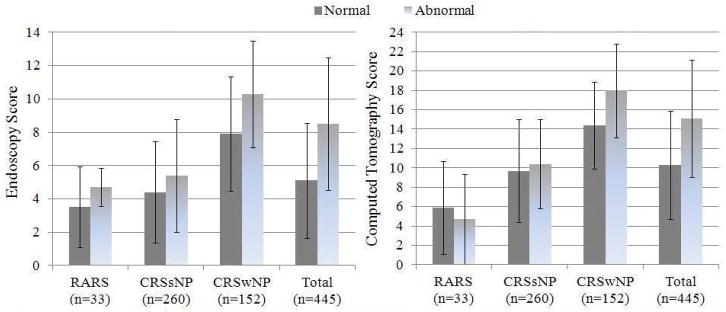
Results: Patients with rhinosinusitis (n=445) were found to suffer olfactory dysfunction as measured by the B-SIT (28.3%). Subgroups of rhinosinusitis differed in the degree of olfactory dysfunction reported. Worse disease severity, measured by computed tomography and nasal endoscopy, correlated to worse olfaction. Olfactory scores did not consistently correlate with the Rhinosinusitis Disability Index or Sinonasal Outcome Test scores. Regression models demonstrated nasal polyposis was the strongest predictor of olfactory dysfunction. Recalcitrant disease and aspirin intolerance were strongly predictive of worse olfactory function.
Conclusions: Olfactory dysfunction is a complex, multifactorial process found to be differentially expressed within subgroups of rhinosinusitis. Olfaction was associated with disease severity as measured by imaging and endoscopy, with only weak associations to disease-specific QOL measures.
Level of evidence: 2b.
Trial registration: ClinicalTrials.gov NCT01332136.
Keywords: Olfaction disorders; inflammation; quality of life; sinusitis; smell.
© 2014 The American Laryngological, Rhinological and Otological Society, Inc.
Conflict of interest statement
Figures
References
-
- Raviv JR, Kern RC. Chronic sinusitis and olfactory dysfunction. Otolaryngol Clin North Am. 2004;37:1143–1157. v–vi. - PubMed
-
- Rosenfeld RM, Andes D, Bhattacharyya N, et al. Clinical practice guideline: adult sinusitis. Otolaryngology--head and neck surgery : official journal of American Academy of Otolaryngology-Head and Neck Surgery. 2007;137:S1–31. - PubMed
-
- Katotomichelakis M, Simopoulos E, Tripsianis G, et al. Improvement of olfactory function for quality of life recovery. Laryngoscope. 2013 - PubMed
Publication types
MeSH terms
Associated data
Grants and funding
LinkOut - more resources
Full Text Sources
Other Literature Sources
Medical
Research Materials
