Effect of home telemonitoring on glycemic and blood pressure control in primary care clinic patients with diabetes
- PMID: 24404819
- PMCID: PMC3934666
- DOI: 10.1089/tmj.2013.0151
Effect of home telemonitoring on glycemic and blood pressure control in primary care clinic patients with diabetes
Abstract
Objective: Patient self-management support may be augmented by using home-based technologies that generate data points that providers can potentially use to make more timely changes in the patients' care. The purpose of this study was to evaluate the effectiveness of short-term targeted use of remote data transmission on treatment outcomes in patients with diabetes who had either out-of-range hemoglobin A1c (A1c) and/or blood pressure (BP) measurements.
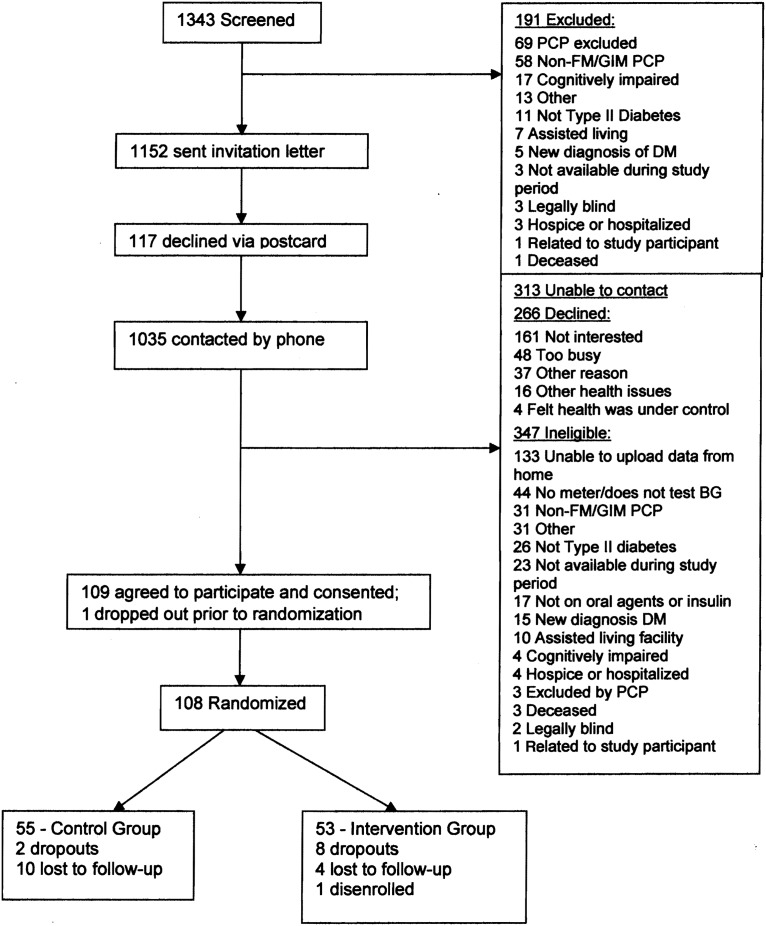
Materials and methods: A single-center randomized controlled clinical trial design compared in-home monitoring (n=55) and usual care (n=53) in patients with type 2 diabetes and hypertension being treated in primary care clinics. Primary outcomes were A1c and systolic BP after a 12-week intervention.
Results: There were no significant differences between the intervention and control groups on either A1c or systolic BP following the intervention.
Conclusions: The addition of technology alone is unlikely to lead to improvements in outcomes. Practices need to be selective in their use of telemonitoring with patients, limiting it to patients who have motivation or a significant change in care, such as starting insulin. Attention to the need for effective and responsive clinic processes to optimize the use of the additional data is also important when implementing these types of technology.
Figures
References
-
- Grant RW, Pirraglia PA, Meigs JB, Singer DE. Trends in complexity of diabetes care in the United States from 1991 to 2000. Arch Intern Med 2004;164:1134–1139 - PubMed
-
- Chodosh J, Morton SC, Mojica W, et al. . Meta-analysis: Chronic disease self-management programs for older adults. Ann Intern Med 2005;143:427–438 - PubMed
-
- Lorig KR, Sobel DS, Stewart AL, et al. . Evidence suggesting that a chronic disease self-management program can improve health status while reducing hospitalization: A randomized trial. Med Care 1999;37:5–14 - PubMed
-
- Walsh JME, McDonald KM, Shojania KG, et al. . Quality improvement strategies for hypertension management: A systematic review. Med Care 2006;44:646–657 - PubMed
Publication types
MeSH terms
Substances
Grants and funding
LinkOut - more resources
Full Text Sources
Other Literature Sources
Medical