


Oxidative stress induces gastric submucosal arteriolar dysfunction in the elderly
- PMID: 24409074
- PMCID: PMC3882420
- DOI: 10.3748/wjg.v19.i48.9439
Oxidative stress induces gastric submucosal arteriolar dysfunction in the elderly
Abstract
Aim: To evaluate human gastric submucosal vascular dysfunction and its mechanism during the aging process.
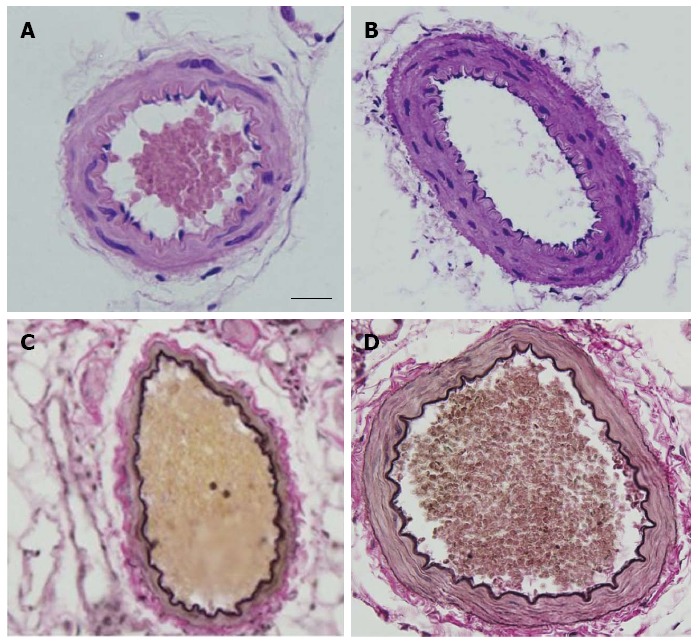
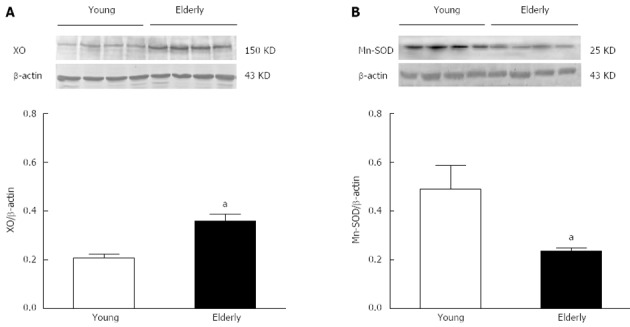
Methods: Twenty male patients undergoing subtotal gastrectomy were enrolled in this study. Young and elderly patient groups aged 25-40 years and 60-85 years, respectively, were included. Inclusion criteria were: no clinical evidence of cardiovascular, renal or diabetic diseases. Conventional clinical examinations were carried out. After surgery, gastric submucosal arteries were immediately dissected free of fat and connective tissue. Vascular responses to acetylcholine (ACh) and sodium nitroprusside (SNP) were measured by isolated vascular perfusion. Morphological changes in the gastric mucosal vessels were observed by hematoxylin and eosin (HE) staining and Verhoeff van Gieson (EVG) staining. The expression of xanthine oxidase (XO) and manganese-superoxide dismutase (Mn-SOD) was assessed by Western blotting analysis. The malondialdehyde (MDA) and hydrogen peroxide (H₂O₂) content and the activities of superoxide dismutase (SOD) and glutathione peroxidase (GSH-Px) were determined according to commercial kits.
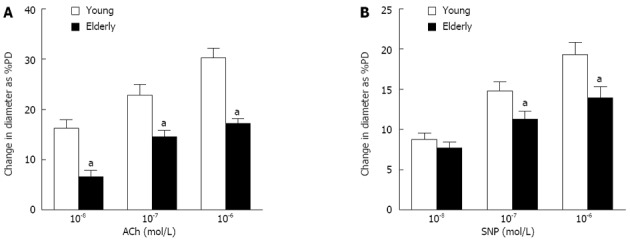
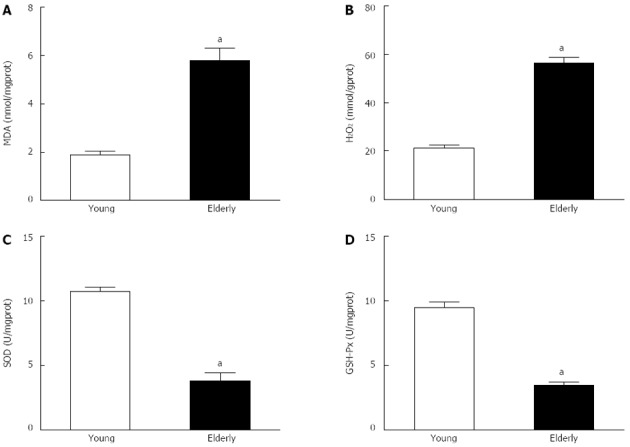
Results: The overall structure of vessel walls was shown by HE and EVG staining, respectively. Disruption of the internal elastic lamina or neointimal layers was not observed in vessels from young or elderly patients; however, cell layer number in the vessel wall increased significantly in the elderly group. Compared with submucosal arteries in young patients, the amount of vascular collagen fibers, lumen diameter and media cross-sectional area were significantly increased in elderly patients. Ach- and SNP-induced vasodilatation in elderly arterioles was significantly decreased compared with that of gastric submucosal arterioles from young patients. Compared with the young group, the expression of XO and the contents of MDA and H₂O₂ in gastric submucosal arterioles were increased in the elderly group. In addition, the expression of Mn-SOD and the activities of SOD and GSH-Px in the elderly group decreased significantly compared with those in the young group.
Conclusion: Gastric vascular dysfunction and senescence may be associated with increased oxidative stress and decreased antioxidative defense in the aging process.
Keywords: Aging; Gastric blood flow; Human; Oxidative stress; Vascular dysfunction.
Figures
References
-
- Grassi M, Petraccia L, Mennuni G, Fontana M, Scarno A, Sabetta S, Fraioli A. Changes, functional disorders, and diseases in the gastrointestinal tract of elderly. Nutr Hosp. 2011;26:659–668. - PubMed
-
- Feldman M, Cryer B, McArthur KE, Huet BA, Lee E. Effects of aging and gastritis on gastric acid and pepsin secretion in humans: a prospective study. Gastroenterology. 1996;110:1043–1052. - PubMed
-
- van Asselt DZ, van den Broek WJ, Lamers CB, Corstens FH, Hoefnagels WH. Free and protein-bound cobalamin absorption in healthy middle-aged and older subjects. J Am Geriatr Soc. 1996;44:949–953. - PubMed
-
- Somerville K, Faulkner G, Langman M. Non-steroidal anti-inflammatory drugs and bleeding peptic ulcer. Lancet. 1986;1:462–464. - PubMed
-
- Petersson J, Phillipson M, Jansson EA, Patzak A, Lundberg JO, Holm L. Dietary nitrate increases gastric mucosal blood flow and mucosal defense. Am J Physiol Gastrointest Liver Physiol. 2007;292:G718–G724. - PubMed
Publication types
MeSH terms
Substances
LinkOut - more resources
Full Text Sources
Other Literature Sources
Medical
