


GILT: Shaping the MHC Class II-Restricted Peptidome and CD4(+) T Cell-Mediated Immunity
- PMID: 24409178
- PMCID: PMC3885806
- DOI: 10.3389/fimmu.2013.00429
GILT: Shaping the MHC Class II-Restricted Peptidome and CD4(+) T Cell-Mediated Immunity
Abstract
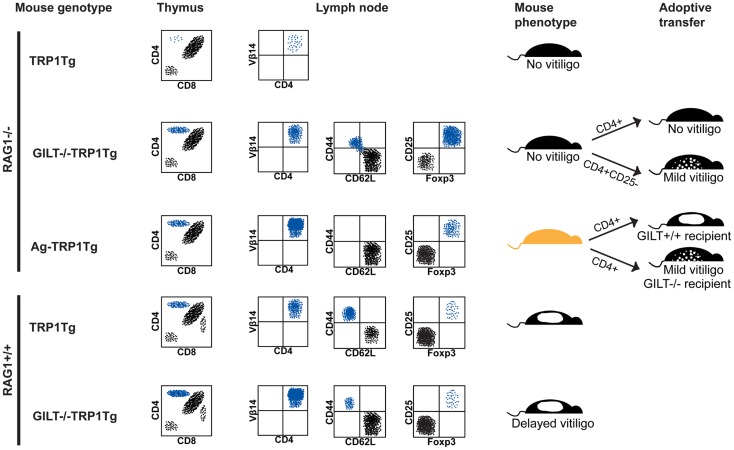
The MHC class II-restricted antigen processing pathway generates peptide:MHC complexes in the endocytic pathway for the activation of CD4(+) T cells. Gamma-interferon-inducible lysosomal thiol reductase (GILT) reduces protein disulfide bonds in the endocytic compartment, thereby exposing buried epitopes for MHC class II binding and presentation. T cell hybridoma responses and elution of MHC class II bound peptides have identified GILT-dependent epitopes, GILT-independent epitopes, and epitopes that are more efficiently presented in the absence of GILT termed GILT-prevented epitopes. GILT-mediated alteration in the MHC class II-restricted peptidome modulates T cell development in the thymus and peripheral tolerance and influences the pathogenesis of autoimmunity. Recent studies suggest an emerging role for GILT in the response to pathogens and cancer survival.
Keywords: GILT; MHC class II; antigen processing and presentation; autoimmunity; tumor immunity.
Figures
References
-
- Jensen PE. Acidification and disulfide reduction can be sufficient to allow intact proteins to bind class II MHC. J Immunol (1993) 150(8 Pt 1):3347–56 - PubMed
-
- Collins DS, Unanue ER, Harding CV. Reduction of disulfide bonds within lysosomes is a key step in antigen processing. J Immunol (1991) 147(12):4054–9 - PubMed
Publication types
Grants and funding
LinkOut - more resources
Full Text Sources
Other Literature Sources
Research Materials
